
Kanpur & Agra Metro: India’s Urban Rail Expansion
India’s Kanpur and Agra metro projects are underway, representing a massive investment in sustainable urban transport. Discover how these ambitious undertakings are shaping the future of Indian railways!
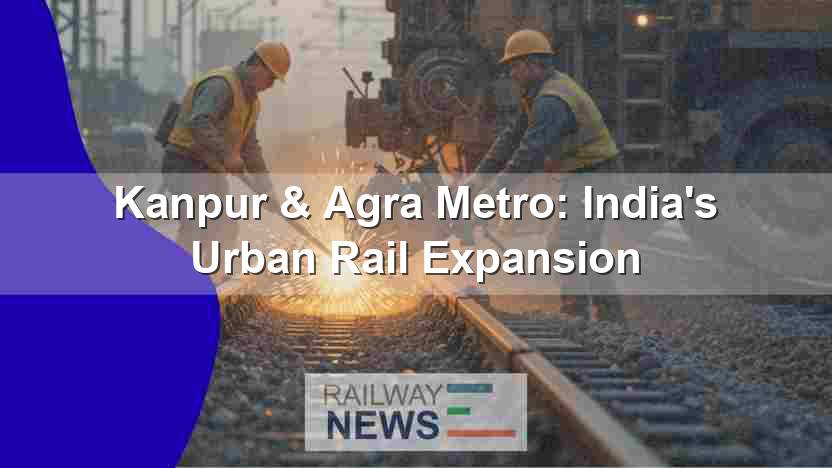
India, a nation experiencing rapid urbanization and economic growth, faces significant infrastructural challenges, particularly in its major cities. Road congestion and air pollution are increasingly pressing concerns, impacting both quality of life and economic productivity. To address these issues, the Indian government has embarked on an ambitious plan to expand its metro rail network, a crucial component of sustainable urban transport. This article explores the recently approved metro rail projects in Kanpur and Agra, Uttar Pradesh, examining their economic impact, technical specifications, and broader significance within India’s wider transportation strategy. The projects represent a significant investment in modernizing urban transportation, promising to alleviate traffic congestion, reduce pollution, and boost economic activity in these rapidly growing cities. We will analyze the financial aspects, the planned routes and station configurations, and the expected timeline for completion, highlighting the challenges and opportunities presented by these ambitious undertakings. Additionally, we will explore the wider context of India’s commitment to sustainable urban development and the role of metro rail systems in achieving this goal.
Project Scope and Financial Implications
The Indian government’s approval encompasses two significant metro rail projects: one in Kanpur and the other in Agra. The Kanpur Metro Rail Project carries a substantial price tag of Rs 110.76 billion (approximately $1.56 billion USD). This project will feature two corridors. The first, spanning 23.79 kilometers, will connect IIT Kanpur (Indian Institute of Technology) to Naubasta, incorporating 14 elevated and eight underground stations. The second corridor, measuring 8.60 kilometers, will run from Agriculture University to Barra-8, with four elevated and four underground stations. Similarly, the Agra Metro Rail Project, costing Rs 83.79 billion (approximately $1.18 billion USD), also includes two corridors. The first, a 14-kilometer stretch connecting Sikandra to the Taj East Gate, will have six elevated and seven underground stations. The second corridor, extending 15.4 kilometers from Agra Cantt to Kalindi Vihar, will consist entirely of elevated stations (14 in total).
Technological Considerations and Route Design
The design of both metro systems reflects careful consideration of the unique geographical and demographic characteristics of each city. In Kanpur, the selection of elevated and underground sections is strategic, balancing construction costs with the need to minimize disruption to existing infrastructure and maximize accessibility. The routes are planned to serve key areas, including educational institutions (IIT Kanpur), commercial zones, and residential areas. In Agra, a significant emphasis is placed on connecting major tourist sites such as the Taj Mahal and Agra Fort, aiming to improve tourist accessibility while simultaneously addressing local transportation needs. The choice between elevated and underground sections in both cities will likely depend on factors including land availability, cost-effectiveness, and the impact on surrounding structures and traffic flows. The integration of modern signaling and communication systems will be vital for optimizing operational efficiency and ensuring passenger safety. Detailed environmental impact assessments will be crucial for minimizing the project’s ecological footprint.
Implementation and Funding
Uttar Pradesh Metro Rail Corporation (UPMRC), a joint venture between the central and state governments, is responsible for implementing both projects. This collaborative approach underscores the shared commitment to enhancing urban infrastructure. The funding model involves equal equity contributions from the Government of India and the Uttar Pradesh state government. Crucially, the projects will also seek soft loans from international funding agencies, signifying a potential for leveraging external financial resources and technological expertise. Securing these loans will require meticulous project planning, transparent financial management, and a robust risk mitigation strategy. The successful acquisition of these loans will also significantly contribute to the overall financial feasibility and sustainability of the project.
Conclusion
The approval of the Kanpur and Agra metro rail projects marks a significant step towards modernizing urban transportation in Uttar Pradesh and exemplifies India’s broader commitment to sustainable urban development. The substantial financial investment, the careful route planning, and the collaborative implementation strategy all indicate a detailed approach to addressing the critical challenges of urban mobility. The projects promise to not only alleviate traffic congestion and improve air quality but also stimulate economic activity and enhance the overall quality of life for residents of Kanpur and Agra. The five-year timeline for completion poses considerable logistical challenges, demanding effective project management, efficient resource allocation, and meticulous coordination among various stakeholders. The successful completion of these projects will serve as a model for future metro rail development in other Indian cities, demonstrating the feasibility and transformative potential of integrated public transportation systems in addressing the complexities of rapid urbanization. The reliance on a joint public-private partnership model, coupled with the pursuit of international funding, highlights a pragmatic approach to resource mobilization and demonstrates India’s ongoing efforts to attract foreign investment in its infrastructure development. The meticulous consideration of technological solutions, coupled with a focus on environmental sustainability and accessibility for all members of the community, signals a progressive and responsible approach to urban planning and transport. These projects, therefore, represent a significant milestone in India’s journey towards creating sustainable and efficient urban environments.

Railway infrastructure, rolling stock and transport technologies specialist focused on global rail industry developments, high-speed rail systems, signaling technologies and freight transportation. Covering railway investments, public transport modernization, rail operations and international mobility projects across Europe, Asia and North America.
RELATED POSTS
September 6, 2026 5:19 am
Hitachi delivered Taiwan's first N700ST high-speed train from Japan in...

September 5, 2026 4:19 pm
CPK launched formal tender talks with four consortia to design...

September 5, 2026 7:14 pm
HS2 Ltd signed renegotiated civils contracts with EKFB and Align...

September 6, 2026 4:12 am
Alstom delivered the first of 100 new G Class trams...
September 6, 2026 6:17 am
Hungary ordered a national ban on most freight trains from...
September 6, 2026 1:17 am
Hitachi Toshiba Supreme Consortium confirmed the first of 12 N700ST...