
Jordan’s Rail Revolution: Aqaba-Ma’an PPP
Jordan’s $700 million Aqaba-Ma’an railway, a public-private partnership, revolutionizes freight transport. Discover how this crucial rail line boosts trade and economic growth!
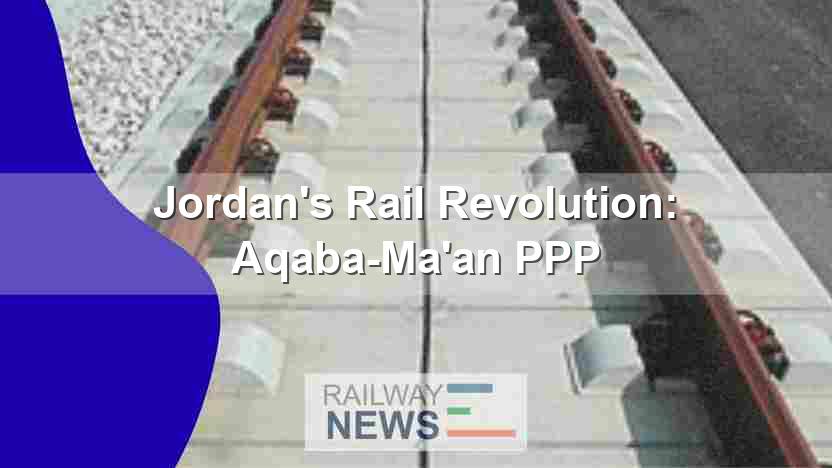
This article examines the significant development of Jordan’s national railway network, focusing on the pivotal memorandum of understanding (MoU) signed between the Saudi Jordanian Investment Fund (SJIF) and the Aqaba Special Economic Zone Authority (ASEZA). This $700 million agreement marks a crucial step towards establishing a modern and efficient freight transportation system in Jordan. The project, a public-private partnership (PPP), will initially focus on a crucial section connecting the port city of Aqaba to a planned dry port in Ma’an. This initial phase, however, represents more than just a localized infrastructure upgrade; it lays the groundwork for a broader national network with considerable economic and logistical implications for the Kingdom. The subsequent sections delve into the technical aspects of the project, the financial structure, and the broader strategic benefits this project promises for Jordan’s economic growth and regional integration.
The Aqaba-Ma’an Rail Line: A Foundation for National Connectivity
The core of the project involves the construction of a 195km railway line linking the port of Aqaba to the planned dry port in Ma’an. This section is strategically vital, as it directly addresses the current logistical bottlenecks hindering Jordan’s trade potential. The project includes several key elements: the construction of a new rail line connecting Aqaba’s southern seaport and container terminal to the existing railway infrastructure; rehabilitation of the existing track between Aqaba and Ma’an; and the construction of the Ma’an dry port itself. The project also encompasses the procurement of rolling stock, including locomotives and freight wagons, essential for efficient cargo handling. The selection of appropriate rolling stock, considering the specific terrain and cargo types (including phosphate), is crucial for operational success. The strategic location of the Ma’an dry port is intended to facilitate seamless transfer of goods between rail and road transport, easing congestion in Aqaba port and optimizing logistics flows throughout the country.
The Public-Private Partnership (PPP) Model: Financing and Implementation
The project’s structure leverages a PPP model, with the SJIF, a joint venture between the Public Investment Fund of Saudi Arabia (90%) and Jordanian banks (10%), acting as the primary investor. This funding model mitigates the financial burden on the Jordanian government, enabling a faster implementation timeline. The involvement of ASEZA, as the governmental authority overseeing the Aqaba Special Economic Zone, ensures alignment with national development goals and regulatory compliance. The MoU serves as a preliminary framework, laying out the initial phases of the project, including feasibility studies and environmental impact assessments. These studies are critical for ensuring the project’s long-term sustainability and minimizing environmental impact. The transparency and due diligence in these initial phases will be crucial for securing further investment and ensuring the project’s overall success.
Economic and Logistical Impacts: Boosting Jordan’s Trade and Transportation
The successful completion of this project promises significant economic benefits for Jordan. Improved transportation efficiency will lead to reduced freight costs, enhancing the competitiveness of Jordanian exports, particularly phosphate, a key export commodity. The streamlined movement of goods will boost trade relations with neighboring countries, potentially acting as a catalyst for regional economic integration. The dry port in Ma’an will play a significant role in this process, acting as a central hub for distribution, reducing congestion in Aqaba and opening up new opportunities for inland industries. By easing logistical challenges, the railway will encourage foreign investment and promote the growth of related industries, such as logistics and warehousing. Additionally, the creation of new jobs during construction and operation will contribute positively to Jordan’s employment landscape.
Conclusion
The partnership between SJIF and ASEZA to develop the Aqaba-Ma’an railway line represents a landmark achievement in Jordan’s infrastructure development. This $700 million project, implemented via a successful public-private partnership, is not merely a transportation upgrade but a strategic investment with far-reaching economic and logistical implications. The initial phase, focusing on the construction of a key rail link and a modern dry port, lays a solid foundation for the broader development of Jordan’s national railway network. The anticipated increase in trade, reduced transportation costs, and creation of employment opportunities highlight the project’s considerable potential to boost economic growth and enhance Jordan’s regional competitiveness. However, the long-term success of this venture hinges on meticulous planning, effective project management, and a commitment to transparency and accountability throughout the implementation process. Careful consideration of environmental and social impacts throughout the project’s lifecycle will be crucial for sustainable and inclusive development. The effective integration of this rail line with existing and planned infrastructure will ensure its strategic value to Jordan’s economy for years to come. The project serves as a model for future infrastructure development initiatives, demonstrating the potential of strategic public-private partnerships in achieving national development goals.

Railway infrastructure, rolling stock and transport technologies specialist focused on global rail industry developments, high-speed rail systems, signaling technologies and freight transportation. Covering railway investments, public transport modernization, rail operations and international mobility projects across Europe, Asia and North America.
RELATED POSTS

October 8, 2026 1:15 pm
Alstom secured a €1bn contract to build 13 automated trains,...

October 1, 2026 7:09 am
United States regulators confirmed a September 30 deadline for the...

October 8, 2026 12:18 pm
Siemens Mobility signed an agreement with VinSpeed to supply 350...

October 4, 2026 5:14 pm
Alstom secured a CA$4.7 billion order from VIA Rail Canada...

October 5, 2026 6:12 pm
AECOM and Jacobs secured a contract in September 2026 to...

October 1, 2026 12:13 am
Illinois approved $1.5 billion annually for the Northern Illinois Transit...