
JICA’s India Rail Revolution: High-Speed & Metro Advancements
JICA’s $1 billion investment in India’s railway infrastructure, including the Mumbai-Ahmedabad high-speed rail, is transforming travel and urban mobility. Discover how cutting-edge technology and international collaboration are shaping India’s future!
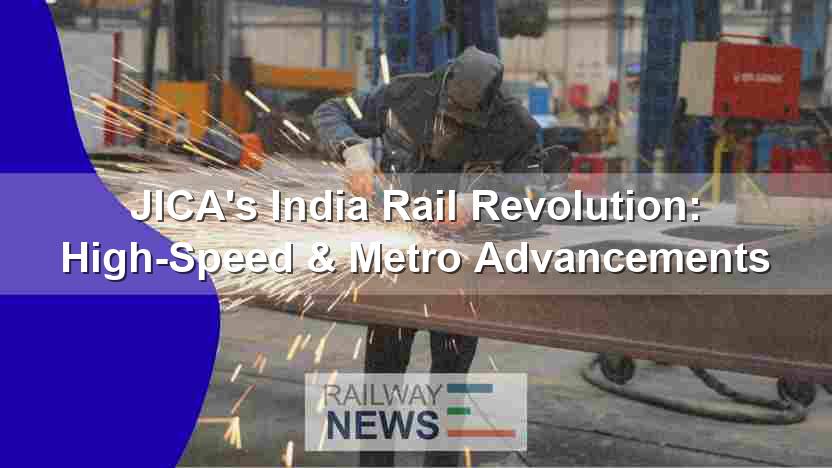
This article examines the substantial financial commitment made by the Japan International Cooperation Agency (JICA) to bolster India’s railway infrastructure. JICA’s allocation of over $1 billion underscores the growing importance of high-speed rail and urban mass transit in India’s economic development strategy. This investment reflects a broader global trend of prioritizing efficient and sustainable transportation solutions to address rapid urbanization and economic growth. We will explore the specifics of two key projects – the Mumbai-Ahmedabad High-Speed Rail corridor and the Kolkata East-West Metro – analyzing their significance within the larger context of India’s transportation network and the role of international cooperation in realizing ambitious infrastructure goals. The article will also discuss the technological advancements and economic impacts associated with these projects, highlighting their potential to transform urban mobility and regional connectivity in India.
High-Speed Rail Development: The Mumbai-Ahmedabad Corridor
The allocation of $790 million to the Mumbai-Ahmedabad High-Speed Rail (MAHSR) project represents a landmark investment in India’s nascent high-speed rail network. This 508km corridor, based on the Japanese Shinkansen (bullet train) technology, is designed to drastically reduce travel time between Mumbai and Ahmedabad from the current several hours to approximately two hours. This significant reduction in travel time will not only benefit commuters but also stimulate economic activity along the corridor, fostering regional development and integration. The project’s adoption of Shinkansen technology signifies a transfer of expertise and technology, showcasing the benefits of international collaboration in infrastructure development. The project’s success will be a crucial step in the development of further high-speed rail lines across India, setting a benchmark for future projects and laying the groundwork for a nationwide high-speed network.
Urban Mass Transit Enhancement: The Kolkata East-West Metro
The $230 million investment in the Kolkata East-West Metro project aims to alleviate severe traffic congestion within the Kolkata Metropolitan Area. This mass rapid transit (MRT) system is crucial for improving urban mobility and enhancing the overall quality of life for Kolkata’s residents. The project’s completion will significantly improve connectivity across the city, reducing commute times and improving accessibility to various areas. This investment aligns with JICA’s broader commitment to supporting urban infrastructure development in India, as evidenced by their previous contributions to metro projects in cities like Delhi, Bengaluru, Chennai, and Mumbai. The success of the Kolkata East-West Metro project will serve as a model for future urban transit projects in other rapidly growing Indian cities.
The Broader Impact of JICA’s Investment
JICA’s investment extends beyond the immediate impact on the two specific projects. The infusion of capital stimulates economic growth, creates employment opportunities, and enhances India’s overall infrastructure capabilities. The transfer of technology, particularly the Shinkansen technology utilized in the MAHSR project, represents a significant knowledge transfer that benefits India’s engineering and construction sectors. Additionally, these projects contribute to environmental sustainability by providing efficient and less polluting transportation alternatives compared to traditional road transport. The success of these projects will undoubtedly inspire further investment in India’s railway infrastructure, facilitating economic growth and development in a sustainable manner.
Conclusion
JICA’s commitment of over $1 billion to the Mumbai-Ahmedabad High-Speed Rail and the Kolkata East-West Metro projects marks a significant step forward in modernizing India’s transportation network. This investment signifies not only a substantial financial contribution but also a transfer of crucial technological expertise and project management skills. The MAHSR project, leveraging Japanese Shinkansen technology, promises to revolutionize long-distance travel within India, setting a precedent for future high-speed rail development. Simultaneously, the Kolkata East-West Metro aims to address critical urban mobility challenges, improving connectivity and enhancing the quality of life for Kolkata’s residents. Both projects are expected to generate significant economic benefits, create employment, and foster regional development. Beyond the immediate impact, this collaboration showcases the effectiveness of international partnerships in addressing large-scale infrastructure challenges and accelerating sustainable development in emerging economies. The successful completion of these projects will serve as a model for future infrastructure development in India and other developing nations, demonstrating the power of strategic investment and international collaboration in shaping a more connected and prosperous future.

Railway infrastructure, rolling stock and transport technologies specialist focused on global rail industry developments, high-speed rail systems, signaling technologies and freight transportation. Covering railway investments, public transport modernization, rail operations and international mobility projects across Europe, Asia and North America.
RELATED POSTS

October 8, 2026 1:15 pm
Alstom secured a €1bn contract to build 13 automated trains,...

October 5, 2026 6:12 pm
AECOM and Jacobs secured a contract in September 2026 to...

October 1, 2026 12:13 am
Illinois approved $1.5 billion annually for the Northern Illinois Transit...

October 4, 2026 11:08 pm
Sound Transit confirmed the September 30 opening of Seattle Pinehurst...
October 5, 2026 1:13 pm
New York MTA confirmed a late 2026 DEIS release for...
October 6, 2026 5:12 pm
Cleveland RTA confirmed the deferral of planned bus and rail...