
Jerusalem-Tel Aviv HSR: Infrastructure Insights
High-speed rail: Mastering engineering, economics, and politics for successful projects. Discover how the Jerusalem-Tel Aviv line tackles these challenges!

The Challenges and Opportunities of High-Speed Rail Development
The development of high-speed rail (HSR) networks presents a complex interplay of engineering, economic, and political considerations. This article delves into the multifaceted challenges and opportunities inherent in constructing and operating HSR systems, using various case studies to illustrate key points. We will explore the crucial technical aspects of track design and train technology, the economic impact on surrounding communities and national economies, and the significant political hurdles often encountered during the planning and implementation phases. The analysis will consider the broader context of sustainable transportation and its role in mitigating climate change, while also examining the potential for HSR to become a catalyst for regional development and economic growth. The focus will be on the complexities involved in successful HSR projects, offering insights into best practices and lessons learned from both successful and less successful implementations around the world. Ultimately, the goal is to provide a comprehensive overview of the factors that contribute to successful HSR development, including a detailed exploration of the Jerusalem-Tel Aviv high-speed rail project, and its potential impact on Israel’s infrastructure and economic landscape.
Engineering and Technological Considerations
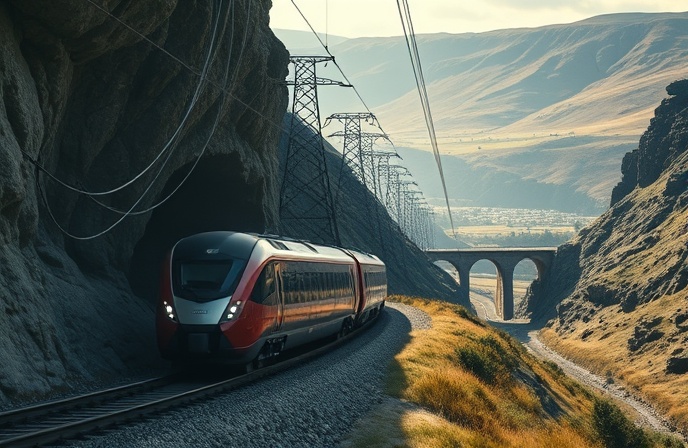
The construction of high-speed rail lines demands advanced engineering solutions. Track design is critical, requiring precise alignment, robust ballast (the material supporting the tracks), and sophisticated signaling systems to ensure safe, high-speed operation. The selection of rolling stock (trains) is equally important, with considerations given to aerodynamic design to minimize energy consumption and maximize speed, advanced braking systems for enhanced safety, and comfortable passenger accommodations. Tunnel boring, bridge construction, and the integration of the new lines with existing rail infrastructure are significant engineering challenges, each demanding meticulous planning and execution. Furthermore, the integration of advanced communication systems and sophisticated control technologies is vital for efficient and safe operation. This includes the use of ETCS (European Train Control System) or similar systems for automated train control and signaling.
Economic Impacts and Financial Viability
High-speed rail projects represent substantial financial investments, requiring careful assessment of their economic viability. While the initial capital costs are high, successful HSR networks can generate significant economic returns through increased passenger mobility, reduced travel times, and the stimulation of economic activity along the corridors they serve. These benefits can include job creation during construction and operation, increased tourism, and the enhanced connectivity of cities and regions. However, thorough cost-benefit analyses are crucial to determine the long-term financial sustainability of these projects. Factors such as ridership projections, operating costs, and government subsidies need to be carefully evaluated to ensure the project’s financial feasibility. A strong business model that considers revenue streams from both passenger and freight transport is essential.
Political and Social Challenges
The political landscape often plays a significant role in the success or failure of HSR projects. Securing necessary permits, resolving land acquisition issues, and navigating regulatory hurdles can be time-consuming and politically challenging. Public support and stakeholder engagement are crucial for mitigating potential opposition and ensuring the project aligns with community needs and environmental concerns. Effective communication strategies are essential to garner public support and address concerns about environmental impact, noise pollution, and displacement of communities. Furthermore, political stability and long-term government commitment are vital for the successful completion and operation of such large-scale infrastructure projects.
The Jerusalem-Tel Aviv High-Speed Rail: A Case Study
The proposed Jerusalem-Tel Aviv high-speed rail line provides a compelling case study for examining the challenges and opportunities associated with HSR development in a complex geopolitical environment. This ambitious project faces unique challenges, including the need to navigate significant topographical differences between the two cities, and addressing potential environmental and social concerns. Successful implementation will necessitate meticulous planning, robust engineering solutions, and effective stakeholder engagement. The project’s potential benefits, however, are substantial: reduced travel times, increased connectivity between two major economic centers, and a significant boost to Israel’s infrastructure and overall economic competitiveness. The successful completion of the Jerusalem-Tel Aviv HSR line would serve as a model for future high-speed rail development projects in the region and beyond, demonstrating the ability to overcome significant challenges to deliver substantial economic and social benefits.
You might be interested in:
Last May 2019, we published an article about Turkey’s €530 million high-speed rail project, a case study in international collaboration, boosting regional connectivity and economic growth. Click here to read – Turkey’s €530M High-Speed Rail: A Connectivity Game Changer
Conclusions
The development of high-speed rail networks presents both significant challenges and remarkable opportunities. This article has explored the critical engineering and technological considerations, the economic impacts and financial viability, and the inherent political and social complexities involved in such projects. From meticulous track design and advanced train technology to navigating complex regulatory landscapes and securing public support, each stage requires careful planning and execution. The economic benefits, however, can be substantial, fostering economic growth, job creation, and enhanced regional connectivity. The Jerusalem-Tel Aviv high-speed rail project exemplifies the potential rewards and challenges of HSR development. Its success will depend on addressing the unique engineering and logistical hurdles while effectively managing the political and social aspects of the undertaking. Ultimately, the long-term viability of any HSR project hinges on a comprehensive approach that considers technical feasibility, economic sustainability, and the socio-political context in which it operates. A thorough understanding of these factors, coupled with effective planning, strong political will, and community engagement, is essential for the successful implementation of high-speed rail projects worldwide, leading to improved transportation networks and sustainable economic development. Careful consideration of these points will be critical for future high-speed rail endeavors, ensuring that they deliver the promised benefits while minimizing potential negative impacts. The global push towards sustainable transportation emphasizes the importance of investing in high-speed rail infrastructure as a crucial component of a greener and more efficient transportation system for the future. The lessons learned from projects like the Jerusalem-Tel Aviv high-speed rail will be invaluable for future initiatives, paving the way for improved efficiency, cost-effectiveness, and broader societal benefits.
RELATED POSTS

The death toll in Tuesday’s derailment on the Moscow metro...
October 13, 2025 1:54 pm
Network North Wales unveils a new direct **train** service from...
November 11, 2018 7:00 am
Kazakhstan's EKZ JV now produces Prima locomotive transformers, boosting local...
May 4, 2025 9:13 pm
This article explores the significant contribution of Systra Subterra to...
November 24, 2018 12:34 pm
Montreal's AZUR trainsets: a $340 million upgrade boosting capacity, safety,...

August 5, 2025 11:33 pm
Rail Baltica project gets €235M boost, speeding up Baltic...