
Jaxport Gains: Rail Integration and Supply Chain Efficiency
Jaxport gains key advantage with revamped East Coast 3 container service, boosting Southeast US maritime sector. Faster transit times & infrastructure upgrades are key.
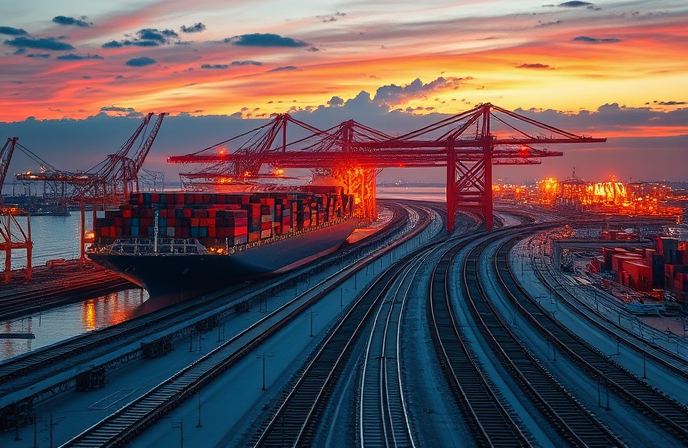
Jaxport Gains Advantage with Revamped East Coast 3 Container Service
In a significant boost for its maritime operations, the Jacksonville Port Authority (Jaxport) has secured a strategic advantage with the revised East Coast 3 (EC3) container service. This marks a historic shift, positioning Jaxport as the first Southeast U.S. port of call for this service. This development, which became effective on July 7th, dramatically reduces transit times between Asia and Jacksonville, Florida, by up to five days. Operated weekly by the Ocean Network Express (ONE), HMM (Hyundai Merchant Marine), and Yang Ming, the EC3 service underscores Jaxport’s growing importance in the global supply chain. This article will explore the key changes, the infrastructural upgrades, and the broader implications for the port and the railway networks serving it.
Strategic Positioning: The Revised EC3 Service and its Impact
The revised EC3 service presents a compelling value proposition for shippers. By prioritizing Jaxport as its initial Southeast U.S. port of call, the service leverages the port’s strategic location and logistical efficiency. The reduction in transit time between Asia and Jaxport is a crucial competitive advantage. This accelerated delivery schedule provides cost savings and optimizes supply chain management for businesses importing and exporting goods. The shift reflects a broader trend of carriers strategically adapting their routes to capitalize on the evolving needs of port infrastructure and the demand for time-sensitive cargo. The arrival of the ONE Mackinac on July 7th, the first vessel to utilize the revised port rotation, highlights the swift implementation of the strategic plan.
Infrastructure Modernization: The Blount Island Terminal Expansion
A pivotal factor supporting the EC3 service is the ongoing modernization of Jaxport’s Blount Island Marine Terminal. This terminal is undergoing a substantial $72 million expansion project, nearing completion. The project’s key improvements include the addition of 97 acres of new paving, significantly enhancing the terminal’s capacity and operational efficiency. An upgraded terminal gate system is also part of the improvements, facilitating faster and more streamlined cargo handling. This ongoing investment in infrastructure directly addresses the growing demands of containerized trade and ensures Jaxport can accommodate larger volumes and a wider range of vessels. The upgraded terminal also provides enhanced handling and efficient processing capabilities, improving overall turnaround times.
Railway Integration: Connecting Jaxport to Key Markets
The successful integration of Jaxport with the national railway network is crucial for the efficient distribution of goods. Jaxport is served daily by major Class I railroads, including CSX Transportation and Norfolk Southern Railway, alongside Florida East Coast Railway. This robust rail network allows for swift movement of cargo to inland destinations across the United States. These railways offer connections to key distribution centers, minimizing reliance on over-the-road trucking for long-haul transport. The strategic alignment of port operations and rail infrastructure enables Jaxport to provide seamless supply chain solutions, driving greater efficiency and cost-effectiveness for shippers. The seamless integration of these transportation modes is crucial for maintaining competitiveness in the dynamic global logistics market.
Conclusion
The revamped EC3 container service represents a significant strategic victory for Jaxport, underlining its growing prominence in the U.S. Southeast’s maritime sector. The port’s ability to attract this revised service, combined with the ongoing infrastructure investments, is poised to drive economic growth and improve operational efficiency for stakeholders. The enhanced transit times, capacity upgrades, and seamless integration with rail networks position Jaxport competitively in the global market, supporting increased trade volume. The future outlook for Jaxport is positive, with ongoing infrastructure projects planned to further expand capacity and efficiency. This strategic move strengthens Jaxport’s position as a critical link in the global supply chain. These developments are indicative of a broader trend towards enhancing port-rail integration, reflecting a proactive approach to meeting the evolving demands of the cargo industry and a commitment to sustainable practices.
RELATED POSTS

July 1, 2025 10:33 am
Dutch rail operator ProRail pioneers circular rail tracks, using recycled...

July 12, 2025 12:34 am
China's MetroTransit exhibition, MetroTrans 2025, opens in Qingdao. Officially...

October 7, 2025 5:54 pm
HS2's Chipping Warden green tunnel nears completion with road realignment....

April 11, 2019 2:55 pm
Sri Lanka's Matara-Beliatta railway line: a massive engineering feat boosting...
August 14, 2018 8:50 pm
Malaysia's High-Speed Rail project faced uncertainty. Learn how political...
January 25, 2023 5:44 pm
Introduction: This article explores the recent inauguration of two new...