
Jaxport EC3 Service: Rail & Maritime Boost for Southeast US Trade
Jaxport, Southeast US’s first EC3 container service port, promises faster Asia-US shipping via revamped rail links.
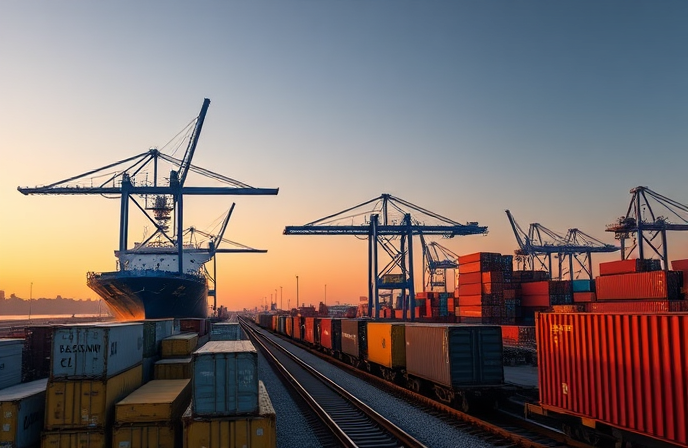
Jaxport Becomes First Southeast US Port of Call for Premier Alliance’s Revamped East Coast 3 Container Service
In a significant development for the Southeastern U.S. maritime sector, the Jacksonville Port Authority (Jaxport) has become the first port of call in the region for the newly revised East Coast 3 (EC3) container service. Operated weekly by Ocean Network Express (ONE), HMM, and Yang Ming, the updated service promises a substantial reduction in transit times between Asia and Jaxport, potentially shortening voyages by up to five days. This strategic shift underscores Jaxport’s growing prominence in international trade and reflects the ongoing modernization of its infrastructure. This article will delve into the specifics of this service revision, its impact on Jaxport’s operations, and its implications for the broader rail and maritime industries.
New Route, Faster Times: The Revamped EC3 Service
The EC3 container service, a collaborative effort between ONE, HMM, and Yang Ming, has been revamped to include Jaxport as its initial Southeast U.S. port of call. This modification provides a crucial link in the supply chain for cargo moving between Asia and the Southeast, shortening delivery times and improving efficiency for importers and exporters alike. The reduction in transit time, as stated by Jaxport officials, is a key selling point for the revised service. The ONE Mackinac was the first vessel to utilize the new routing, making its inaugural call at Jaxport on July 7th.
Modernized Infrastructure: Blount Island Terminal Expansion
Vessels utilizing the EC3 service will dock at Jaxport’s recently modernized container terminal on Blount Island. The Blount Island terminal is undergoing a significant $72 million expansion project, with completion imminent. This expansion encompasses the addition of 97 acres of new paving, which will increase container storage capacity, and an upgraded terminal gate system designed to expedite truck traffic and improve overall operational efficiency. This investment in infrastructure is a clear signal of Jaxport’s commitment to handling increased cargo volumes and meeting the evolving demands of global shipping.
Seamless Rail Connectivity: Connecting Jaxport to the Nation
A critical advantage for Jaxport is its robust connectivity to the national railway network. Jaxport benefits from daily service provided by CSX and Norfolk Southern Railway (NS), two of the largest Class I railroads in North America. Additionally, the Florida East Coast Railway (FEC) provides essential links within the state. This comprehensive rail network facilitates the efficient movement of containerized cargo inland, reaching key distribution centers and markets throughout the Southeast and beyond. The integration of maritime and rail transport is crucial for reducing costs and streamlining the overall logistics process.
Conclusion
The revised EC3 container service and Jaxport’s inclusion as the first Southeast U.S. port of call mark a pivotal moment in the region’s maritime landscape. The reduced transit times and strategic location of Jaxport, supported by its expanding Blount Island terminal and strong rail connections, offer significant benefits to shippers. This development not only enhances Jaxport’s competitiveness but also bolsters the Southeast’s role in international trade. The ongoing infrastructure investments, especially the terminal expansion and the continued partnerships with rail providers, position Jaxport for sustainable growth in the years to come.
The successful integration of the revised EC3 service highlights the importance of continuous adaptation and investment in both port infrastructure and logistics networks. This approach is increasingly crucial for ports competing in the global marketplace. The trend toward optimizing supply chains and enhancing efficiency indicates that Jaxport is well-positioned to capitalize on these developments, cementing its position as a vital hub for trade in the Southeastern United States. The long-term impact will likely include increased cargo volumes, job creation, and enhanced economic activity within the region.
RELATED POSTS

December 1, 2021 11:04 pm
This article examines recent infrastructure improvements undertaken on Victoria’s Seymour...
August 16, 2020 2:09 pm
This article explores the significant modernization efforts undertaken by Transport...

November 5, 2009 6:18 am
A consortium led by Austrian firm Strabag has won a...
September 23, 2017 8:57 pm
Revolutionize railway infrastructure with slab track systems and smart technologies....
August 1, 2018 8:34 am
The £780m East Coast Main Line upgrade: faster journeys,...
July 14, 2019 10:17 pm
This article examines the commissioning of India’s longest electrified railway...