
Jacobs & Arcadis to Certify Queensland’s Faster Rail Project
Queensland’s rail project: Jacobs and Arcadis (AJJV) are appointed as independent certifier for the Logan and Gold Coast Faster Rail Project, enhancing capacity.
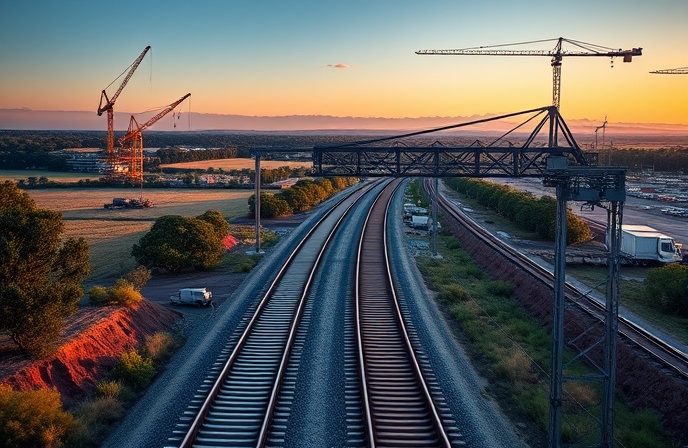
Queensland’s Department of Transport and Main Roads has appointed Jacobs and Arcadis (AJJV) as the independent certifier for the critical Logan and Gold Coast Faster Rail Project. This significant appointment will see AJJV oversee quality assurance and compliance throughout the extensive design and construction phases of the vital rail corridor upgrades aimed at enhancing capacity and reliability between Brisbane and the Gold Coast.
| Key Entity | Critical Detail |
|---|---|
| Lead Organisation | Department of Transport and Main Roads Queensland |
| Appointed Certifier | Jacobs and Arcadis Joint Venture (AJJV) |
| Project | Logan and Gold Coast Faster Rail Project |
| Core Action | Overseeing quality and compliance for rail capacity expansion and service reliability improvements. |
| Key Scope Element | Doubling tracks from two to four along a 20km stretch between Kuraby and Beenleigh. |
The Logan and Gold Coast Faster Rail Project represents a significant investment in Queensland’s public transport infrastructure, with the primary objective of expanding rail capacity and markedly improving service reliability on the busy corridor connecting Brisbane and the Gold Coast. A key component of this ambitious initiative involves the substantial upgrade of a 20-kilometre section of the rail network between Kuraby and Beenleigh. This stretch is currently a bottleneck, forcing trains in both directions to share a single track. The project will address this by doubling the track count to four, a move crucial for alleviating congestion during peak periods, particularly the delays experienced by all-stop Beenleigh services waiting for express trains to pass.
Strategic Impact
The appointment of AJJV as the independent project certifier underscores the strategic importance the Department of Transport and Main Roads places on ensuring the integrity and quality of this transformative project. Their oversight will span the entirety of the design and construction lifecycle, ensuring that the implemented upgrades meet stringent standards for safety, efficiency, and long-term performance. This rigorous approach is vital for delivering a rail line that can support future passenger growth and contribute to a more sustainable and connected South East Queensland.
Operational Details and Community Benefits
The detailed scope of work for the Logan and Gold Coast Faster Rail Project extends beyond track duplication. It includes extensive upgrades to existing tracks, essential structures, and sophisticated rail systems. Additionally, significant improvements are planned for ten stations: Kuraby, Trinder Park, Woodridge, Kingston, Loganlea, Bethania, Edens Landing, Holmview, and Beenleigh. A critical safety and congestion-reduction element is the removal of five hazardous level crossings at Kuraby, Woodridge, Bethania, Holmview, and Beenleigh. The project also prioritises enhanced community connectivity, with improvements to walking and cycling paths leading to stations, alongside adjustments to the local road network. Enabling works for the European Train Control System (ETCS) and the extension of the cattle siding at Holmview are also included, demonstrating a holistic approach to modernising the rail infrastructure.
Last June 2025, we published an article about Renfe’s cutting-edge Aranjuez maintenance hub. Click here to read – Future of Rail: Renfe’s Railway Technology Hub, Aranjuez: Essential Guide
Industry Context
This project is a prime example of the substantial capital investment and strategic planning occurring within the global rail sector to address increasing demand and modernise aging infrastructure. The Logan and Gold Coast Faster Rail Project’s focus on capacity enhancement, service reliability, and integrated transport solutions (including active transport and road network improvements) reflects global trends towards developing multi-modal, efficient, and sustainable urban and regional transit systems. For industry leaders, this development signals ongoing opportunities in signalling, track construction, station development, and system integration, reinforcing the long-term growth trajectory of the rail industry as governments prioritise critical infrastructure upgrades.

Railway infrastructure, rolling stock and transport technologies specialist focused on global rail industry developments, high-speed rail systems, signaling technologies and freight transportation. Covering railway investments, public transport modernization, rail operations and international mobility projects across Europe, Asia and North America.
RELATED POSTS
October 1, 2026 5:14 am
Siemens confirmed delivery of the first new S200 train to...

October 1, 2026 3:12 am
Greenbrier confirmed Brian Comstock as new president and CEO effective...
October 1, 2026 8:12 am
Knorr-Bremse expanded its UK rail adhesion trial on Chiltern Railways...
October 1, 2026 10:14 am
HS2 installed a 55-metre steel span in Birmingham, completing phase...

October 1, 2026 9:10 am
Transpennine Route Upgrade launched a £270,000 fund on 28 September,...
October 1, 2026 11:13 am
Norfolk Southern expanded its 3B Corridor in Alabama in 2025,...