
Indore Yellow Metro Line Inaugurated: India’s Transit Boost
Indore’s Yellow Metro Line: A 6km launch redefines urban transit, boosting efficiency and accessibility with advanced CBTC and Movia trains.
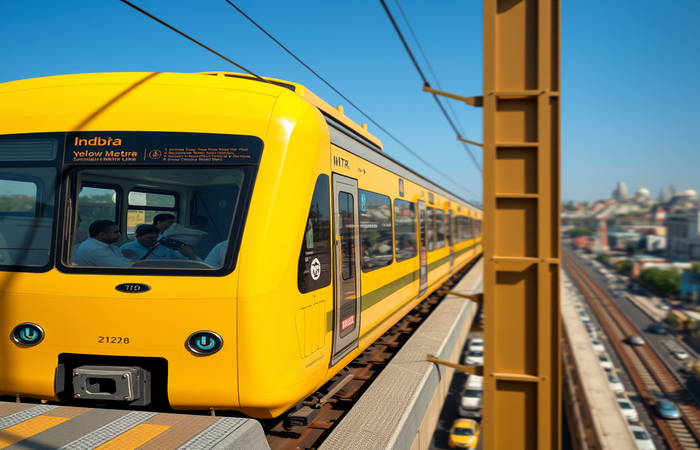
India Inaugurates First Section of Indore Yellow Metro Line
Indore, India – June 1, 2025 marked a significant milestone in India’s urban transportation landscape with the inauguration of the first section of the Indore Yellow Metro Line. This project, spearheaded by Prime Minister Narendra Modi, signifies a concerted effort to modernize infrastructure, alleviate traffic congestion, and enhance the quality of life for the residents of Indore. The initial 6-kilometer stretch, running from Devi Ahilya Bai Holkar Terminal to Veerangana Jhalkari Bai Station, opened for commercial operations, offering a glimpse into the future of public transit in the city. This launch is not just a transport project, but a strategic initiative aimed at fostering economic growth, improving environmental sustainability, and creating a more connected and accessible urban environment for millions.
The Yellow Metro Line is a crucial component of the larger urban development strategy and will directly benefit over six million residents of the city. The project’s comprehensive nature, from rolling stock to signaling systems, is designed to ensure a seamless and efficient commuting experience. The use of advanced technologies, such as CBTC (Communication-Based Train Control) systems, highlights the commitment to safety, reliability, and operational efficiency. This represents a significant advancement in India’s urban infrastructure, setting a precedent for future metro projects nationwide.
A New Era of Urban Mobility
The initial segment of the Indore Yellow Metro Line, which includes five elevated stations, represents a crucial step in enhancing the city’s public transportation network. The implementation of the line is expected to drastically reduce traffic congestion and decrease travel times, enhancing the daily commutes of numerous residents. The introduction of modern, lightweight Movia metro trains, built by Alstom, represents a commitment to providing a comfortable and eco-friendly transportation option. These trains, designed to accommodate both seated and standing passengers, and capable of reaching speeds of up to 80 km/h, mark a notable upgrade in urban travel, ensuring efficiency while simultaneously contributing to reducing emissions and promoting sustainable urban development.
Cutting-Edge Technology and Design
The Indore Yellow Metro Line incorporates state-of-the-art technology to guarantee safety, efficiency, and user comfort. The Alstom-built Movia metro trains are equipped with advanced CBTC signalling systems, ensuring safe and reliable operations. The trains also feature a sophisticated TCMS (Train Control and Management System), which enables the automated track inspection and rapid data transmission. To ensure safety and security, the system incorporates continuous CCTV surveillance and a direct communication link between passengers, train operators, and the central control center for emergency scenarios. Moreover, intelligent CCTV features, like unattended object detection and empty train detection, enhance passenger safety. The trains also provide dedicated wheelchair spaces to improve accessibility for passengers with disabilities.
The Scope of the Project and Future Expansion
The Indore Yellow Metro Line is designed to span a total of 31.5 km, connecting Devi Ahilya Bai Holkar Terminal to the airport and comprising 29 stations upon completion. The overall project is valued at an estimated USD 1.4 billion, demonstrating a significant investment in urban infrastructure. This initiative represents the government’s commitment to improving urban transportation. In addition to the construction of the Yellow Metro Line, there are plans for the establishment of five additional metro corridors, which will collectively cover a distance of 124 km.
Conclusion: Paving the Way for Modern Urban Transit
The inauguration of the Indore Yellow Metro Line’s first section marks a pivotal moment in India’s journey towards modern urban transit. This project, a testament to technological innovation and strategic urban planning, is designed to redefine the commuting experience for millions of residents. The deployment of Alstom’s advanced Movia metro trains, coupled with cutting-edge CBTC signalling and comprehensive maintenance services, promises reliability, safety, and operational efficiency. The focus on passenger comfort and accessibility, with features like dedicated wheelchair spaces and direct communication channels, underscores the project’s commitment to inclusivity and user-centric design.
The Indore Yellow Metro Line is poised to reduce traffic congestion, minimize pollution, and drive economic growth by providing a more efficient and sustainable transportation solution. The project’s success will likely inspire similar initiatives across India, paving the way for a nationwide transformation of urban transit. The use of locally manufactured trains, and the long-term maintenance contracts offered by companies such as Alstom, also contribute to economic growth and job creation in India. As the remaining phases of the Indore Metro project are completed, the city’s residents can look forward to a more interconnected and accessible urban environment, setting a new standard for urban development in the region.
Summary of Key Companies Involved:
- Alstom: A global leader in rail transport solutions. Alstom was responsible for the design, manufacture, supply, installation, testing, and commissioning of the Movia metro trainsets, as well as the CBTC signalling, train control, and telecommunication systems. They are also providing comprehensive maintenance services for these systems.
- Madhya Pradesh Metro Rail Corporation Limited (MPMRCL): The governmental body responsible for overseeing and managing the development and operations of the Indore Metro project.
RELATED POSTS
December 8, 2025 5:01 pm
FRA approves expanded Automated Track Inspection (ATI) testing! This boosts...

November 19, 2017 6:10 am
Revolutionize rail with sustainable propulsion! Fuel cell trains offer...

November 8, 2025 6:54 pm
FAIRTIQ's pay-as-you-go ticketing technology launches in the UK, starting with...
April 29, 2023 2:10 pm
The Expansion of Vande Bharat Train Manufacturing in India: A...
May 18, 2022 4:43 am
Exploring the Potential of Longer Freight Trains in Sweden: A...
December 13, 2022 7:26 am
This article explores the recent commissioning of the new ICE...