
Indonesia’s Rail Revolution: Banyuwangi’s INKA Factory
Indonesia’s rail industry is booming! INKA’s new Banyuwangi rolling stock factory quadruples production, creating jobs and exporting globally. Discover how!
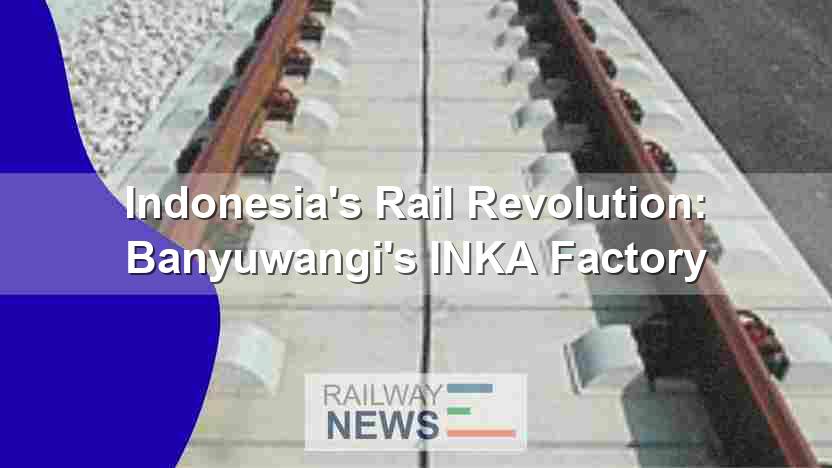
This article explores the significant development of PT Industri Kereta Api Indonesia (INKA)’s new rolling stock manufacturing facility in Banyuwangi, Indonesia. The establishment of this factory represents a major step forward for Indonesia’s railway industry, promising increased domestic production capacity, job creation, and export opportunities. The project, with a substantial investment of IDR 1.6 trillion ($112.41 million USD), signifies a commitment to modernizing Indonesia’s rail infrastructure and establishing the nation as a key player in the global rolling stock market. The strategic location in Banyuwangi, chosen for its port access, further underscores the project’s ambition to not only supply the domestic market but also to become a significant exporter of high-quality rolling stock to international markets. We will explore the project’s technical aspects, its economic implications for Indonesia, and its potential impact on the global railway industry.
Increased Production Capacity and Technological Advancement
The Banyuwangi factory is projected to significantly increase Indonesia’s rolling stock production capacity. With a planned output of four train cars per day, it will quadruple the output of INKA’s existing factory in Madiun. This substantial increase in production will directly address the growing demand for rail infrastructure development within Indonesia, allowing for the expansion of existing networks and the construction of new lines. The collaboration with Stadler Rail Group, a leading Swiss rolling stock manufacturer, ensures the integration of advanced technologies and manufacturing processes, resulting in the production of high-quality, modern rolling stock that meets international standards.
Economic Impact and Job Creation
The construction and operation of the Banyuwangi factory will generate substantial economic benefits for Indonesia. The IDR 1.6 trillion investment will stimulate economic activity in the region, creating numerous jobs during the construction phase and providing employment for approximately 2,000 workers once operational. Additionally, the factory will contribute to the development of a skilled workforce through an open training program in partnership with Banyuwangi Polytechnics. This investment in human capital will have long-term positive effects on the Indonesian economy, fostering a skilled workforce capable of supporting the growth of the railway industry.
Export Opportunities and Market Expansion
INKA’s existing export success in countries like Bangladesh and the Philippines demonstrates its capacity to compete in the global market. The Banyuwangi facility significantly enhances this capacity. The increased production volume, combined with the high quality of rolling stock produced in collaboration with Stadler Rail Group, positions INKA to expand into new markets, including Australia, Taiwan, and Africa. The strategic location of the factory, with its port access, will facilitate efficient and cost-effective export logistics, further enhancing INKA’s global competitiveness.
Strategic Partnerships and Technological Transfer
The partnership with Stadler Rail Group is crucial to the success of this project. It represents not only access to advanced technology and manufacturing expertise but also a valuable opportunity for technology transfer. This collaboration will enable INKA to acquire and develop critical skills and knowledge within the Indonesian workforce, fostering long-term self-sufficiency and growth in the domestic rail industry. The transfer of knowledge and expertise will build capacity within INKA, allowing for future independent development and innovation in rolling stock design and manufacturing.
Conclusions
The establishment of PT Industri Kereta Api Indonesia’s new rolling stock factory in Banyuwangi marks a pivotal moment for Indonesia’s railway sector. The project’s scale, technological advancements, and strategic partnerships demonstrate a significant commitment to modernizing the nation’s rail infrastructure. The projected increase in production capacity will not only satisfy the growing domestic demand but also propel Indonesia into a prominent position in the global rolling stock market. The significant job creation and economic stimulus associated with the project will contribute significantly to Indonesia’s economic development. Additionally, the strategic partnership with Stadler Rail Group represents a crucial step in technology transfer and skill development, securing the long-term sustainability and growth of the Indonesian railway industry. The initiative showcases a clear vision of national development, prioritizing infrastructure investment, economic growth, and technological advancement, setting the stage for Indonesia to become a major player in the international rail industry.

Railway infrastructure, rolling stock and transport technologies specialist focused on global rail industry developments, high-speed rail systems, signaling technologies and freight transportation. Covering railway investments, public transport modernization, rail operations and international mobility projects across Europe, Asia and North America.
BENZER KONULAR
July 4, 2026 11:41 pm
Eurostar cancelled all direct London–Amsterdam trains through July 2 after...
July 1, 2026 1:37 pm
NRHS awarded $187K to 34 U.S. rail heritage projects in...
July 1, 2026 1:42 am
UK government launched a £30bn Better Connected plan, allocating £15.6bn...
July 1, 2026 6:37 am
Amtrak launched a small-plate dining program for Acela First Class...
July 1, 2026 8:49 am
The Short Line Training Center launched FRA-funded online DSLE and...

July 4, 2026 11:02 pm
Eurostar suspends all direct London–Dutch trains through 2 July after...