
India’s Train 18: High-Speed Rail Revolution
India’s Train 18: A revolutionary engineless marvel, boosting speed, efficiency, and passenger comfort. Discover how!
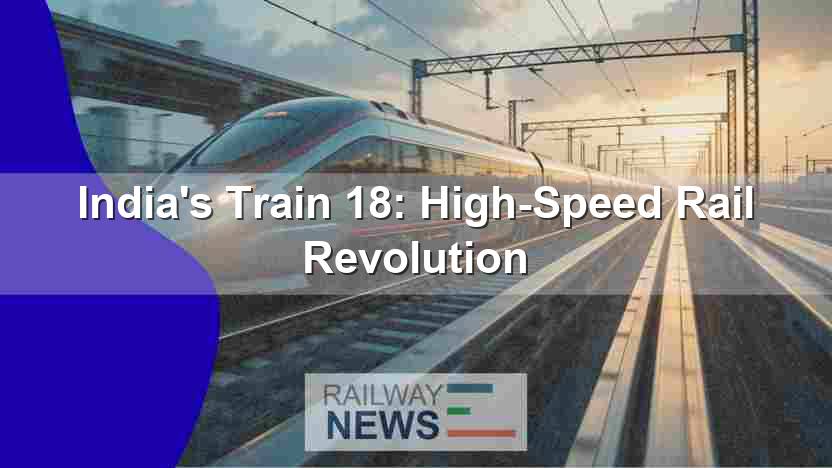
This article explores the development and upcoming trials of Train 18 (T18), India’s first indigenously developed engineless train. This represents a significant advancement in India’s railway technology, signifying a shift towards modern, high-speed, and energy-efficient rail travel. The project, undertaken as part of the “Make in India” initiative, highlights the country’s commitment to self-reliance in manufacturing and technological innovation within the rail sector. The successful development and implementation of T18 will not only improve passenger comfort and travel times but also serve as a catalyst for further advancements in the design and manufacture of advanced rail systems across the nation. We will delve into the technological aspects of the train, the manufacturing process, its projected impact on the Indian railway network, and the challenges and opportunities presented by this ambitious project.
Technological Innovations in Train 18
Train 18’s design incorporates several cutting-edge technologies. As a distributed power train (a train with multiple motor carriages instead of a single locomotive), it eliminates the need for a separate engine, leading to improved acceleration, braking, and overall efficiency. The train’s distributed traction system allows for faster acceleration and deceleration, significantly reducing travel times. The self-propelled design contributes to energy efficiency, estimated to be 15-20% higher compared to conventional trains. Advanced features such as automatic doors with retractable steps, onboard Wi-Fi, infotainment units, a GPS-based passenger information system, and CCTV cameras for enhanced passenger safety and security demonstrate a focus on passenger comfort and experience. The use of diffused lighting further enhances the overall ambiance and passenger comfort within the train’s carriages.
Manufacturing and the “Make in India” Initiative
The manufacturing of Train 18 at the Integral Coach Factory (ICF) in Chennai within a remarkably short span of 18 months is a testament to the expertise and capabilities of Indian engineers and technicians. This achievement underscores the success of the “Make in India” initiative, which aims to boost domestic manufacturing and reduce reliance on foreign technologies. The project involved an investment of Rs 1 billion ($14 million), demonstrating the commitment to investing in indigenous technological development. The successful completion of this project provides a strong foundation for future development and manufacturing of similar advanced railway systems within India.
Impact on the Indian Railway Network
Train 18 is designed to replace India’s aging Shatabdi Express fleet, which has been in operation for over three decades. The train’s ability to travel at speeds up to 160 km/h (approximately 99 mph) is projected to reduce travel times by around 15%, significantly enhancing connectivity and efficiency across the network. The increased passenger capacity (1128 passengers across 16 coaches) will help accommodate growing passenger demand. The improved energy efficiency also translates to cost savings in the long run for the Indian Railways. The successful deployment of T18 could serve as a template for the modernization and upgrading of other intercity passenger routes, further improving the overall efficiency and quality of the Indian railway network.
Challenges and Future Prospects
While Train 18 represents a significant achievement, challenges remain. Scaling up production to meet the demands of the extensive Indian railway network requires careful planning and investment. Ensuring the long-term maintenance and upkeep of these sophisticated trains is crucial for maintaining their operational efficiency and reliability. The cost-effectiveness of widespread adoption will need to be closely monitored and adjusted accordingly. Despite these challenges, Train 18’s success opens up numerous opportunities. It showcases India’s potential to design and manufacture world-class railway systems, attracting further investment and fostering innovation within the sector. It also paves the way for the development of even more advanced and high-speed rail technologies in the future.
Conclusion
The development and upcoming trials of Train 18 mark a significant milestone for India’s railway system. This indigenous engineless train, manufactured under the “Make in India” initiative, showcases the country’s growing technological prowess and commitment to modernizing its infrastructure. The incorporation of advanced technologies like distributed traction, automatic doors, onboard Wi-Fi, and CCTV cameras demonstrates a focus on both efficiency and passenger experience. The projected speed increase and enhanced capacity will significantly improve intercity travel within India. While challenges regarding scaling up production and long-term maintenance exist, the potential benefits of widespread adoption are substantial. The success of Train 18 not only upgrades India’s railway network but also positions the country as a leader in the design and manufacture of advanced rail technologies, attracting further investment and driving technological innovation within the rail sector and beyond. This project serves as a powerful example of how a nation can leverage indigenous talent and resources to achieve remarkable advancements in transportation technology.

Railway infrastructure, rolling stock and transport technologies specialist focused on global rail industry developments, high-speed rail systems, signaling technologies and freight transportation. Covering railway investments, public transport modernization, rail operations and international mobility projects across Europe, Asia and North America.
RELATED POSTS

October 1, 2026 7:09 am
United States regulators confirmed a September 30 deadline for the...

October 8, 2026 1:15 pm
Alstom secured a €1bn contract to build 13 automated trains,...

October 4, 2026 5:14 pm
Alstom secured a CA$4.7 billion order from VIA Rail Canada...

October 8, 2026 12:18 pm
Siemens Mobility signed an agreement with VinSpeed to supply 350...

October 1, 2026 12:13 am
Illinois approved $1.5 billion annually for the Northern Illinois Transit...

October 6, 2026 2:14 am
Union Pacific launched export rail shipments with Ferromex to deliver...