
India’s Green Rail Revolution: $750M ADB Loan for Electrification
India’s railway electrification gets a $750 million boost! This massive project, funded by the ADB, is modernizing the network and driving sustainable growth. Discover how!
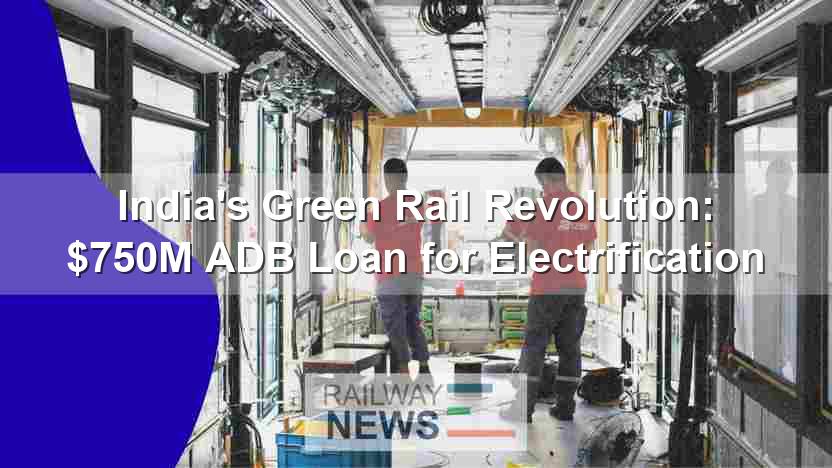
This article examines the significant $750 million loan secured by the Indian Railway Finance Corporation (IRFC) from the Asian Development Bank (ADB) to electrify approximately 3,378 kilometers of existing railway lines in India. This substantial investment represents a crucial step in India’s broader plan to modernize its vast railway network, transitioning from diesel to electric traction for both passenger and freight services. The project underscores the crucial role of public-private partnerships (PPPs) in funding large-scale infrastructure projects and highlights the strategic importance of railway electrification in achieving India’s economic and environmental goals. We will explore the financial mechanisms employed, the project’s impact on India’s railway system, and the broader implications for sustainable transportation infrastructure development.
Funding India’s Green Rail Revolution
The IRFC’s acquisition of a $750 million loan from the ADB represents a substantial commitment to electrifying a significant portion of India’s existing railway network. This financing, crucial for the procurement and installation of electric traction equipment, will facilitate the shift from diesel-powered locomotives to electric ones. The structure of the financing, including risk-sharing agreements with private sector participants, demonstrates a sophisticated approach to leveraging private capital for public infrastructure projects. This innovative model not only reduces the burden on public funds but also introduces crucial expertise and risk management strategies from the private sector, enhancing project efficiency and reducing overall risk.
Strategic Partnerships and Risk Mitigation
The involvement of private risk participants through risk participation agreements is a key aspect of this project’s success. These agreements distribute the financial risks associated with the project among multiple entities, reducing the potential financial burden on the IRFC and ADB. This shared responsibility encourages greater accountability and strengthens the overall financial viability of the initiative. This strategy is particularly significant in large-scale infrastructure projects, where unexpected challenges and cost overruns are common. The participation of the private sector also brings specialized knowledge and expertise in areas such as project management, technology implementation, and risk assessment.
Electrification’s Impact on Indian Railways
The electrification of 3,378 kilometers of railway lines will have a multifaceted impact on India’s railway system. Firstly, it will significantly reduce reliance on fossil fuels, leading to decreased greenhouse gas emissions and improved air quality along railway corridors. Secondly, electric traction is generally more cost-effective than diesel in the long run, due to lower operating costs and reduced fuel dependency. Thirdly, the enhanced efficiency and reliability of electric trains will improve both passenger and freight transportation, leading to improved punctuality, increased carrying capacity, and reduced congestion. The project also aligns with India’s broader commitment to sustainable development and aligns with global efforts to combat climate change.
Modernizing India’s Rail Infrastructure: A Broader Perspective
This electrification project is not an isolated event but rather an integral part of a larger, ambitious modernization plan for Indian Railways. The Indian government’s five-year, $132 billion capital expenditure program encompasses various initiatives, including network expansion, safety improvements, station redevelopment, and rolling stock procurement. This detailed approach underlines the government’s commitment to enhancing the efficiency, safety, and capacity of its railway system. The electrification project contributes directly to this overarching goal, transforming the railway network into a more sustainable and efficient transportation backbone for the nation.
Conclusion
The $750 million loan secured by IRFC from ADB marks a pivotal moment in the modernization of India’s railway infrastructure. This substantial investment in railway electrification, facilitated by a smart blend of public and private funding and risk-sharing mechanisms, is not merely about upgrading technology; it’s about shaping a sustainable and efficient transportation future for India. The project’s success hinges on effective project management, diligent oversight of the risk participation agreements, and seamless integration with broader modernization efforts. The successful implementation of this project will not only significantly improve the efficiency and environmental performance of Indian Railways but will also serve as a model for other large-scale infrastructure projects globally, showcasing the potential of innovative public-private partnerships in financing and delivering critical infrastructure upgrades. The reduction in reliance on fossil fuels, the increased efficiency of electric traction, and the improved overall performance of the railway system will contribute significantly to India’s economic growth and environmental sustainability goals. The project’s success will be a testament to the power of strategic partnerships, meticulous planning, and the commitment to a greener, more efficient transportation future.

Railway infrastructure, rolling stock and transport technologies specialist focused on global rail industry developments, high-speed rail systems, signaling technologies and freight transportation. Covering railway investments, public transport modernization, rail operations and international mobility projects across Europe, Asia and North America.
RELATED POSTS

October 1, 2026 7:09 am
United States regulators confirmed a September 30 deadline for the...

October 1, 2026 12:13 am
Illinois approved $1.5 billion annually for the Northern Illinois Transit...

October 4, 2026 5:14 pm
Alstom secured a CA$4.7 billion order from VIA Rail Canada...

October 1, 2026 6:10 am
Amtrak approved a System Expansion Committee on July 30 to...
October 1, 2026 3:12 am
Greenbrier confirmed Brian Comstock as new president and CEO effective...

October 6, 2026 2:14 am
Union Pacific launched export rail shipments with Ferromex to deliver...