
India’s DFCs: Boosting Rail Freight & Infrastructure Growth
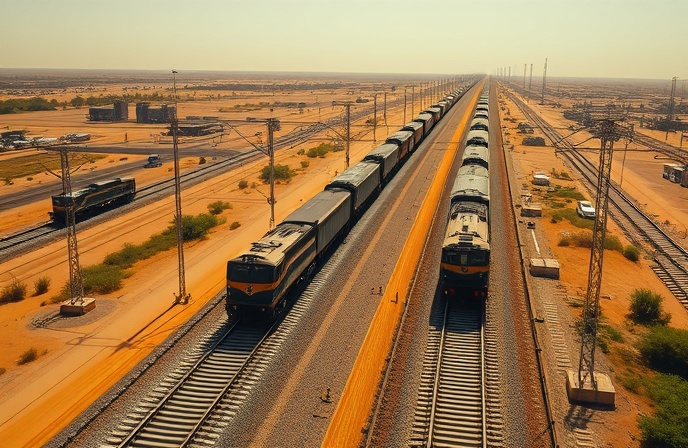
India’s **Dedicated Freight Corridors** propel record-breaking rail freight, reaching 1.6 billion tonnes. These high-speed **rail** lines are enhancing efficiency and driving economic growth.
“`html
Introduction
India’s rail freight operations reached 1.6 billion metric tonnes during the 2024–25 financial year, making it the second-largest rail freight carrier globally. This achievement is largely due to the development of Dedicated Freight Corridors (DFCs), which now span over 2,800 km and are nearing completion.
DFCs: Operational Overview
The DFC network currently facilitates between 300 and 325 freight trains daily. As of August 2025, approximately 2,741 km of the network were operational. Full completion of the project is anticipated by the end of the year.
Operational Efficiency and Speed
Freight trains on the DFCs operate at an average speed of 50–60 km/h. This is a significant increase compared to the 20–25 km/h typically seen on conventional mixed-use lines. This enhanced efficiency has led to a modal shift from road to rail, especially for bulk and time-sensitive commodities.
Volume Growth and Impact
Between 2019 and 2025, Indian Railways’ freight volumes increased from 1.22 to 1.61 billion tonnes. The DFCs currently handle over 10 per cent of the nation’s total freight. This has helped reduce congestion on passenger routes and enhance supply chain reliability.
Economic and Environmental Benefits
The DFCs are fostering economic development in underdeveloped regions by establishing logistics hubs and industrial clusters. Their fully electrified infrastructure supports India’s decarbonisation efforts and its target of achieving net zero emissions by 2070.
Last June 2025, we published an article about Renfe’s Aranjuez maintenance hub. Click here to read – Future of Rail: Renfe’s Railway Technology Hub, Aranjuez: Essential Guide
Conclusion
India’s Dedicated Freight Corridors have significantly enhanced freight transport capacity and efficiency, contributing to substantial growth in rail freight volumes. The expansion of this network continues to drive economic development and supports environmental sustainability goals.
Indian Railways
Indian Railways saw freight volumes grow from 1.22 to 1.61 billion tonnes between 2019 and 2025. It is the second-largest rail freight carrier in the world by volume, transporting 1.6 billion metric tonnes of goods in the 2024–25 financial year.
Dedicated Freight Corridors (DFCs)
The DFCs are high-capacity, fully electrified lines designed exclusively for freight. The DFC network now covers over 2,800 km, comprising two main routes. Freight trains on the DFC operate at average speeds of 50–60 km/h. As of August 2025, approximately 2,741 km of the DFC network were operational.
“`
RELATED POSTS

September 15, 2019 10:16 am
This article examines the significant railway expansion project undertaken by...

February 15, 2017 3:00 am
China Railway Construction’s consortium says it has signed a $1.85...

February 8, 2011 8:18 am
The Saudi Railways Organisation has awarded projects worth $2.4bn to...

October 28, 2025 5:54 pm
Union Pacific and Norfolk Southern launch a new **intermodal service**,...
February 19, 2020 4:06 pm
The Rail Baltica Project: A Focus on the Pärnu-Estonian/Latvian Border...
February 20, 2025 4:29 am
The construction of Curzon Street Station, a pivotal component of...