
i-RAMP: AI Predictive Maintenance for Rail
Revolutionize rail maintenance with i-RAMP’s predictive power! AI-driven insights prevent costly failures, boosting efficiency and passenger satisfaction.
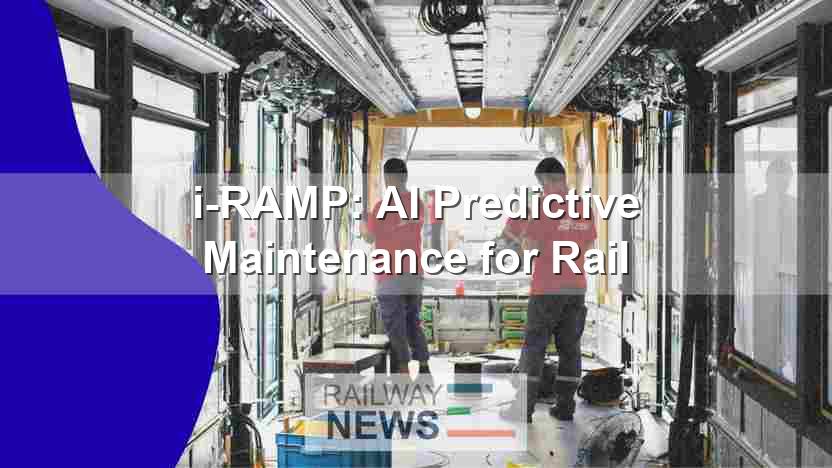
The increasing demand for reliable and efficient railway systems necessitates innovative solutions for predictive maintenance. This article explores the development and implementation of a cutting-edge technology, the i-RAMP (IoT-enabled Platform for Rail Assets Monitoring and Predictive Maintenance) system, designed to revolutionize rail infrastructure maintenance. Developed by Enable My Team (EMT), in collaboration with the University of the West of England (UWE Bristol) and Costain, this system leverages the Internet of Things (IoT), augmented reality (AR), and artificial intelligence (AI) to predict and prevent failures in railway tracks, signaling equipment, and other critical assets. The focus will be on the technological underpinnings of i-RAMP, its implementation at London Bridge Station, and the potential impact on railway operations and passenger experience. The system’s ability to analyze vast amounts of sensor data to anticipate potential problems before they lead to service disruptions will be a primary focus, examining its efficacy and future implications for the industry.
The i-RAMP System: A Technological Overview
The core of the i-RAMP system lies in its network of strategically deployed IoT sensors across the railway infrastructure. These sensors continuously monitor various parameters, including temperature, humidity, pressure on critical components, and vibration levels. This data is transmitted in real-time to the central i-RAMP platform. The platform, utilizing sophisticated algorithms and AI-powered predictive analytics, analyzes this data to identify patterns and anomalies that might indicate impending failures. Crucially, this data is not simply displayed as raw figures; instead, it is integrated into a 3D virtual model of the railway infrastructure, allowing engineers to visualize potential problems within a realistic context using augmented reality (AR) via smartphones or Head Mounted Displays (HMDs). This allows for quicker identification of problem areas and facilitates more effective repair strategies.
Implementation at London Bridge Station
London Bridge Station served as the initial pilot site for i-RAMP deployment. The selection of this busy station, with its complex infrastructure and high passenger volume, provided a rigorous testing ground for the system’s capabilities. The installation and commissioning of the IoT sensor network and the subsequent integration with the i-RAMP platform marked a significant milestone. The data collected during this phase provided valuable insights into the system’s performance under real-world conditions. The ability to monitor a complex network of assets in real time provided a unique opportunity to validate the AI algorithms that power the predictive maintenance capabilities of i-RAMP.
Predictive Capabilities and Maintenance Optimization
The predictive capabilities of i-RAMP extend beyond simple fault detection. By analyzing historical data and real-time sensor readings, the system can anticipate potential problems, such as vegetation overgrowth impacting tracks, structural damage to components, or impending signaling equipment failures. This proactive approach to maintenance allows for timely interventions, preventing potentially costly and disruptive failures. This translates to increased operational efficiency and reduced downtime, enhancing both passenger satisfaction and railway profitability. The use of machine learning within the system ensures that its predictive accuracy improves over time, refining its ability to pinpoint potential issues.
Future Implications and Scalability
The successful implementation of i-RAMP at London Bridge Station and subsequent trials with other customers demonstrate its potential for widespread adoption across the UK rail network and beyond. The system’s scalability is a key advantage; its modular design allows for easy integration into existing infrastructure and expansion to accommodate increasingly complex railway systems. The ability to provide real-time insights into the health of railway assets, combined with its capacity for proactive maintenance, offers significant advantages in terms of cost savings, safety, and improved passenger experience. The potential reduction in train delays and smoother operations could benefit millions of passengers annually.
Conclusions
The i-RAMP system represents a significant advancement in railway infrastructure maintenance. By seamlessly integrating IoT sensors, AI-powered predictive analytics, and augmented reality visualization, it offers a detailed solution for proactive maintenance and the prevention of costly and disruptive failures. The successful pilot at London Bridge Station has validated its effectiveness in a high-pressure environment. The data-driven approach, the real-time monitoring of railway assets, and the predictive capabilities of the system contribute to increased operational efficiency, enhanced safety, and improved passenger satisfaction. The potential for scalability and the anticipated reduction in train delays make i-RAMP a crucial tool for modernizing railway operations and improving service reliability. The ability to forecast issues such as vegetation overgrowth, structural damage, and signaling equipment failure before they impact services will significantly contribute to the smooth and dependable running of the railway network. Its successful roll-out promises substantial benefits for both railway operators and passengers alike. The adoption of such sophisticated predictive maintenance technology is crucial for the continued improvement and modernization of railway systems worldwide.

Railway infrastructure, rolling stock and transport technologies specialist focused on global rail industry developments, high-speed rail systems, signaling technologies and freight transportation. Covering railway investments, public transport modernization, rail operations and international mobility projects across Europe, Asia and North America.
RELATED POSTS

October 8, 2026 1:15 pm
Alstom secured a €1bn contract to build 13 automated trains,...

October 1, 2026 7:09 am
United States regulators confirmed a September 30 deadline for the...

October 8, 2026 12:18 pm
Siemens Mobility signed an agreement with VinSpeed to supply 350...

October 4, 2026 5:14 pm
Alstom secured a CA$4.7 billion order from VIA Rail Canada...

October 5, 2026 6:12 pm
AECOM and Jacobs secured a contract in September 2026 to...

October 1, 2026 12:13 am
Illinois approved $1.5 billion annually for the Northern Illinois Transit...