
HS1 High-Speed Rail Project: London, UK
HS1 high-speed rail line, connecting London to the Channel Tunnel, dramatically reduced travel times to Europe, boosting UK connectivity.

High Speed 1 Network Project – Railway Technology
This article explores the High Speed 1 (HS1) project, a significant undertaking in British railway history. The project aimed to dramatically reduce travel times between London and continental Europe, enhancing connectivity and boosting economic activity. This involved not only constructing a new high-speed rail line but also redeveloping St Pancras International station to become the London terminus for Eurostar services. The project’s success hinged on careful planning, innovative engineering solutions, and substantial investment. We will delve into the key aspects of HS1’s development, including its construction phases, the integration with existing infrastructure, the technological advancements in rolling stock and signaling, and finally, the project’s impact on the UK’s railway network and its implications for future high-speed rail development in the country. The ultimate goal is to analyze the project’s achievements and challenges, offering insights into the planning, execution, and long-term effects of major rail infrastructure projects.
Construction and Infrastructure
HS1, originally known as the Channel Tunnel Rail Link (CTRL), was conceived as a single project but was later divided into two phases due to financial difficulties. The first phase, completed in September 2003, encompassed a 72km stretch from Folkestone (Channel Tunnel) to Fawkham Junction, including notable structures like the Medway Viaduct (¾ mile long) and the North Downs Tunnel (2 miles long, 40ft diameter). The second phase, extending from Ebbsfleet to London St Pancras, involved a complex undertaking, including a 2.5km tunnel under the Thames and a 20km tunnel incorporating a 1km trench section for Stratford International station and a new maintenance facility at Temple Mills. This meticulous construction process ultimately connected the British high-speed rail network to the European high-speed lines, enabling trains to travel at speeds up to 300 km/h. The project also involved the extensive redevelopment of St Pancras International station, providing improved connections to the London Underground network.
Rolling Stock and Technological Advancements
The Eurostar Class 373 trains, constructed by GEC-Alsthom, represent a significant technological feat. These 400m long, 800t trains, capable of carrying 750 passengers, are modified TGV sets. The engineering challenge lay in adapting these trains for operation in the UK and mainland Europe, requiring them to operate under three different voltages (750V DC, 25kV 50Hz, 3kV DC) and three different overhead catenary systems. The trains also had to accommodate four different signalling systems, including TVM (Train à Grande Vitesse – high-speed train) signalling on the LGV (Ligne à Grande Vitesse – high-speed line). The incorporation of three separate braking systems—regenerative braking, disk brakes, and wheel brakes—underscores the complexity of ensuring safe and efficient operation at high speeds.
Operational Integration and Economic Impact
HS1’s completion led to significant improvements in journey times. Travel from London to Paris was reduced to 2 hours 15 minutes, London to Brussels to 1 hour 51 minutes, and London to Lille to 1 hour 20 minutes. This boosted the competitiveness of rail travel against air travel, particularly for passengers from outside London. The relocation of the Eurostar terminus from Waterloo to St Pancras International station provided superior connectivity to the London Underground network and other major rail lines. This enhanced accessibility for a wider range of passengers. While some smaller stations lost some services, the overall impact on passenger numbers was positive and contributed to the increased profitability and usage of HS1.
Future High-Speed Rail Developments
The success of HS1 spurred further discussions and planning for domestic high-speed rail lines in the UK. Network Rail launched a strategic review, leading to plans for High Speed 2 (HS2), a proposed network connecting London to Birmingham, Manchester, and Leeds. While HS2 has faced various challenges and delays, its existence testifies to the impact HS1 had in demonstrating the feasibility and benefits of expanding high-speed rail infrastructure within the UK. The experience gained from HS1’s planning, construction, and operation is vital in shaping future domestic high-speed rail developments, informing decisions regarding route selection, technological choices, and the integration of these new lines into the existing rail network.
Conclusion
The High Speed 1 project stands as a landmark achievement in British railway engineering. Its completion successfully linked the UK to the continental European high-speed rail network, significantly reducing travel times and improving connectivity. The project highlights the complex interplay of engineering, logistical, and financial challenges involved in such large-scale infrastructure projects. The redevelopment of St Pancras International and the introduction of advanced rolling stock demonstrate the innovative technological solutions required to achieve high-speed rail capabilities. While the project faced opposition in certain areas and economic hurdles along the way, its overall success has spurred renewed interest in developing high-speed rail networks within the UK. The lessons learned from HS1’s successes and challenges will undoubtedly inform the planning and execution of future projects, including the ambitious High Speed 2 initiative. The lasting impact of HS1 lies not only in the infrastructure it created but also in its role as a catalyst for the continued development of high-speed rail in the UK, transforming travel patterns and boosting the nation’s connectivity for the long-term.
| Project Attribute | Details |
|---|---|
| Project Name | High Speed 1 (HS1) / Channel Tunnel Rail Link (CTRL) |
| Project Type | High-Speed Rail Line |
| Total Length | 108 km (67 miles) |
| Connection | London St Pancras to Channel Tunnel |
| Number of Stations | Several, including St Pancras International, Ebbsfleet International, Ashford International etc. |
| Project Cost | £5.8 billion (St Pancras redevelopment: £800 million) |
| Train Speed | Up to 300 km/h (186 mph) |
| Main Contractor | Various, including GEC-Alsthom (rolling stock) |
Company Information:
- Network Rail: The UK’s publicly owned company responsible for managing, operating, and maintaining most of the country’s railway infrastructure.
- London and Continental Railways (LCR): A company formerly responsible for building and owning the Channel Tunnel Rail Link. Its role has evolved over time.
- Eurostar: A high-speed passenger rail service connecting London, Paris, and Brussels.
- DB Schenker Rail (UK) Ltd: A subsidiary of DB Schenker, a global logistics company, providing rail freight services.
- GEC-Alsthom (now part of Alstom): A major multinational company involved in the design and manufacture of railway equipment, including the Eurostar Class 373 trains.
- SNCF (Société Nationale des Chemins de fer Français): The national railway company of France.
RELATED POSTS
October 21, 2017 8:44 am
Urban rail is evolving! Optimize infrastructure, leverage tech, and...
October 24, 2021 9:07 pm
Singapore's Downtown Line Stage 2 (DTL2) railway project, completed in...
January 14, 2022 4:53 am
Serbia's Nis-Dimitrovgrad railway line undergoes major rehabilitation, boosting speed and...
June 29, 2021 1:29 am
Moscow's new Vostochny Railway Station eases congestion, improves connectivity, and...
September 11, 2024 9:06 am
Bologna's new tram network, a €500 million railway project, ...
May 3, 2025 6:37 am
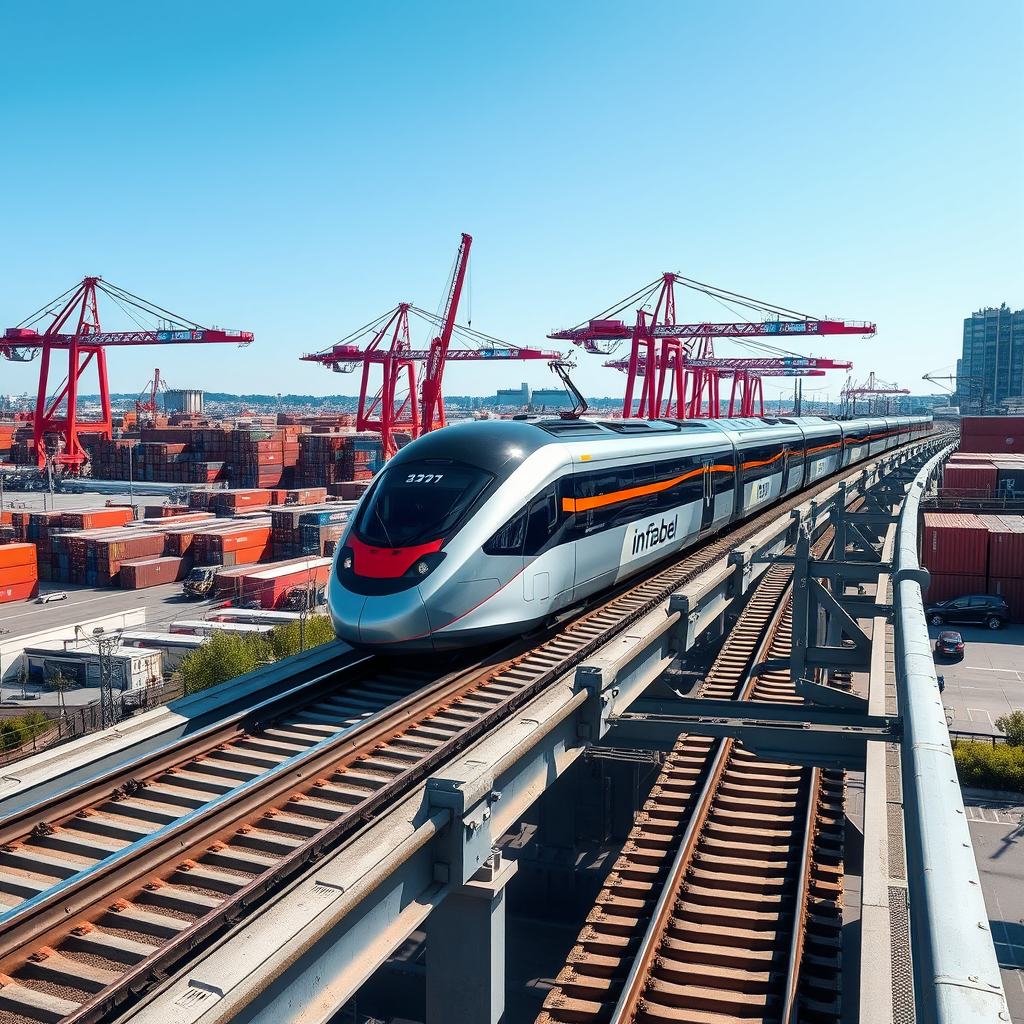
This article analyzes Infrabel’s (the Belgian rail infrastructure manager) ambitious...