
Hong Kong MTR’s iSPS: Revolutionizing Rail Safety
Revolutionize rail safety with the MTR’s iSPS! This integrated speed and position system uses GPS and RFID for real-time monitoring and alerts, boosting efficiency and safety.
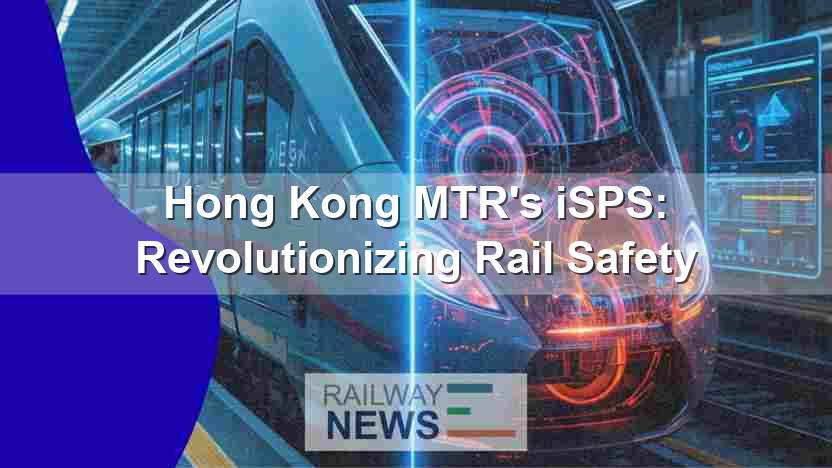
This article explores the innovative Integrated Speed and Position Supervision System (iSPS) implemented by the Hong Kong Mass Transit Railway (MTR) Corporation. The iSPS represents a significant advancement in light rail (LR) safety and operational efficiency. The system, developed in-house by MTR engineers, addresses the unique challenges of operating light rail vehicles (LRVs) in shared-use environments, such as those found in the Tin Shui Wai, Tuen Mun, and Yuen Long districts, where LRVs share tracks with other road users. This necessitates a robust system capable of providing real-time monitoring and alerts, enhancing both safety and the responsiveness of train crews. The article explores the technological underpinnings of iSPS, its operational mechanisms, its potential for broader application within the MTR network, and the overall impact on enhancing railway safety and operational efficiency. The focus will be on the technical aspects and the strategic importance of this innovative system for the future of railway operations in Hong Kong and beyond.
Technological Foundations of the iSPS
The iSPS leverages a sophisticated integration of several technologies to achieve its real-time monitoring capabilities. At its core, the system combines the accuracy of the Global Positioning System (GPS) with the precise identification capabilities of Radio Frequency Identification (RFID). GPS receivers installed on each LRV provide continuous location data, while RFID tags embedded in the track infrastructure provide precise positional referencing, allowing for pinpoint accuracy in determining the LRV’s location on the network. This data is then transmitted via a mobile communications network to a central control center, providing operators with a continuous, real-time overview of the entire light rail network. The integration of GPS and RFID ensures both precise location tracking and unambiguous identification of the LRV’s position within the rail network.
Real-time Monitoring and Alerting
The real-time data stream from the iSPS allows for immediate intervention should an LRV exceed speed limits. The system continuously monitors the speed of each LRV against pre-defined speed limits for each section of track. If an LRV approaches or exceeds the limit for a given section, the system automatically issues an audible warning to the train captain, promoting immediate corrective action. This immediate feedback loop is critical for enhancing safety and minimizing the risk of accidents. Additionally, the iSPS isn’t solely focused on speed monitoring; it also provides the capacity for issuing various other notifications to train captains, including platform duty reminders and alerts during maneuvers through complex junctions and turnouts.
Operational Efficiency and Enhanced Safety
The benefits of the iSPS extend beyond simple speed monitoring. By providing real-time location data and proactive alerting, the system contributes significantly to improved operational efficiency. Precise location information enables better scheduling, optimizing the flow of LRVs and reducing delays. The proactive alerts for platform duty and junction navigation enhance the situational awareness of train captains, thereby reducing the potential for human error. Moreover, the data collected by the iSPS can be used for system-wide performance analysis, identifying areas for further optimization and improvement in the future. The enhanced safety is paramount, considering the shared-use nature of the tracks, protecting both passengers and other road users.
Future Implementation and Wider Applications
Following successful trials in the Tin Shui Wai area, the MTR plans a phased rollout of the iSPS across its entire light rail network, beginning in the second quarter of the following year. The proven success of the system in enhancing safety and efficiency suggests that it could serve as a model for other light rail and even heavy rail systems worldwide. The adaptable nature of the system, using readily available technologies, makes it potentially cost-effective and easy to implement in various railway environments. Future developments could potentially include integration with other onboard systems and enhanced data analytics capabilities to further refine safety protocols and optimize railway operations. The potential for integrating this with predictive maintenance and other operational systems for a more holistic approach is extremely promising.
Conclusions
The Hong Kong MTR’s Integrated Speed and Position Supervision System (iSPS) represents a significant technological advancement in railway safety and operational efficiency. By seamlessly integrating GPS and RFID technologies, the iSPS provides real-time monitoring of light rail vehicles (LRVs), allowing for immediate intervention should an LRV exceed speed limits or require other operational notifications. The system’s impact extends beyond immediate safety concerns; by providing real-time location data and automated alerts, it enhances operational efficiency, reduces delays, and improves the situational awareness of train captains. The successful trials in Tin Shui Wai demonstrate the system’s efficacy in a shared-use environment, highlighting its potential for wider adoption within the MTR network and other railway systems globally. The successful integration of GPS and RFID technology alongside the use of mobile communication networks, allows for near real-time data transfer and analysis, leading to improved safety protocols and operational efficiency. The adaptability of the system and its potential for future expansion, including integration with predictive maintenance systems, further emphasizes its importance as a vital tool for enhancing both the safety and efficiency of railway operations. The MTR’s proactive approach to technological innovation serves as an exemplary model for the railway industry, demonstrating a strong commitment to safety and the continuous improvement of rail operations.

Railway infrastructure, rolling stock and transport technologies specialist focused on global rail industry developments, high-speed rail systems, signaling technologies and freight transportation. Covering railway investments, public transport modernization, rail operations and international mobility projects across Europe, Asia and North America.
RELATED POSTS
September 6, 2026 5:19 am
Hitachi delivered Taiwan's first N700ST high-speed train from Japan in...

September 5, 2026 4:19 pm
CPK launched formal tender talks with four consortia to design...
September 6, 2026 1:17 am
Hitachi Toshiba Supreme Consortium confirmed the first of 12 N700ST...
September 6, 2026 6:17 am
Hungary ordered a national ban on most freight trains from...
September 7, 2026 8:16 am
Midea, Gree and TCL shipped air conditioners via China Railway...
September 6, 2026 12:20 pm
Indian Railways ordered a probe after a fire destroyed 2...