
Hitachi Rail & Google Cloud Partner to Advance Autonomous Rail with AI
Hitachi Rail partners with Google Cloud, leveraging AI for digital transformation and accelerating the development of autonomous rail systems. Boosted efficiency and cyber resilience.
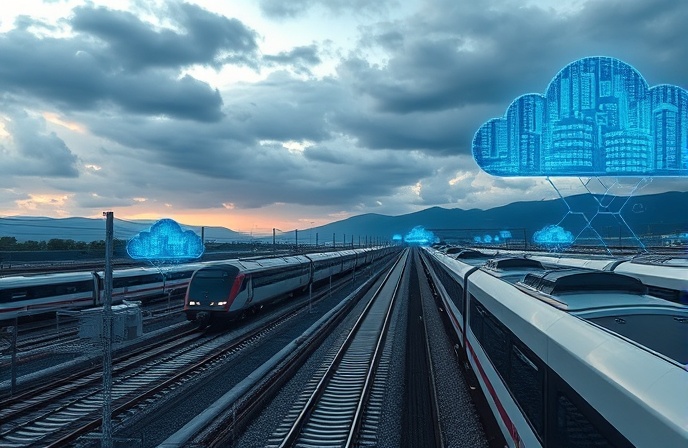
Hitachi Rail is set to revolutionize its global operations and accelerate the development of a fully autonomous rail network through a strategic partnership with Google Cloud. The collaboration will leverage Google’s advanced cybersecurity and artificial intelligence (AI) technologies, including generative AI and agentic AI, to significantly enhance operational efficiency, bolster cyber resilience, and drive progress towards more sustainable and autonomous rail systems.
| Key Entity | Critical Detail |
|---|---|
| Main Company | Hitachi Rail |
| Partner | Google Cloud |
| Core Action | Deployment of Google Cloud’s cybersecurity and AI technologies for digital transformation. |
| Key Technologies | Generative AI, Agentic AI, Vertex AI, Advanced Cybersecurity |
| Strategic Goals | Boost operational efficiency, sustainability, cyber resilience, and autonomous rail development. |
| Date Announced | 3 December 2025 |
This landmark alliance brings together Hitachi Rail’s extensive domain expertise in rail systems with Google Cloud’s cutting-edge AI platforms and cybersecurity solutions. The integration of technologies like Vertex AI aims to enhance productivity across Hitachi Rail’s global operations and accelerate the industry’s transition towards highly efficient, sustainable, and ultimately autonomous rail transport. The partnership also involves GlobalLogic’s digital engineering capabilities, creating a detailed approach to digital transformation.
Strategic Impact and Vision
Giuseppe Marino, Group CEO of Hitachi Rail, emphasized the strategic importance of this collaboration, stating, “Sustainability is the destination – digital is how we’ll get there.” He further elaborated on the ambition to harness Google Cloud’s leadership in digital and AI to develop optimized and energy-efficient solutions for customers, reinforcing rail’s position as a core component of future mobility schemes. This initiative underscores Hitachi Rail’s commitment to digital innovation and its vision for a fully autonomous rail network, achieved through a unified “One Hitachi” approach that integrates GlobalLogic and the Strategic SIB Business Unit.
Operational Enhancement and Cyber Resilience
The partnership is designed to unlock new levels of innovation in operational technology. Andrea Williamson, Director, Retail, Consumer and Travel, Google Cloud UKI, highlighted the synergy, noting, “Hitachi Rail is a pioneer in operational technology, and our collaboration combines that deep domain expertise with the power of Google’s generative AI and agentic technology.” This fusion is expected to yield immediate gains in efficiency for Hitachi Rail’s teams while establishing a robust foundation for the future of autonomous rail. Hitachi Rail plans to deploy both physical AI and cloud-based tools to fortify cyber resilience, fine-tune network performance, and deliver more dependable and environmentally conscious mobility systems.
Last June 2025, we published an article about Renfe’s cutting-edge Aranjuez maintenance hub. Click here to read – Future of Rail: Renfe’s Railway Technology Hub, Aranjuez: Essential Guide
Industry Context
This strategic move by Hitachi Rail signifies a significant leap forward in the railway industry’s digital evolution. By embracing advanced AI and cloud technologies, Hitachi Rail is not only aiming to improve its own operational efficiency and sustainability but is also setting a precedent for the broader industry. CEOs across the transportation and critical infrastructure sectors should view this development as a key indicator of future trends in digitalization, emphasizing the growing importance of AI and robust cybersecurity in achieving operational excellence and meeting ambitious sustainability targets. The successful implementation of such a detailed digital transformation strategy could redefine competitive advantages and accelerate the adoption of smart, autonomous technologies across global transport networks.

Railway infrastructure, rolling stock and transport technologies specialist focused on global rail industry developments, high-speed rail systems, signaling technologies and freight transportation. Covering railway investments, public transport modernization, rail operations and international mobility projects across Europe, Asia and North America.
RELATED POSTS

October 1, 2026 7:09 am
United States regulators confirmed a September 30 deadline for the...

October 8, 2026 1:15 pm
Alstom secured a €1bn contract to build 13 automated trains,...

October 4, 2026 5:14 pm
Alstom secured a CA$4.7 billion order from VIA Rail Canada...

October 1, 2026 12:13 am
Illinois approved $1.5 billion annually for the Northern Illinois Transit...

October 6, 2026 2:14 am
Union Pacific launched export rail shipments with Ferromex to deliver...

October 1, 2026 6:10 am
Amtrak approved a System Expansion Committee on July 30 to...