
High-Speed Rail Future: Trends, Tech & Thailand-China Project
Here are a few options for a voiceover-friendly excerpt for railway professionals:
**Option 1 (Focus on Impact):**
> High-speed rail is revolutionizing global transportation. Learn how this technology drives economic growth and champions sustainability for a brighter future.
**Option 2 (Focus on Engineering):**
> From track design to advanced signaling, high-speed rail represents incredible engineering achievements. Dive into the intricacies of tomorrow’s railway.
**Option 3 (Focus on the Future):**
> High-speed rail is constantly evolving. Discover how innovations will shape the future of the industry and create a more connected world.
**Option 4 (More Concise):**
> High-speed rail is transforming transportation. Join us as we explore the engineering and economic advancements driving this evolution.

The Rise of High-Speed Rail: A Global Transformation
High-speed rail (HSR) has revolutionized the way we travel, connect, and conduct business. This innovative mode of transportation, characterized by its speed, efficiency, and environmental benefits, has reshaped transportation landscapes worldwide. From its origins in Japan to its widespread adoption across Europe and Asia, HSR continues to evolve, driven by technological advancements and a growing demand for sustainable travel solutions. This article delves into the various facets of high-speed rail, exploring its impact on infrastructure development, economic growth, and societal changes. We will examine the engineering marvels that underpin these systems, analyze the economic and environmental implications, and consider the future trajectory of HSR in a rapidly changing world. Furthermore, we will also address the challenges and opportunities that lie ahead for this critical component of modern transportation.
Engineering Marvels: Building the Tracks of Tomorrow
The construction and operation of high-speed rail systems represent significant engineering achievements. Building these systems necessitates meticulous planning, advanced technologies, and a deep understanding of various engineering disciplines.
* *Track Design and Construction*: HSR tracks are specifically designed to accommodate high speeds. This involves using continuously welded rails, which minimize vibrations and ensure a smoother ride. The track bed is often constructed with specialized materials, such as concrete slabs, to provide stability and reduce maintenance requirements. Curves are carefully designed with larger radii to minimize centrifugal forces, and sophisticated signaling systems are implemented to ensure safe train operations.
* *Rolling Stock and Propulsion Systems*: High-speed trains are built with aerodynamic designs to reduce air resistance. Powerful electric traction motors and sophisticated control systems are used to achieve and maintain high speeds. These trains often feature tilting technology, allowing them to navigate curves at higher speeds. The materials used in construction are often lightweight, but robust, and they are designed to withstand the stress of high-speed operation.
* *Signaling and Control Systems*: Advanced signaling systems are essential for the safe and efficient operation of HSR. These systems use technologies like European Rail Traffic Management System (ERTMS) or similar systems to provide real-time train location, speed, and track conditions. They also enable automatic train protection (ATP) and automatic train operation (ATO) functionalities.
You might be interested in: “`html
Last October 2018, we published an article about ScotRail’s Inter7City HST upgrade. Click here to read – ScotRail’s HST Upgrade: Scotland’s Rail Revolution
“`
Economic and Environmental Impacts: Driving Growth and Sustainability
The implementation of high-speed rail projects has far-reaching economic and environmental consequences.
* *Economic Benefits*: HSR stimulates economic growth by improving connectivity and reducing travel times. It facilitates business travel, trade, and tourism. Moreover, HSR projects create employment opportunities during construction and operation. The development of HSR infrastructure can also spur regional development, promoting investment and creating new economic centers.
* *Environmental Advantages*: Compared to other modes of transportation, like air travel or private vehicles, HSR offers significant environmental benefits. High-speed trains generate lower carbon emissions per passenger-kilometer. They also contribute to a reduction in traffic congestion and air pollution, particularly in urban areas. Furthermore, the electrification of HSR systems allows for the use of renewable energy sources, further reducing their environmental footprint.
* *Challenges*: Despite these advantages, HSR projects can be expensive to develop, requiring significant upfront investments. The construction of new lines can also present land acquisition challenges. It is important to consider that effective urban planning and sustainable practices are crucial to maximizing the economic and environmental benefits of HSR.
The Future of High-Speed Rail: Innovations and Expansion
High-speed rail is on a trajectory of continuous evolution, and several trends are shaping its future.
* *Technological Advancements*: Innovations in train design, track construction, and signaling systems are continually enhancing the performance and safety of HSR. New materials, such as carbon fiber, are being used to reduce weight and improve energy efficiency. Research and development efforts are focused on increasing train speeds, reducing noise and vibrations, and enhancing the overall passenger experience.
* *Expansion and Integration*: There is a global trend toward expanding existing HSR networks and integrating them with other modes of transportation. This includes linking HSR lines with airports, local transit systems, and conventional rail networks to create seamless transportation hubs. The concept of high-speed rail is expanding across regions.
* *Sustainability and Decarbonization*: Environmental sustainability is a major driver for HSR development. The use of renewable energy sources to power trains, combined with strategies to reduce energy consumption and waste, will be crucial for achieving carbon-neutral transportation. Public and private partnerships are emerging to promote sustainable HSR projects.
Conclusion: Charting the Course for a High-Speed Future
High-speed rail has emerged as a transformative force in the global transportation landscape, offering a compelling alternative to traditional modes of travel. From the engineering complexities of track design and rolling stock to the economic and environmental advantages it provides, HSR is a testament to human ingenuity and our commitment to sustainable development. The continuous technological advancements, exemplified by the development of the **Thailand-China railway project**, and the ongoing expansion of networks around the world demonstrate the enduring appeal and viability of this innovative mode of transportation.
Looking ahead, the future of HSR is promising. The integration of advanced technologies, the commitment to sustainability, and the growing demand for efficient and eco-friendly travel solutions will continue to fuel its growth. Addressing the challenges associated with high upfront investments, and land acquisition, is essential. Collaboration between governments, private sector entities, and technology providers will be key to navigating the complexities of HSR projects and unlocking their full potential. By embracing innovation, prioritizing environmental sustainability, and fostering strategic partnerships, we can pave the way for a future where high-speed rail becomes an integral part of a greener, more connected, and more prosperous world.
RELATED POSTS
January 17, 2018 1:20 pm
Revitalize overnight rail travel! Modernize rolling stock, enhance passenger...

June 22, 2013 1:16 am
JSC Transmashholding, the biggest Russian transport engineering company, and Tognum...
October 5, 2007 2:15 pm
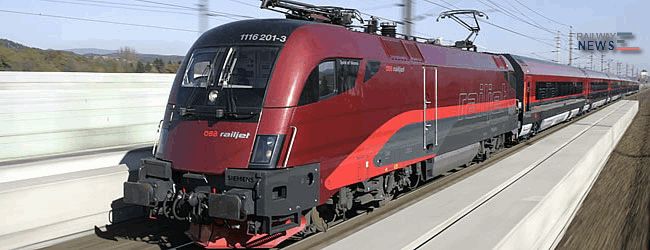
Austrian Federal Railways is to boost its fleet of railjet...

August 20, 2011 5:03 pm
Sri Lanka is planning to complete its $167.4m south coastal...
July 7, 2019 8:21 pm
Fostering Innovation in the UK Rail Industry: A Collaborative Approach...
August 25, 2008 2:10 am
Switzerland's Lausanne Metro m2, a new automated rail system, ...