
Helsinki Ring Rail Line Project: Finland, Commuter Rail Development
Helsinki’s Ring Rail Line opens, boosting commuter rail with faster airport access. A major railway success story.

Ring Rail Line, Helsinki: A Case Study in Modern Commuter Rail Development
This article explores the planning, construction, and operational aspects of the Ring Rail Line (RRL) in Helsinki, Finland. The project aimed to significantly enhance Helsinki’s commuter rail network, providing faster and more efficient access to Helsinki-Vantaa Airport (HEL) and surrounding areas. This involved not only constructing new railway lines and stations but also integrating them seamlessly with existing infrastructure. The project’s success hinges on several factors, including innovative engineering solutions, effective project management, and strategic collaboration among various stakeholders. The analysis will delve into the technical challenges overcome during construction, the economic and social impacts of the project, and the lessons learned that could inform future large-scale rail infrastructure projects globally. Furthermore, we will investigate the sustainability aspects of the project and its contribution to reducing carbon emissions within the Helsinki metropolitan area. The project serves as a valuable case study for understanding the complexities involved in modern railway development.
Project Overview and Design
The Ring Rail Line project, a joint venture between the Finnish Transport Agency, the City of Vantaa, and Finavia (the airport operator), commenced in May 2009 and concluded in July 2015. The project’s core objective was to create a dedicated commuter rail link connecting Helsinki city center to Helsinki-Vantaa Airport, significantly reducing travel times and improving accessibility. This involved constructing a new section of track, integrating it with existing lines (Martinlaakso line, Helsinki-Lahti line, Helsinki-Turku line, and the Helsinki-Hämeenlinna-Tampere line), and building several new stations. A key element of the project was the 8km twin tunnel traversing the challenging Ruskeasanta groundwater area and running close to the Päijänne tunnel. The innovative use of the drill and blast method for excavating the underground stations, completed in March 2010 for the airport tunnel section, exemplifies the engineering prowess involved. The line features a mix of above-ground and underground stations, designed for accessibility and passenger comfort.
Construction and Engineering Challenges
The construction phase presented several formidable engineering challenges. The twin-tunnel construction through the Ruskeasanta groundwater area required meticulous planning and execution to mitigate the risk of water ingress. The use of advanced grouting techniques and rock bolting, implemented by ISITC Tunnel Construction, was crucial in ensuring tunnel stability. Lemminkäinen Infra Oy played a significant role in the tunnel construction, responsible for a substantial section of the twin-tunnel and a station reservation center. The integration of the new line with the existing network demanded careful coordination and phased implementation to minimize disruption to existing services. The design incorporated features such as 230m-long platforms at all stations, accessible via stairs, lifts, and elevators (especially at Kivistö station) to ensure passenger convenience and accessibility. The project also involved the construction of 38 bridges, further highlighting its scale and complexity.
Rolling Stock and Operational Efficiency
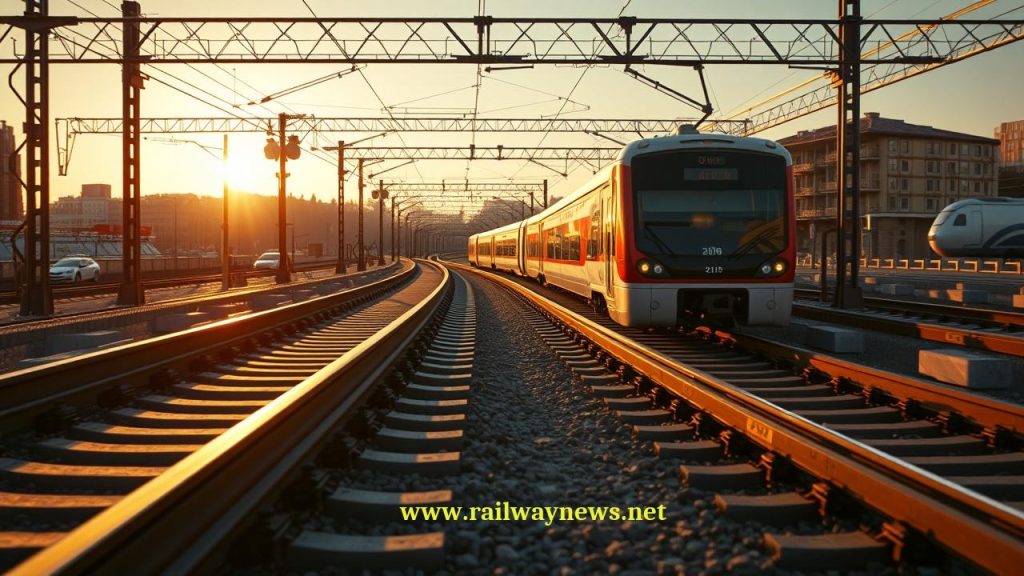
The RRL utilizes modern, low-floor Stadler FLIRT (Fast Light Innovative Regional Train) SM5 electric multiple units (EMUs) – train codes I and P – known for their passenger capacity and operational efficiency. These 75m-long trains, with a seating capacity of 232, boast six doors per side for rapid passenger boarding and deboarding. Their air-conditioned passenger and driver compartments enhance comfort. With an operating speed of 120km/h, the trains can transport approximately 2,000 passengers per hour in each direction during peak times, operating at 10-minute intervals. This high-capacity, efficient rolling stock is crucial for meeting the high ridership demands. The seamless integration of the new trains with the existing rail network is a testament to the planning involved.
Project Costs and Funding
The total cost of the Ring Rail Line project was approximately €750 million ($824 million). Funding was secured through a combination of sources: the Finnish Transport Agency contributed €474 million ($565 million), the City of Vantaa €234.5 million ($280 million), and Finavia €30 million ($35 million). The European Union also provided co-financing under the Trans-European Transport Network (TEN-T) program. The effective management of project funds, efficient procurement processes, and securing external funding were instrumental to the project’s success.
| Project Parameter | Value |
|---|---|
| Project Start Date | May 2009 |
| Project Completion Date | July 2015 |
| Total Project Length (approx.) | 8km (tunnel) + additional surface lines |
| Total Project Cost | €750 million ($824 million) |
| Funding Sources | Finnish Transport Agency, City of Vantaa, Finavia, European Union (TEN-T) |
| Number of Stations (Initial Phase) | 5 (3 surface, 2 underground) |
| Platform Length (all stations) | 230m |
| Number of Bridges | 38 |
| Park & Ride Capacity | 700 cars, 840 bicycles |
| Rolling Stock | Stadler FLIRT SM5 EMUs |
| Projected Daily Ridership (2025) | 14,000 |
Conclusions
The Helsinki Ring Rail Line stands as a significant achievement in modern railway engineering and project management. Its successful completion demonstrates the feasibility of constructing complex, large-scale rail infrastructure projects, even in challenging geological conditions. The project’s success can be attributed to several key factors: strategic planning and collaboration between various stakeholders (Finnish Transport Agency, City of Vantaa, Finavia, and various contractors), innovative engineering solutions to overcome the challenges of tunnel construction in a groundwater-rich area, the use of modern, high-capacity rolling stock enhancing operational efficiency and passenger comfort, and effective management of project costs and funding sources. The project’s impact extends beyond mere infrastructural improvements; it has significantly enhanced public transportation in the Helsinki metropolitan area, improved connectivity to Helsinki-Vantaa Airport, and boosted economic activity in the surrounding regions. The Ring Rail Line serves as a valuable case study for future rail projects, highlighting the importance of meticulous planning, sustainable construction practices, and a collaborative approach for achieving ambitious infrastructure goals. The project’s long-term economic and social benefits underscore the substantial return on investment achieved, showcasing the significant value of strategic rail infrastructure development. It exemplifies how a well-planned and executed rail project can contribute significantly to improving urban mobility and promoting sustainable transportation. The project’s success also showcases the importance of public-private partnerships in delivering complex infrastructure projects.
Company Information:
- Stadler Bussnang: A Swiss rolling stock manufacturer that supplied the FLIRT SM5 trains.
- Lemminkäinen Group: A Finnish construction company that undertook a significant portion of the tunnel construction.
- KONE: A Finnish company that supplied elevators and escalators for the stations.
- PES-Architects: Architectural firm responsible for the design of several underground stations.
- ISITC Tunnel Construction: A company specializing in tunnel construction, responsible for blasting, grouting, and rock bolting.
- WSP: A global engineering professional services consultancy that provided planning services for the rail track, stations, and bridges.
- Pöyry: (now part of AFRY) provided general planning and environmental impact assessment services.
- Finavia: The state-owned company operating Helsinki-Vantaa Airport.
RELATED POSTS
March 9, 2026 5:45 pm
ÖBB and Wiener Linien launch Vienna S-Bahn 13 km main...
March 4, 2026 12:02 am
Balfour Beatty VINCI completes 2.4km HS2 Coleshill Viaduct decks in...