
Helsinki Metro: Teleste S-AWARE Rail Innovations
Helsinki Metro boosted safety and efficiency with Teleste’s S-AWARE platform. Discover how real-time situational awareness revolutionized their operations!
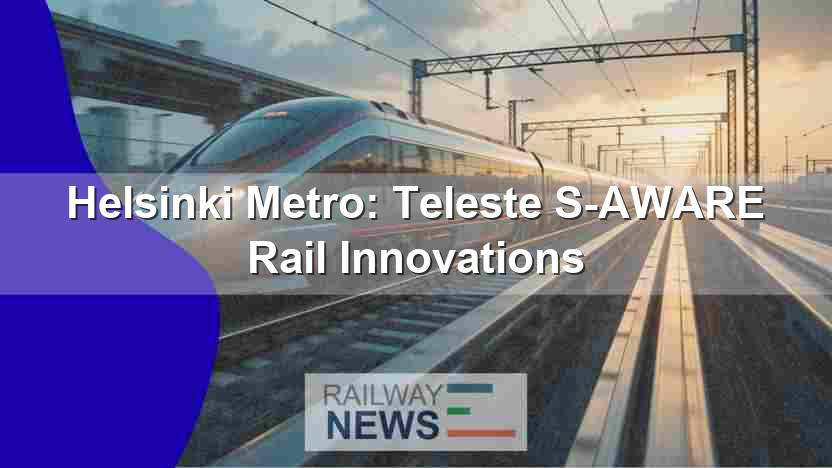
This article examines the Helsinki City Transport’s (HCT) decision to implement Teleste’s S-AWARE platform within its metro system. This strategic move signifies a significant advancement in enhancing operational efficiency, safety, and security across the network. The integration of this sophisticated platform represents a paradigm shift towards a more intelligent and responsive public transport system, capable of handling emergencies and optimizing daily operations. The €2 million investment reflects HCT’s commitment to providing a reliable, secure, and efficient metro service to its citizens. We will delve into the functionalities of the S-AWARE platform, explore its impact on various aspects of metro operations, analyze the phased implementation plan, and finally assess the long-term implications of this technological upgrade for the Helsinki metro and the broader public transport sector. The adoption of S-AWARE by Helsinki serves as a case study for other cities facing similar challenges in managing and modernizing their public transport infrastructure.
System-Wide Situational Awareness and Enhanced Emergency Response
The core functionality of Teleste’s S-AWARE platform lies in its ability to provide real-time, detailed situational awareness across the entire Helsinki metro network. By integrating data from various sources – including CCTV (Closed-Circuit Television) systems, passenger information displays, train control systems, and other sensory inputs – S-AWARE creates a unified, dynamic picture of the metro’s operational status. This integrated view allows HCT personnel to rapidly assess incidents, whether they involve security breaches, service disruptions, or passenger emergencies. This dramatically improves response times and facilitates more effective crisis management. The platform’s ability to correlate data from disparate sources allows for a much more holistic understanding of events compared to relying on individual, isolated systems. The resulting improved decision-making process contributes directly to enhanced passenger safety and service reliability.
Improved Operational Efficiency and Predictive Maintenance
Beyond emergency response, S-AWARE contributes significantly to enhancing the operational efficiency of the Helsinki metro. By providing real-time data on train performance, passenger flow, and system health, the platform allows HCT to optimize resource allocation, proactively identify potential issues, and implement preventative maintenance strategies. This predictive maintenance approach reduces downtime, minimizes service disruptions, and ultimately lowers overall operational costs. The platform’s analytical capabilities allow for the identification of trends and patterns that might otherwise go unnoticed, potentially highlighting areas for process improvement or highlighting components requiring attention before they fail. This contributes to a more resilient and cost-effective operation of the metro system.
Phased Implementation and Future Expansion
The €2 million deployment of S-AWARE is being undertaken in a phased approach, commencing in 2019 and scheduled for completion by the end of 2020. This phased rollout ensures a controlled and manageable implementation process, minimizing disruption to ongoing metro operations. Each phase likely involves the integration of specific subsystems and the training of HCT personnel on the new system. This strategic approach minimizes risks associated with a large-scale system implementation. The scalability of the S-AWARE platform also allows for future expansion to encompass other aspects of the Helsinki public transport network, potentially integrating bus and tram systems for city-wide situational awareness.
Conclusion
The Helsinki City Transport’s adoption of Teleste’s S-AWARE platform represents a significant leap forward in the modernization of its metro system. The platform’s ability to provide real-time situational awareness, improve emergency response capabilities, enhance operational efficiency, and facilitate predictive maintenance demonstrates a commitment to providing a safer, more reliable, and more cost-effective public transport service for the citizens of Helsinki. The phased implementation strategy demonstrates a responsible approach to integrating a complex new system, minimizing disruption and maximizing the potential for success. This project serves as a valuable model for other cities seeking to upgrade their public transport infrastructure using intelligent and integrated technology solutions. The successful integration of S-AWARE will not only improve the Helsinki metro’s performance but will also establish a benchmark for future smart city initiatives related to public transport. The long-term benefits extend beyond improved service delivery; they include enhanced safety, reduced operational costs, and a more sustainable transport system. The strategic investment in this technology underlines the importance of prioritizing public safety and operational efficiency in modern urban planning and transportation management.

Railway infrastructure, rolling stock and transport technologies specialist focused on global rail industry developments, high-speed rail systems, signaling technologies and freight transportation. Covering railway investments, public transport modernization, rail operations and international mobility projects across Europe, Asia and North America.
RELATED POSTS
September 6, 2026 5:19 am
Hitachi delivered Taiwan's first N700ST high-speed train from Japan in...

September 5, 2026 4:19 pm
CPK launched formal tender talks with four consortia to design...

September 5, 2026 7:14 pm
HS2 Ltd signed renegotiated civils contracts with EKFB and Align...

September 6, 2026 4:12 am
Alstom delivered the first of 100 new G Class trams...
September 6, 2026 6:17 am
Hungary ordered a national ban on most freight trains from...
September 6, 2026 1:17 am
Hitachi Toshiba Supreme Consortium confirmed the first of 12 N700ST...