
Hamburg Metro: DT6 Train Acquisition & Alstom Partnership
Hamburg metro gets €173M loan for 41 new DT6 trains, part of a wider fleet modernization.
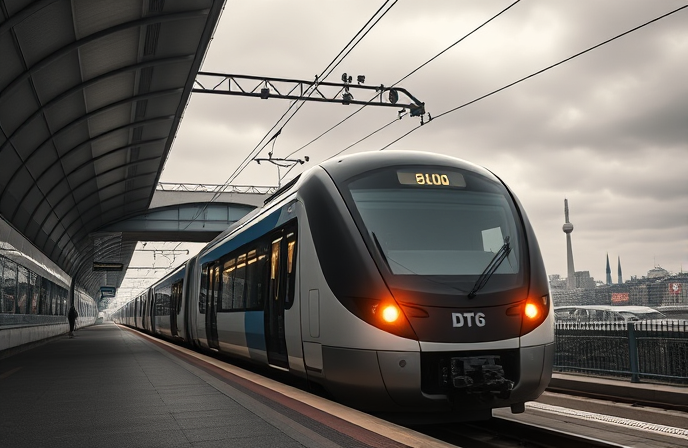
Hamburg Metro Receives EUR 173 Million Boost for New DT6 Train Procurement
In a move signaling a significant investment in Hamburg’s public transport network, Hamburger Hochbahn (Hochbahn) has secured a EUR 173 million loan from the European Investment Bank (EIB) to finance the acquisition of 41 new DT6 metro trains. The agreement, signed recently by EIB Vice-President Nicola Beer and Hochbahn CEO Robert Henrich, represents a crucial step in modernizing and expanding the city’s metro system. This article will delve into the specifics of the funding, the capabilities of the new DT6 trains, and the broader implications for Hamburg’s urban mobility, including the advent of fully automated operation. The project involves a long-term framework agreement with Alstom for a comprehensive fleet upgrade, underlining Hamburg’s commitment to sustainable and technologically advanced public transport solutions.
Strategic Financial Partnership: The EIB Loan
The financial agreement with the EIB provides critical backing for the DT6 train acquisition. The loan, formalized during a signing ceremony attended by Hamburg’s Senator for Transport and Mobility Transition, Anjes Tjarks, underscores the importance of the project in the region’s transport strategy. As Hochbahn CEO Robert Henrich stated, “The DT6 contract is the largest single investment in Hochbahn’s history,” highlighting the significance of this financial injection. The favourable interest rates offered by the EIB further enhance the financial viability of the project, making it an attractive investment for Hochbahn. This funding aligns with the EIB’s policy objectives, promoting sustainable urban development and supporting the transition towards more efficient and eco-friendly public transport systems.
Next-Generation Metro Technology: The DT6 Series
The DT6 series marks the latest evolution of metro train technology for Hamburg. The trains, designed as twin units, will feature both the DT6-F model (operated with a train crew) and the DT6-A model, which represents a leap towards fully self-driving and unstaffed operations. The versatility allows Hochbahn to gradually integrate autonomous train services, thereby enhancing operational efficiency. These innovations will facilitate enhanced service frequencies and reduce operating costs. The deployment of fully automated trains aligns with Hamburg’s vision of a future-ready transport system, capable of adapting to increasing passenger demands and leveraging the benefits of advanced control systems.
The Alstom Partnership: A Framework for Fleet Modernization
In July 2024, Hamburger Hochbahn and Alstom established a EUR 2.8 billion framework agreement for the delivery of up to 374 new metro trains, underscoring a large-scale fleet renewal initiative. The firm order includes the delivery of 48 trains, valued at EUR 670 million, of which 41 will be DT6 trains and seven DT6-A trains. This partnership facilitates the adoption of cutting-edge signaling technology, with Alstom responsible for installing its Communication-Based Train Control (CBTC) Urbalis system on the new U5 line. The CBTC technology enables enhanced train control and management, ultimately leading to improved system capacity and safety. The collaborative framework aims to accelerate the transformation of Hamburg’s metro network through the integration of the latest in train and signalling technologies.
Manufacturing and Deployment Timeline
The DT6 trains are scheduled to be manufactured at Alstom’s site in Salzgitter, Germany, beginning in 2026. The first deliveries are anticipated to commence in 2028, following which the trains will undergo rigorous testing before entering revenue service on the U5 line. The planned launch on the U5 line, anticipated in 2029, represents a significant milestone. It will introduce both modern train technology and new levels of passenger service frequency, with trains projected to run every 90 seconds. This strategic deployment timeline is designed to minimize disruption while ensuring the efficient integration of the new trains into the existing network.
Conclusion
The strategic financial commitment from the EIB, coupled with the extensive framework agreement with Alstom, positions Hamburg at the forefront of urban transport innovation. The acquisition of the new DT6 trains, including both crewed and fully automated models, signals a clear commitment to enhance the city’s public transportation infrastructure and improve the passenger experience. The implementation of advanced technologies, such as Alstom’s CBTC Urbalis system, further underscores this commitment. The gradual introduction of autonomous train operations will set new standards for operational efficiency and scalability. The project exemplifies the growing importance of public-private partnerships in shaping sustainable urban transport solutions. Looking ahead, the Hamburg metro project is poised to serve as a model for other cities seeking to upgrade and modernize their public transit systems. The increased capacity, frequency, and advanced technology of the DT6 fleet are expected to considerably benefit the citizens of Hamburg and set a new standard for efficient, customer-focused metro travel.
Company Summary
Hamburger Hochbahn AG (Hochbahn): Hochbahn is the primary public transport operator in Hamburg, Germany. It is responsible for operating the city’s metro (U-Bahn), bus, and ferry services, serving millions of passengers annually. Hochbahn plays a crucial role in facilitating urban mobility. The company continuously invests in infrastructure upgrades, expansion projects, and technological advancements to improve its services and provide sustainable transport solutions for the citizens of Hamburg.
Alstom: Alstom is a global leader in the rail transport sector, providing rolling stock, signaling solutions, and infrastructure. Alstom’s products and services cater to a wide range of rail transportation needs. Alstom’s technologies are designed to enhance passenger transport, provide cost-effective solutions, and contribute to a more sustainable and energy-efficient rail transport sector.
RELATED POSTS

October 28, 2016 3:59 am
"Queensland's SkyRail project is underway! Stage 1, a $1.5 billion...
February 13, 2019 4:14 am
India's rail sector is poised for global dominance by 2050,...
May 26, 2018 6:00 am
The Beskyd Rail Tunnel: A Ukrainian marvel quadrupling rail...
December 16, 2017 5:22 am
Maximize depot efficiency and passenger experience by optimizing maintenance, logistics,...
November 9, 2025 10:54 pm
Alstom's Crewe Works unveils a revamped facility, boosting **HVAC** unit...

Future Projects, High Speed Railways, HSR, Passenger, Past Railway News, Rolling Stock, South Korea, Technology
November 20, 2020 8:02 pm
The Korean Railroad Research Institute (KORAIL) announced on Wednesday that...