
GWR’s 3.5-Minute Rail Revolution: FastCharge Trial
Introduction
This article explores the groundbreaking real-world trials of FastCharge battery technology being undertaken by Great Western Railway (GWR) in the United Kingdom. This initiative marks a significant step towards decarbonizing the UK rail network and achieving ambitious sustainability goals. The trial, using a Class 230 battery train on the Greenford branch line, focuses on addressing the challenges of rapid charging for battery-electric multiple units (BEMUs) operating on branch lines with demanding timetables. The technology promises a significant reduction in carbon emissions compared to diesel-powered trains, while maintaining the operational efficiency crucial for passenger services. This trial builds upon previous simulations and leverages a unique charging system capable of fully charging a train in just 3.5 minutes. The success of this trial has the potential to influence the widespread adoption of this technology across the UK and potentially globally, setting a new precedent for sustainable railway operations. The implications for both environmental impact and operational efficiency will be examined in detail.
FastCharge Technology: A Detailed Look
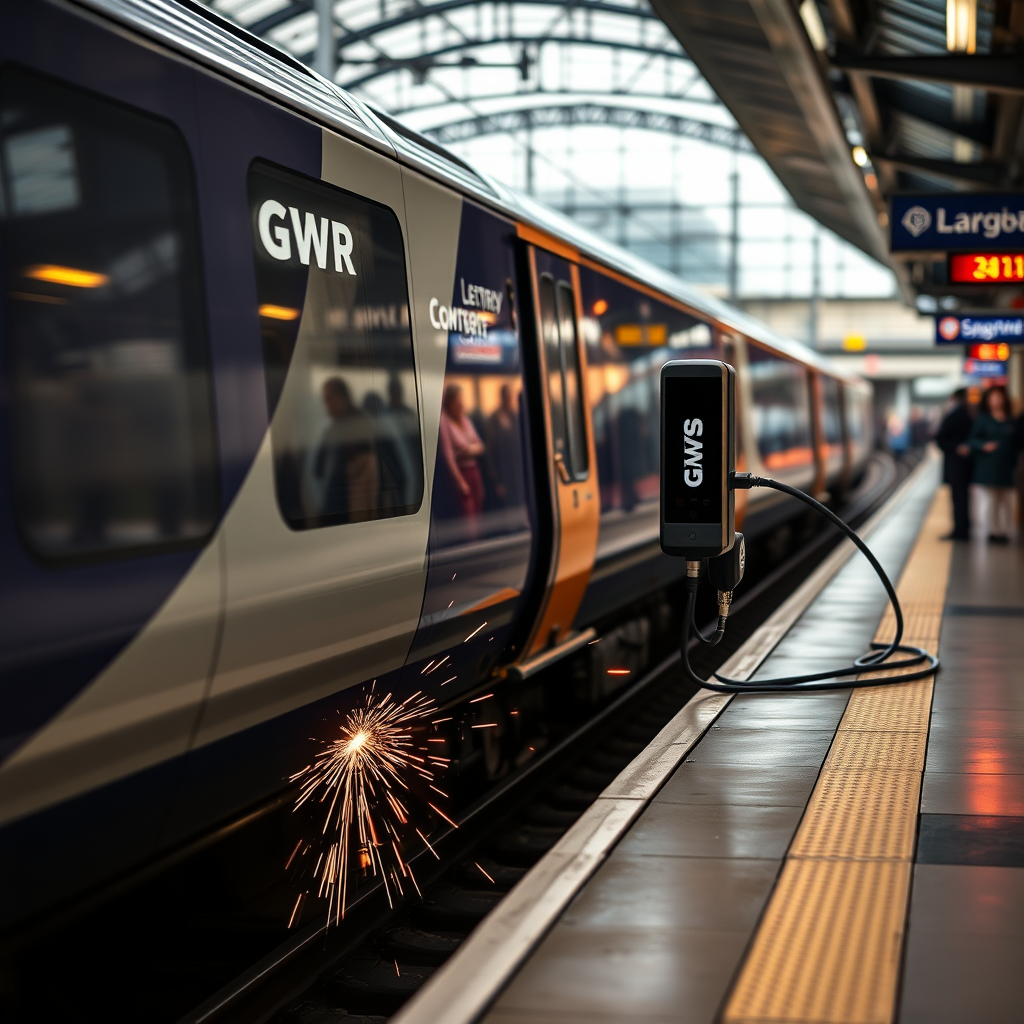
The core of GWR’s initiative is the FastCharge system, a 2400 kW charging technology designed specifically for rapid charging of battery-electric trains. This system overcomes a major hurdle in widespread BEMU adoption: the need for quick turnaround times on branch lines to meet passenger service schedules. Traditional charging methods are often too slow for this purpose. FastCharge utilizes retractable shoegear, essentially electrical contact pads on the train, to engage with short charging rails located alongside the track. These rails are continuously “trickle-charged” from the grid via two track-side battery banks, providing a stable and efficient charging process. This unique design minimizes the impact on the local grid’s power supply while ensuring rapid charging. The technology represents a crucial innovation in sustainable rail transport, enabling a transition away from diesel-powered trains without sacrificing operational efficiency.
GWR’s Role and Strategic Partnerships
GWR’s commitment to phasing out diesel-only traction by 2040 is driving this significant investment in FastCharge technology. Their collaboration with Vivarail, initially through a trial agreement in 2022 and culminating in the acquisition of Vivarail’s intellectual property (IP) and assets after the company’s administration, underscores GWR’s dedication to this technology. This acquisition provided GWR with not only the FastCharge technology but also crucial expertise and rolling stock. The collaboration highlights the importance of public-private partnerships in driving innovation within the rail sector and accelerating the adoption of sustainable technologies. GWR’s proactive approach positions them as leaders in the transition towards greener rail transport in the UK.
Trial Implementation and Expected Outcomes
The real-world trial at West Ealing on the Greenford branch line provides a crucial test bed for the FastCharge system. The trial uses a Class 230 battery train, operating alongside scheduled passenger services, ensuring a realistic assessment of its performance. Charging rails have already been installed at West Ealing to support the trial. Preliminary simulations conducted on Thames Valley branch lines estimated potential CO2 emission reductions of over 1700 tons annually. This suggests that the widespread adoption of FastCharge technology could significantly contribute to GWR’s environmental goals and the UK’s overall emissions reduction targets. The data gathered from this trial will be invaluable for determining the feasibility and scalability of this technology on a national level.
Conclusions
The Great Western Railway’s (GWR) pioneering trial of FastCharge battery technology represents a substantial leap forward in sustainable rail transportation. The 2400kW system, enabling 3.5-minute charging of battery-electric multiple units (BEMUs), directly addresses the operational challenges associated with rapid charging on branch lines, a critical factor hindering broader BEMU adoption. GWR’s strategic partnership with Vivarail, culminating in the acquisition of FastCharge technology and related assets, demonstrates a strong commitment to technological innovation and decarbonization. The real-world trial at West Ealing, using a Class 230 train, is crucial in validating the technology’s performance in a realistic operational setting alongside passenger services. Preliminary estimates of significant CO2 emission reductions, exceeding 1700 tons annually, underscore the technology’s environmental benefits. Success in this trial will not only significantly impact GWR’s sustainability goals but also has the potential to reshape the UK rail network’s approach to electrification and pave the way for similar deployments globally. This technology holds significant promise for achieving a cleaner, more efficient, and environmentally responsible rail system, contributing greatly to global decarbonization efforts within the rail sector. The future of rail transport may well depend on the success of such innovative approaches, highlighting the crucial role of forward-thinking rail operators like GWR in driving this essential transition.
RELATED POSTS
September 7, 2025 3:00 pm
Egis appointed to supervise the 3.6km Riyadh monorail construction, enhancing...

December 18, 2025 9:39 pm
WMATA's FY2026-27 budget proposes a 6% service boost, but crucial...

November 19, 2019 6:59 am
This article delves into the development and features of the...
February 11, 2021 8:32 am
The Rise of Hydrogen-Powered Trains: A Technological and Economic Analysis...
June 29, 2025 9:33 pm
Calgary's Green Line LRT MSF gets crucial earthworks contract from...
December 18, 2022 7:16 am
The Metropolitan Transportation Authority (MTA) has embarked on a transformative...