
Guangzhou Metro Project: A China Rail Technology Case Study
Guangzhou Metro, a case study in railway technology, showcases advanced signaling, train control, and fare collection systems. Its phased development highlights successful urban rail expansion in China.
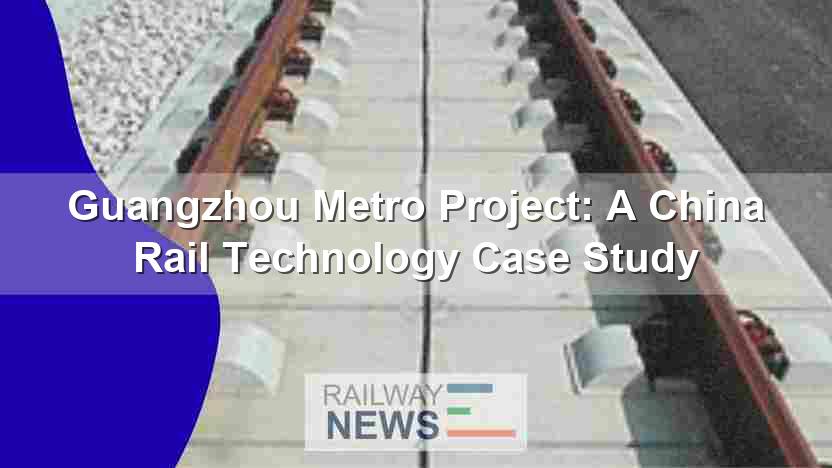
This article explores the development and technological advancements implemented within the Guangzhou Metro system, a significant urban rail project in China. The project’s aims extend beyond mere transportation; it serves as a model for integrated urban planning, showcasing cutting-edge technologies in signaling, train control, and fare collection. Examining the Guangzhou Metro allows for a detailed analysis of the challenges and successes in implementing a large-scale, modern rail network within a rapidly growing metropolis. The analysis will cover the project’s phased construction, the integration of international and domestic technologies, and the ongoing expansion plans, highlighting the strategic importance of such projects in addressing the transportation needs of a megacity while simultaneously contributing to economic development and sustainable urban growth. The article will conclude by assessing the project’s overall impact and offering insights into future trends in urban rail development based on the Guangzhou experience.
Project Overview and Phased Development
The Guangzhou Metro, operated by the state-owned Guangzhou Metro Corporation, serves the third-largest city in China. Initially planned as a two-line system, it has expanded significantly to its current configuration. The project’s phased development, spanning several decades, showcases a strategic approach to meeting the city’s evolving transportation demands. Early construction began in 1993, with Line 1 opening in 1997, followed by subsequent line openings and extensions. This incremental approach allowed for the incorporation of lessons learned and technological advancements into later phases.
Technological Integration and International Collaboration
The Guangzhou Metro’s success stems partly from its integration of various advanced railway technologies. The signaling system, provided by Siemens, utilizes a 16-bit interlocking system (SIG) and integrates Automatic Train Protection (ATP) and Automatic Train Operation (ATO) for enhanced safety and efficiency. This demonstrates a reliance on cutting-edge solutions to maximize operational performance. International collaboration played a significant role; Siemens-AEG supplied trains and associated equipment for Line 1, while Bombardier and the Chinese firm Changchun Car also contributed to the rolling stock fleet. This collaborative approach leveraged international expertise while fostering domestic industrial capabilities.
Fare Collection and System Management
The Guangzhou Metro was one of the first systems in China to adopt an automated fare collection system (AFC) by Cubic Transportation Systems (CTS). This system, featuring magnetically encoded plastic tickets and various automated equipment, significantly streamlined passenger flow and improved operational efficiency. The central control system manages timetables, staff rosters, and route adherence, demonstrating sophisticated operational management. The integration of such technologically advanced systems is integral to managing the complexities of a large metro network, and served as a model for other rail projects in China and beyond.
Ongoing Expansion and Future Prospects
The Guangzhou Metro’s ongoing expansion underscores its importance in addressing the city’s continuous growth. Numerous lines are currently under construction, with even more planned for the long term. This sustained investment highlights the ongoing commitment to upgrading urban transportation infrastructure. The project’s success, however, depends on securing continued financial support, given the substantial costs involved. Additionally, competition from other infrastructure projects will always present a challenge to resource allocation.
Conclusions
The Guangzhou Metro project stands as a compelling case study in the planning, construction, and operation of a large-scale, modern urban rail system. The phased approach to development allowed for adaptable implementation and integration of state-of-the-art technologies from both international and domestic manufacturers. The project successfully integrated sophisticated signaling systems (SIG, ATP, ATO), automated fare collection (AFC), and advanced passenger information systems. This approach, which leverages international collaboration and domestic expertise, has significantly improved the city’s transport infrastructure, contributing to its economic development and urban planning. The project’s continued expansion plans highlight the ongoing need for substantial investments in urban rail infrastructure in rapidly growing megacities worldwide. The successful implementation of the Guangzhou Metro provides valuable insights for future similar projects globally, emphasizing the critical role of phased development, technological innovation, and strategic partnerships in achieving sustainable and effective urban transportation solutions. The financial sustainability of such megaprojects remains a crucial consideration. Future projects must actively explore diverse funding models to secure continued investment and avoid the pitfalls of relying solely on conventional methods. Additionally, environmental sustainability will play an increasingly important role, requiring projects to integrate eco-friendly technologies and operational practices. The Guangzhou Metro’s journey is a testament to the transformative power of well-planned and technologically advanced urban rail systems.
| Line | Length (km) | Stations | Rolling Stock Manufacturer(s) |
|---|---|---|---|
| Line 1 | 18.5 | 17 | Siemens, Bombardier, Changchun Car |
| Line 2 | 31.4 | 24 | Bombardier, Changchun Car |
| Line 3 | 65.3 | 29 | Siemens AG, Zhuzhou Electrical Locomotive Works |
| Line 4 | 43.8 | 16 | Kawasaki Heavy Industries, Sifang Locomotive and Rolling Stock |
| Line 5 | 31.9 | 24 | Kawasaki Heavy Industries, Sifang Locomotive and Rolling Stock |
| Guangzhou-Foshan Line | 21 | 14 | N/A (Information not provided in source material) |
| Zhujiang New Town APM | 3.9 | 9 | N/A (Information not provided in source material) |
| Line 8 | 14.8 | 13 | N/A (Information not provided in source material) |
Company Information:
- Siemens AG (Germany): A global technology powerhouse involved in various sectors, including railway signaling, rolling stock, and electrification.
- Bombardier Transportation (Canada): A major player in the rail industry, supplying trains and railway systems globally.
- Changchun Railway Vehicles Co., Ltd. (China): A significant Chinese rolling stock manufacturer.
- Kawasaki Heavy Industries (Japan): A diversified industrial conglomerate involved in railway manufacturing.
- Sifang Locomotive and Rolling Stock (China): A Chinese railway rolling stock manufacturer.
- Cubic Transportation Systems (CTS) (USA): A leading provider of intelligent transportation systems, including fare collection systems.
- Guangzhou Metro Corporation (China): The state-owned operator of the Guangzhou Metro.

Railway infrastructure, rolling stock and transport technologies specialist focused on global rail industry developments, high-speed rail systems, signaling technologies and freight transportation. Covering railway investments, public transport modernization, rail operations and international mobility projects across Europe, Asia and North America.