
Green Hydrogen Trains: DB’s H2goesRail Revolution
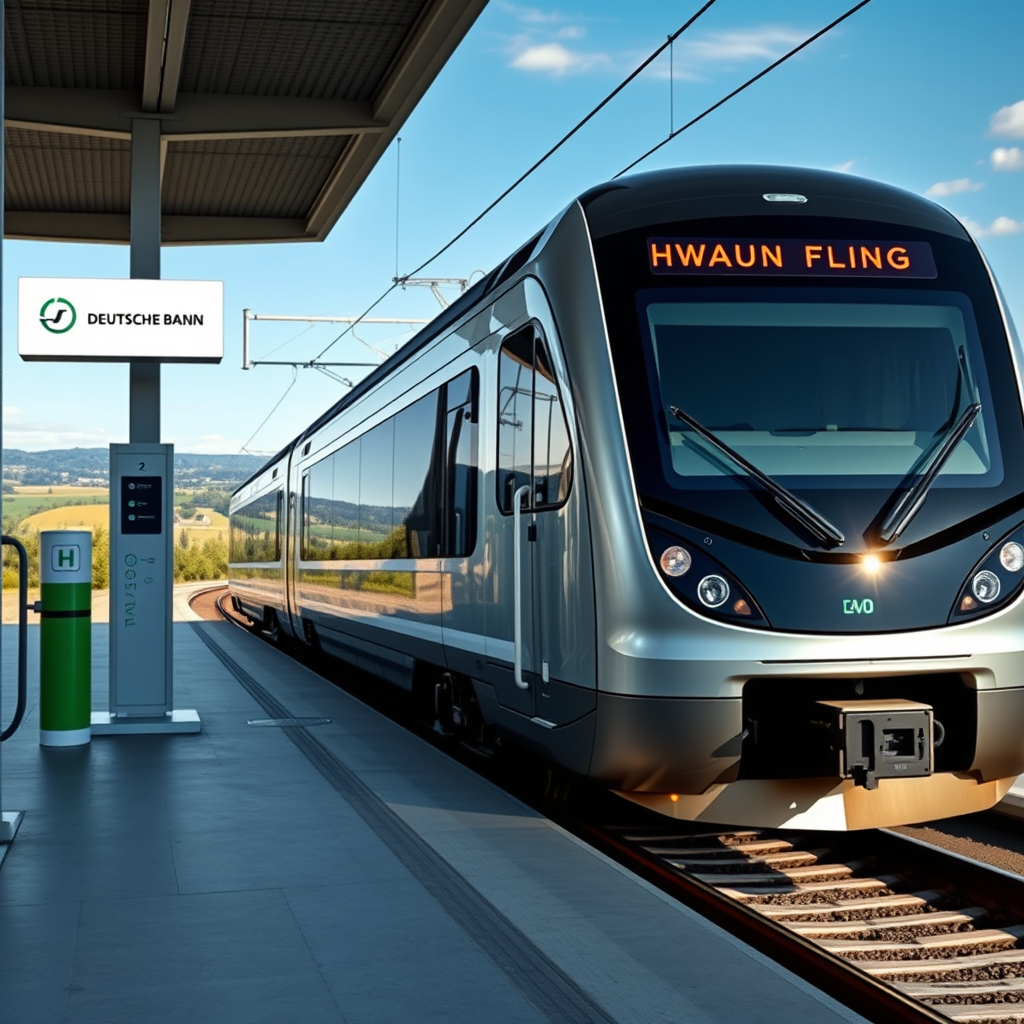
The transition to sustainable transportation is a critical global challenge, and the railway sector plays a significant role in this transition. This article explores the burgeoning use of green hydrogen as a zero-emission fuel source for railway applications, focusing on a particularly innovative project undertaken by Deutsche Bahn (DB, German national railway operator) in collaboration with Lhyfe, a green hydrogen producer. The partnership centers around DB’s H2goesRail initiative, a crucial step towards decarbonizing rail operations. This initiative highlights the potential of green hydrogen to power a new generation of trains, reducing reliance on fossil fuels and mitigating the environmental impact of railway transport. We will delve into the technical aspects of hydrogen production, its integration into the existing railway infrastructure, and the broader implications of this technology for the future of sustainable rail transport. Further, we will analyze the economic viability of hydrogen-powered trains and the challenges involved in their widespread adoption.
The H2goesRail Project: A Case Study in Green Hydrogen Integration
Deutsche Bahn (DB), in conjunction with Siemens Mobility, is spearheading the H2goesRail project, a significant initiative focusing on the development and implementation of hydrogen-powered trains. The project leverages a new hydrogen production plant established by Lhyfe at DB’s innovation hub in Tübingen, Germany. This plant boasts an annual production capacity of up to 30 tons of green hydrogen, fueled entirely by renewable electricity sourced from DB’s own portfolio. This direct coupling of renewable energy generation and hydrogen production represents a crucial advancement in achieving a truly sustainable fuel source for the railway system. The hydrogen produced is then utilized to power the Mireo Plus H hydrogen train, currently undergoing rigorous testing by DB and Siemens. This testing includes evaluating a novel hydrogen filling station concept designed specifically for this type of rolling stock.
Technological Advancements and Infrastructure Development
The H2goesRail project highlights several key technological advancements within the railway sector. Firstly, the utilization of green hydrogen, produced through electrolysis powered by renewable energy, demonstrates a significant step toward decarbonizing railway operations. Secondly, the development of a highly efficient and scalable hydrogen filling station is critical for the widespread adoption of hydrogen-powered trains. The integration of the hydrogen production plant, the filling station, and the train itself into a single, coordinated system at DB’s innovation hub provides valuable operational experience and insights for future deployments. This includes understanding the logistics and efficiencies of large-scale hydrogen handling and distribution within a rail network.
Economic Viability and Scalability of Hydrogen-Powered Trains
The economic viability of hydrogen-powered trains is a crucial aspect for widespread adoption. While the initial investment in infrastructure and technology may be substantial, the long-term operational costs, especially considering reduced reliance on fossil fuels and the potential for revenue generation through green energy production, present a compelling case. The H2goesRail project, through its partnership with Lhyfe, aims to provide real-world data on the cost-effectiveness of green hydrogen fuel. Scalability is another critical factor. The success of the Tübingen plant, and the ongoing construction of a larger facility in nearby Schwäbisch Gmünd, signifies Lhyfe’s commitment to scaling hydrogen production to meet the growing demand in the transportation sector. This demonstrates the potential for replicating this model in other regions and countries, contributing to a broader transition to sustainable rail transport.
Comparative Analysis and Future Prospects
The H2goesRail initiative is not an isolated case. Similar projects are underway across Europe, indicating a global trend towards hydrogen-based solutions in the railway sector. The ongoing EU-backed project in Spain and Portugal, as well as Stadler’s recent demonstration of the FLIRT H2 train, underscore the growing momentum in this field. However, challenges remain. These include the need for further advancements in hydrogen storage technology to improve efficiency and range, as well as the development of a robust and comprehensive hydrogen infrastructure. The integration of hydrogen technology into existing railway networks also requires careful planning and strategic investment. Despite these challenges, the prospects for hydrogen-powered trains are promising. As technology matures and costs decline, the transition to a cleaner, more sustainable railway system powered by green hydrogen becomes increasingly feasible and attractive.
Conclusions
The Deutsche Bahn’s (DB) H2goesRail project, in partnership with Lhyfe, serves as a compelling example of the potential of green hydrogen to revolutionize railway transportation. The project successfully integrates green hydrogen production, a novel filling station design, and a hydrogen-powered train (Mireo Plus H) into a single, cohesive system. This integrated approach not only reduces reliance on fossil fuels but also provides valuable data on the economic viability and operational efficiency of this technology. The project’s success hinges on several key elements: the sustainable production of green hydrogen using renewable energy, advancements in hydrogen storage and distribution technologies, and the development of efficient and scalable refueling infrastructure. While challenges remain in terms of cost and widespread infrastructure development, the ongoing success of H2goesRail and similar projects in Europe, like the EU-backed initiatives in Spain and Portugal, and Stadler’s FLIRT H2 achievements, highlight the clear trajectory towards a future where hydrogen fuels a cleaner and more sustainable railway sector. The collaborative approach between DB, Siemens, and Lhyfe showcases the power of partnerships in driving technological innovation and achieving ambitious sustainability goals. The future of rail transport looks increasingly green, with hydrogen playing a vital role in its sustainable transformation.
RELATED POSTS

October 19, 2024 10:49 am
Duos Technologies and CN Partner to Enhance Rail Safety with AI-Powered Wayside Detection Technology
Duos, known for its Railcar Inspection Portal and ten active...

June 21, 2025 11:33 am
Poland's Poznań–Piła railway line gets PLN 100 million second track....
October 27, 2025 1:54 pm
Caltrain's new electric trains will generate revenue through **regenerative braking**,...
May 7, 2022 12:05 pm
Significant Investments in California’s LOSSAN Rail Corridor: A Comprehensive Overview...

July 11, 2018 4:04 pm
SNCF Réseau's ARGOS initiative modernizes French railway signaling with next-generation...
September 3, 2023 2:30 am
This article explores the significant expansion of Siemens Mobility’s rail...