
Greater Manchester Unveils Rail Vision: £90B Boost, Doubling Passengers
Greater Manchester’s Rail Vision 2050 targets doubling passenger numbers and a £90 billion economic boost through transformative **rail** improvements. Integrated **rail** services are coming!
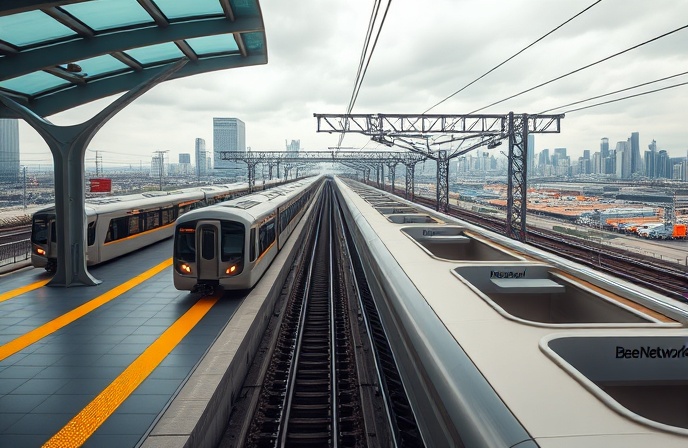
Greater Manchester unveils ambitious 2050 rail vision aiming to double passenger numbers and unlock £90 billion in economic growth. Mayor Andy Burnham officially launched the ‘On the Right Track for Growth’ strategy, developed with industry partners, outlining a transformative plan for the region’s rail network over the next 25 years.
| Key Entity | Critical Detail |
|---|---|
| Greater Manchester Rail Network | Over 318km, 96 stations, 40 million+ passenger trips annually |
| ‘On the Right Track for Growth: A 2050 Vision for the Future of Rail in Greater Manchester’ | Roadmap to improve, grow, and transform rail |
| Core Objectives | Double passenger numbers, support 75,000 new homes, unlock £90 billion economic uplift |
| Key Dates | December 2026 (first local rail services join Bee Network), December 2026 (contactless payments and full integration) |
| Investment & Funding | £1 billion ‘GM Good Growth Fund’ |
| Immediate Impact | Simpler rail fares (two options: anytime/off-peak) effective Sunday (7 December) |
The launch of Greater Manchester’s comprehensive 2050 rail vision marks a significant stride towards a more integrated and efficient public transport system. Developed collaboratively with key rail industry stakeholders, the strategy aims to address current limitations, including accessibility issues, service crowding, and reliability concerns, by empowering local control and accountability.
Strategic Impact
This forward-thinking vision is designed to fundamentally reshape rail services, with ambitious targets to double passenger numbers and stimulate substantial economic growth. The plan forecasts an economic uplift of £90 billion across the Northern Arc area by 2050, directly supporting the creation of 75,000 new homes and aligning with the broader ambitions of the Greater Manchester strategy. The initiative is underpinned by the £1 billion ‘GM Good Growth Fund’, a commitment to driving regeneration and ensuring equitable growth across all districts.
Operational Details and Integration
A crucial immediate step towards this future is the introduction of simplified rail fares, effective from Sunday (7 December). This reform replaces a complex fare structure with just two options: anytime and off-peak. These new fares will be valid across all operators, with single journeys priced at half the cost of return trips. Critically, this initiative paves the way for the seamless integration of contactless payments and full connectivity with the broader Bee Network from December 2026, which will unite trains with buses, trams, and active travel modes.
Last June 2025, we published an article about Renfe’s cutting-edge Aranjuez maintenance hub. Click here to read – Future of Rail: Renfe’s Railway Technology Hub, Aranjuez: Essential Guide
Industry Context
Mayor Andy Burnham emphasized the transformative potential of this reform, stating, “The way projects and services are planned and delivered is changing, with long-needed reform giving us a once-in-a-generation opportunity to reshape rail for Greater Manchester.” The vision commits to substantial upgrades, including new trains, improved stations, more frequent services, and integrated ticketing across intercity, regional, and local rail, as well as the Metrolink tram system and bus services. This strategic alignment is vital for CEOs and transport leaders across the UK rail sector, as it demonstrates a clear model for effective devolution, local control, and the delivery of passenger-centric improvements that can drive both ridership and economic prosperity. The integration of local train services into the Bee Network, as highlighted by Transport Commissioner Vernon Everitt, represents the “next piece in the jigsaw” towards a world-class, integrated public transport system, setting a precedent for other major conurbations.
RELATED POSTS
June 6, 2025 8:01 pm
NJ Transit is modernizing its rail maintenance with a new...

September 12, 2023 7:13 am
Improving Passenger Communication and Flexibility in UK Rail The UK...
June 17, 2025 9:01 am
Melbourne Metro Tunnel: A Revolution in Rail Transportation Set for...

October 25, 2016 7:16 pm
Deutsche Bahn (DB) and Siemens are launching a pilot application...
May 4, 2022 3:44 am
Introduction: This article delves into Network Rail’s substantial £70 million...
January 9, 2026 8:39 am
Baltimore Metro SubwayLink unveils new trains, part of a $400.5M...