
Greater Manchester: 2.5 Billion for Zero-Emission Transport
Greater Manchester’s Bee Network: a GBP 2.5 billion investment revolutionizing public transport with integrated systems and an all-electric fleet by 2030.
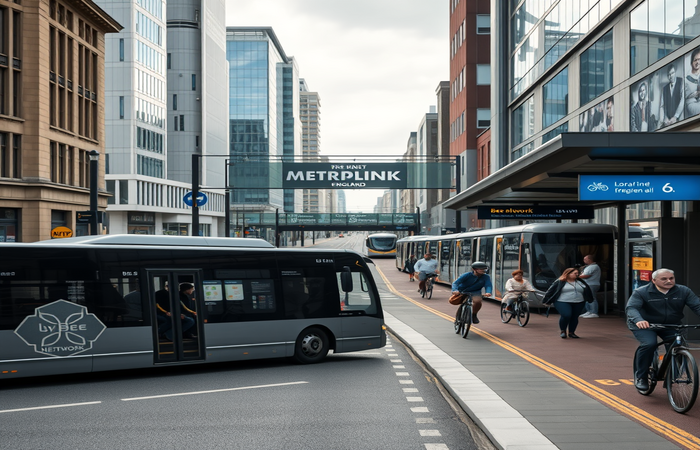
Greater Manchester Unveils Ambitious GBP 2.5 Billion Investment in Integrated, Zero-Emission Public Transport
The United Kingdom (UK), October 26, 2023 – Greater Manchester is poised to revolutionize its public transport infrastructure with a substantial GBP 2.5 billion (approximately EUR 3 billion) investment, aimed at creating a fully integrated and zero-emission “Bee Network” by 2030. This initiative, backed by the UK government, represents a pivotal step towards sustainable urban mobility. The funding is part of a larger EUR 18.5 billion commitment to local transport projects across city regions. This article delves into the specifics of this transformative plan, exploring the key components of the Bee Network and its potential impact on the community. We will analyze the technical aspects of integrating various modes of transport, the challenges associated with transitioning to an all-electric fleet, and the long-term benefits expected from this ambitious undertaking. The project promises not only a cleaner environment but also improved connectivity and accessibility for residents.
Integrated Transport: The Vision of the Bee Network
The core principle of the Bee Network is seamless integration across various transport modes: buses, trams, trains, and cycling infrastructure. This means a unified ticketing system, coordinated schedules, and physical infrastructure that facilitates easy transfers between modes. The project includes integrating local rail lines into the Bee Network. This will involve significant improvements to existing railway stations, ensuring full accessibility for all users. Capped fares are also part of the plan. The goal is to make public transport the preferred option for all residents. This integrated approach reduces reliance on private vehicles, leading to reduced congestion and emissions. The design of the Bee Network will be a model for other cities looking to modernize their transport systems.
The integration of different transport modes will allow the public to move between them in a simple, easy and convenient manner.
Transition to an All-Electric Fleet
A central element of the Bee Network is the transition to a 100% electric bus fleet. This shift requires significant investment in electric buses, charging infrastructure, and operational adjustments. The project aims to achieve a completely emission-free network by leveraging renewable energy to power both the buses and the existing Metrolink tram system. The adoption of e-bikes for hire further complements this strategy, offering residents a sustainable and flexible last-mile transport solution.
The development of charging infrastructure and the deployment of electric buses are essential steps towards achieving an emission-free public transport system, reducing the carbon footprint of the Greater Manchester area.
Expanding the Metrolink and Enhancing Connectivity
The Bee Network project includes significant expansions to the Metrolink tram system, introducing new lines and stops in strategic locations. A new Metrolink line is planned to reach Stockport town center, with new stops and modern interchanges, significantly enhancing connectivity for residents. The project will also facilitate the creation of new tram-train services connecting Oldham, Rochdale, Heywood, and Bury. New Metrolink stops are planned in North Manchester, Bury and Oldham. These expansions are designed to connect communities and reduce travel times.
New Metrolink lines and expanded services will also lead to fewer vehicles on the road.
Beyond Greater Manchester: Regional and National Impact
Greater Manchester’s public transport investment is not just focused on local improvements, it also looks towards the future of transport infrastructure in the region. The project includes potential support for transformational schemes extending beyond the city-region’s boundaries. One such proposal is the new Liverpool–Manchester railway. The Bee Network serves as a pilot project. The success of Greater Manchester’s initiative will likely influence transport strategies across the UK, providing a model for sustainable and integrated public transport systems. The investment will also support the creation of skilled jobs, stimulate economic growth, and create new opportunities for the residents.
The project’s impact extends beyond Greater Manchester, potentially influencing transport strategies nationwide and promoting sustainable urban development.
Conclusion
The GBP 2.5 billion investment in the Greater Manchester Bee Network represents a bold vision for the future of urban transport. By prioritizing integration, electrification, and network expansion, Greater Manchester is setting a new standard for public transport systems. The move to a fully integrated network, encompassing buses, trams, trains, and cycling, promises to significantly enhance connectivity and accessibility. The transition to a 100% electric bus fleet, powered by renewable energy, is a critical step towards achieving zero-emission transport. The expansion of the Metrolink system and the integration of local rail lines will create a more efficient and accessible transport network, benefiting residents and the environment. This project demonstrates a strong commitment to sustainability. The Bee Network can also influence transport strategies across the UK, serving as a model for other cities aiming to modernize their infrastructure and reduce their carbon footprint. With these ambitious plans, Greater Manchester is positioned to become a leader in sustainable urban mobility, improving the quality of life for its residents and contributing to a cleaner, greener future.
**Summary of Companies**
This article focuses on a government investment in the Greater Manchester public transport system and does not specifically mention any companies. The project will likely involve various companies in the fields of:
* **Public transport operations:** Transport for Greater Manchester (TfGM).
* **Infrastructure development:** Construction firms, engineering companies.
* **Rolling stock manufacturers:** Companies that build buses, trams, and trains.
* **Technology and services:** Companies providing ticketing systems, charging infrastructure, and related services.
RELATED POSTS

December 21, 2023 12:10 pm
Italy's Verona-Padua high-speed rail line, part of the TEN-T network,...

July 24, 2025 5:33 am
Salix's innovative track solutions deliver quieter, more sustainable Australian rail....
September 15, 2025 8:55 pm
Alstom wins €42.1M Delhi Metro maintenance contract, covering Bombardier trains...
December 22, 2017 3:11 am
Urban rail is evolving! Discover how innovative technologies and...
April 22, 2008 12:59 pm
Mulhouse's light rail and tram-train system boosts urban renewal. ...
May 11, 2015 4:04 am
The capital’s LRT company signed an agreement on May 7...