
Go Rail, Indiana Rail Road: Freight Rail’s Future & Policy Insights
Go Rail briefed Indiana lawmakers on freight rail’s role in the economy, focusing on safety, technology, and supply chain solutions.
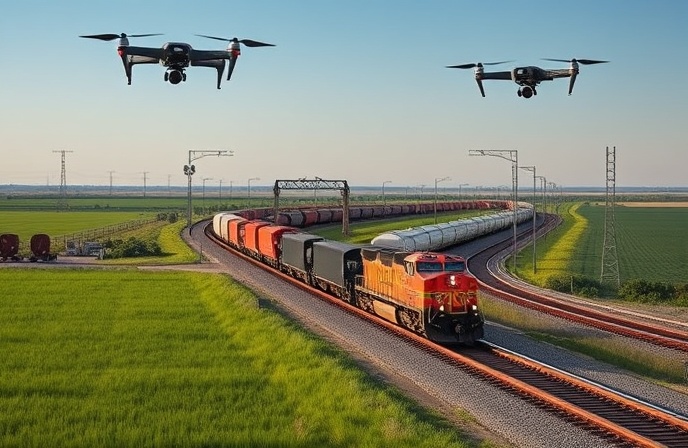
Go Rail Hosts State Lawmakers at Indiana Rail Road for Freight Rail Showcase
In a bid to educate and advocate for the crucial role of freight rail in the national economy, the national non-profit organization Go Rail orchestrated a comprehensive policy discussion and site visit last week. The event, held at The Indiana Rail Road Co. (INRD) in Indianapolis, brought together 55 state lawmakers representing 23 states, railroad executives, and Go Rail staff. This gathering served as a hands-on educational opportunity, providing state legislators with an in-depth understanding of modern freight rail operations. The event aimed to illuminate the industry’s safety protocols, technological advancements, and the vital contributions of its workforce. The primary objectives included highlighting rail’s role in mitigating supply chain congestion and educating policymakers on critical industry priorities for the upcoming surface transportation reauthorization in 2026.
Operational Insights and Supply Chain Solutions
The central focus of the event was to provide state lawmakers with a tangible understanding of the operational intricacies of a modern freight railroad. Attendees received a firsthand look at various aspects of INRD’s operations, encompassing track maintenance, locomotive technology, and yard management. This allowed them to appreciate the efficiency and safety measures employed in moving goods across the nation. Furthermore, discussions centered on how freight rail actively contributes to alleviating supply chain bottlenecks, a critical issue in recent years. The efficient movement of goods by rail offers a significantly less congested alternative to over-the-road trucking, reducing both transit times and the environmental impact associated with increased truck traffic. INRD President and CEO Joe Gioe underscored this aspect, emphasizing how the industry ensures the smooth flow of commodities through the supply chain.
Technological Advancements in the Rail Industry
The event also showcased the significant technological advancements reshaping the rail industry. Key areas of focus included the implementation of advanced signaling systems, such as Positive Train Control (PTC), designed to prevent train-to-train collisions, overspeed derailments, and incursions into established work zones. PTC utilizes GPS, wireless communications, and onboard computers to monitor and control train movements. In addition, the utilization of sophisticated track inspection technologies, incorporating drones and automated track geometry cars, was highlighted. These tools enable the rapid and precise identification of potential track defects, reducing the risk of incidents and optimizing maintenance schedules. The application of data analytics and predictive maintenance further streamlines operations, contributing to increased safety and efficiency.
Legislative Priorities for the Future
A crucial component of the policy discussion revolved around outlining critical freight rail priorities for the upcoming surface transportation reauthorization in 2026. Go Rail officials presented several key areas for legislative focus, including permit streamlining to expedite project approvals and infrastructure improvements. Continued funding for rail grants, critical for supporting both passenger and freight rail expansion and modernization projects, was also a focal point. The meeting additionally addressed the urgent need to restore solvency to the Highway Trust Fund, acknowledging its interrelation with rail freight as it is a key component of the overall transportation network. The discussions aimed to establish a framework for future policy, ensuring a sustainable and well-funded transportation infrastructure.
Workforce Development and Industry Outlook
The event also addressed the imperative of workforce development within the rail industry. Highlighting the need to attract and retain skilled employees across various disciplines, from engineering and maintenance to train operations, was emphasized. The promotion of apprenticeships, educational partnerships, and ongoing training programs were discussed as crucial steps in preparing for the industry’s long-term future. Furthermore, the event underscored the industry’s resilience and adaptability in the face of evolving economic and environmental challenges. This included embracing sustainable practices and fostering a collaborative environment to better serve both national and local economies.
Conclusion
The Go Rail event at the Indiana Rail Road proved to be an important effort in educating state lawmakers on the complexities and importance of freight rail. By offering a tangible demonstration of operational practices, the initiative aimed to bridge the gap between policymakers and the industry, resulting in better understanding of the critical role of freight rail in a modern economy. The detailed focus on safety, technology, and workforce development, combined with discussions around key legislative priorities, provided the lawmakers with a comprehensive insight into the industry’s needs and future vision. The discussions around permit streamlining, continued funding, and the Highway Trust Fund’s health highlight the significance of governmental policies in supporting the freight rail industry. In the future, this event can lead to policy changes that support infrastructure upgrades, improved supply chain efficiency, and overall economic health.
Company Summary: The Indiana Rail Road Company
The Indiana Rail Road Company (INRD) is a privately held, short-line freight railroad operating over approximately 500 miles of track in central and southern Indiana and east-central Illinois. INRD provides a crucial link in the national transportation network, connecting with several major Class I railroads. Its core business includes transporting various commodities, such as agricultural products, coal, steel, and intermodal freight. The company is committed to operational efficiency, safety, and providing excellent customer service, all while playing an integral role in supporting economic growth in the communities it serves.
RELATED POSTS
April 1, 2026 12:10 pm
Alstom secured a €410 million contract from CFR SA to...
April 1, 2026 2:14 pm
Saudi Arabia Railways launched a 1,700 km freight rail corridor...
April 1, 2026 8:40 pm
BNSF Railway expands Galesburg, Illinois, yard capacity, with second hump...
April 1, 2026 5:39 pm
The U.S. Surface Transportation Board proposed a 1.5% annual US...
April 1, 2026 4:31 pm
Network Rail upgraded Berrylands station platforms for £6 million, replacing...
April 1, 2026 6:21 pm
Federal Transit Administration awarded $20.6 billion in formula-based apportionments to...