
Go-Ahead’s German Rail Expansion: E-Netz Allgau Insights
Go-Ahead’s German rail expansion continues! Their E-Netz Allgau win shows the power of private sector competition. Learn more about this game-changing acquisition.
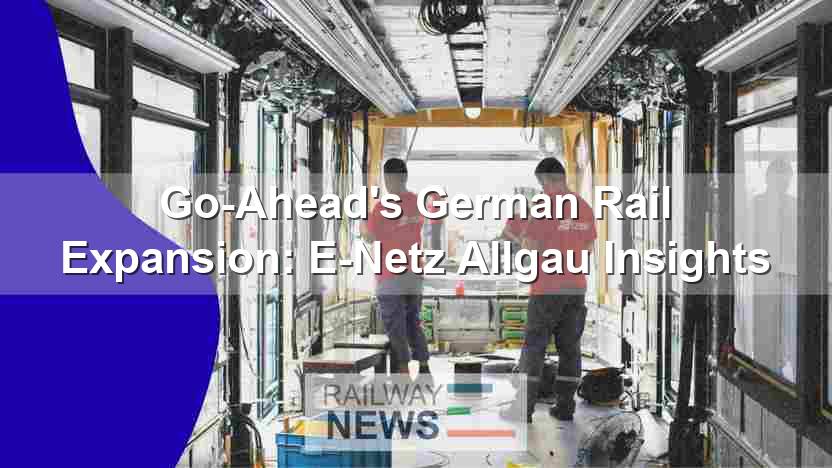
This article examines the strategic significance of Go-Ahead Group’s acquisition of the E-Netz Allgau railway network in Germany. The award of this 12-year contract to Go-Ahead Bus und Bahn, the German subsidiary of the UK-based transport operator, represents a significant milestone in the ongoing liberalization of the German railway market. The deal, secured from the Bavarian and Baden-Württemberg transport authorities, marks Go-Ahead’s fourth network operation in Germany, solidifying their position as a major player in the increasingly competitive German regional rail sector. This analysis will delve into the strategic implications of this contract for Go-Ahead, the broader German railway landscape, and the future of regional rail services in the Allgau region. We will explore the competitive dynamics, the operational challenges, and the potential impacts on passenger experience. Finally, we will consider the long-term implications of this and similar contracts for the future of railway privatization and competition within Germany.
Expansion of Go-Ahead’s German Operations
Go-Ahead’s successful bid for the E-Netz Allgau network underscores its ambitious expansion strategy within the German market. Securing this contract, scheduled to commence in 2021, significantly expands Go-Ahead’s operational footprint in Germany. This follows the acquisition of the Murrbahn (Network 3A) network, a 13-year contract awarded in 2017, demonstrating a clear commitment to long-term investment in the German regional rail market. The Allgau network’s connection between Munich and Lindau, traversing Bavaria and Baden-Württemberg, strategically complements Go-Ahead’s existing networks, creating operational synergies and potentially enabling efficient scheduling and resource allocation. This expansion strategy showcases Go-Ahead’s confidence in its ability to effectively manage and grow its operations within the complexities of the German rail regulatory environment.
Competitive Dynamics in the German Rail Market
The award of the E-Netz Allgau contract to Go-Ahead represents a challenge to the dominance of Deutsche Bahn (DB), the long-standing national railway operator. The increasing privatization and liberalization of the German rail system creates a more competitive landscape, forcing incumbent operators like DB to adapt and innovate. Go-Ahead’s success demonstrates the viability of private sector participation in regional rail operations and highlights the growing appeal of alternative service providers. This competition could potentially lead to improved efficiency, enhanced service quality, and greater innovation in the German rail sector. The presence of multiple operators also offers passengers a wider range of options and potentially fairer pricing strategies.
Operational Challenges and Opportunities
Operating the E-Netz Allgau network presents Go-Ahead with a number of operational challenges. The integration of the existing infrastructure, the coordination of rolling stock (most likely electric multiple units – EMUs), and the management of a diverse workforce will require significant organizational expertise and meticulous planning. However, these challenges also present significant opportunities. The network’s approximately 2.5 million kilometer route length provides substantial scale for efficiency gains, and the potential for synergies with existing networks could lead to considerable cost savings. Additionally, Go-Ahead’s experience in other European markets will provide valuable insights for optimizing operations in the Allgau region, including potentially innovative approaches to customer service and passenger experience.
Long-Term Implications for German Rail
Go-Ahead’s success in securing the E-Netz Allgau contract signals a broader trend towards the liberalization and privatization of regional rail services in Germany. This development reflects a governmental strategy to improve efficiency, increase competition, and potentially lower costs for taxpayers. The long-term success of Go-Ahead and other private operators will depend on their ability to deliver high-quality services, meet passenger expectations, and integrate effectively with the existing infrastructure and regulatory framework. The competition fostered by such contracts will likely drive innovation and improvements in the overall passenger experience, resulting in a more efficient and customer-focused rail system. The continued success of such private sector partnerships will undoubtedly shape the future of German rail for decades to come.
Conclusion
Go-Ahead’s acquisition of the E-Netz Allgau network marks a significant step in the ongoing transformation of the German railway landscape. The company’s expansion into this region builds upon its previous successes and signals a long-term commitment to the German market. The competitive dynamics introduced by private operators like Go-Ahead are expected to challenge the incumbents and enhance efficiency within the sector. While operational challenges remain, Go-Ahead’s expertise and experience position them to overcome these hurdles and create a more efficient, customer-centric rail service for the Allgau region. The successful implementation of this contract could pave the way for further privatization of regional rail networks in Germany, potentially leading to substantial improvements in service quality, innovation, and overall passenger satisfaction. The success of this venture will be a key indicator of the wider efficacy of liberalizing the German rail market and could influence policy decisions in other European countries facing similar challenges. The long-term implications of this trend extend beyond Germany, potentially shaping the future of rail privatization and competition across Europe.

Railway infrastructure, rolling stock and transport technologies specialist focused on global rail industry developments, high-speed rail systems, signaling technologies and freight transportation. Covering railway investments, public transport modernization, rail operations and international mobility projects across Europe, Asia and North America.
RELATED POSTS
September 6, 2026 5:19 am
Hitachi delivered Taiwan's first N700ST high-speed train from Japan in...
September 6, 2026 1:17 am
Hitachi Toshiba Supreme Consortium confirmed the first of 12 N700ST...

September 6, 2026 4:12 am
Alstom delivered the first of 100 new G Class trams...

September 5, 2026 7:14 pm
HS2 Ltd signed renegotiated civils contracts with EKFB and Align...
September 19, 2026 11:19 am
China launched an experimental 1.11-tonne maglev test sled to 800...
September 7, 2026 4:15 pm
Zimbabwe approved the EUR 3 billion Harare Light Rail project,...