
Global Railway Operator: Sustainability & Safety Report Reveals Progress
Railway operator’s Sustainability Report highlights emissions reduction, improved safety, and employee development. Key improvements for the rail sector are showcased in this report.
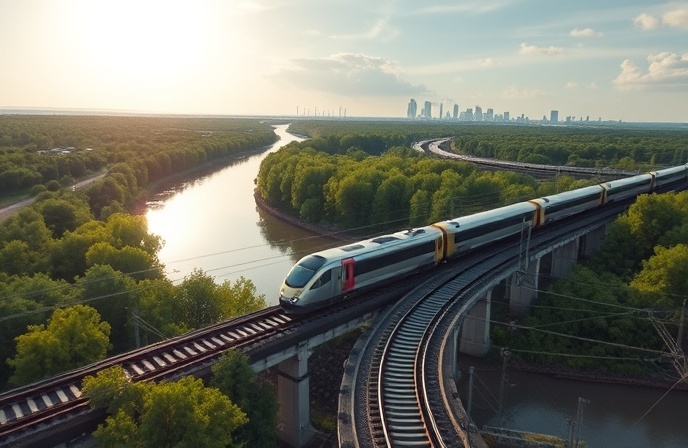
The global railway operator has released its 2024 Delivering Responsibly Report, highlighting significant advancements in emissions reduction, accident frequency, and employee development. The company achieved a 4% improvement in Scope 1 and 2 greenhouse gas emissions intensity and maintained strong safety performance, with accident frequency falling 8% year-over-year.
| Key Entity | Critical Detail |
|---|---|
| Company | 2024 Delivering Responsibly Report |
| Emissions Improvement | 4% reduction in Scope 1 & 2 GHG intensity |
| Renewable Fuel Use | Nearly 10% of total fuel |
| Safety Performance | 1.06 injuries per 200,000 person-hours (2nd best ever); 8% reduction in train accident frequency |
| Employee Training | Over 1 million hours logged; 97% of procurement team trained on sustainable procurement |
| Community Investment | C$20 million |
| Report Release Date | December 2, 2024 |
The 10th annual sustainability and safety report details the company’s progress toward its long-term goals, underscoring a commitment to responsible operations. Beyond the reported emissions intensity improvement, the company also saw a substantial increase in its use of renewable fuels, now accounting for nearly 10% of all fuel consumed. This dual focus on operational efficiency and environmental stewardship positions the company as a leader in sustainable rail transport.
Strategic Impact on Sustainability and Safety
The report’s findings demonstrate a robust strategy for integrating sustainability and safety into core business operations. The 4% reduction in greenhouse gas emissions intensity, coupled with the expanded use of renewable fuels, directly addresses industry-wide pressures to decarbonize and reduce environmental impact. Simultaneously, achieving the second-best injury performance in company history and a notable decrease in train accident frequency reinforces a safety culture that is paramount in the railway sector. These achievements are not merely metrics but represent tangible progress towards critical 2030 reduction benchmarks, signaling a well-defined path for future improvements.
Operational Advancements and Community Engagement
Further operational enhancements include the deployment of new behavior-based safety training programs, specifically targeting front-line supervisors to proactively mitigate risks. Employee well-being has also been a focus, with improved wellness initiatives and significant accessibility upgrades made to over 30 facilities across Canada. The company’s commitment extends beyond its internal operations, as evidenced by a substantial C$20 million contribution to community initiatives. Furthermore, the comprehensive training of 97% of its procurement and supply management team on sustainable procurement practices highlights a strategic effort to embed environmental and social responsibility throughout its entire value chain.
Last June 2025, we published an article about Renfe’s cutting-edge Aranjuez maintenance hub. Click here to read – Future of Rail: Renfe’s Railway Technology Hub, Aranjuez: Essential Guide
Industry Context
In an era where environmental, social, and governance (ESG) performance is increasingly scrutinized by investors, regulators, and the public, the achievements detailed in this report are of significant consequence. For railway industry CEOs, these results offer a compelling case study in how to balance operational efficiency with ambitious sustainability targets and an unwavering commitment to safety. The company’s proactive approach to emissions reduction, renewable energy integration, and enhanced safety protocols sets a precedent and provides a benchmark for competitors, underscoring the growing imperative for all stakeholders to prioritize responsible and sustainable business practices to ensure long-term viability and societal acceptance.
RELATED POSTS
SEPTA fare hike and service cuts halted by Philadelphia court,...
September 6, 2025 9:36 pm
LSRC unveils "Spirit of Pere Marquette" locomotive, a tribute to...

March 17, 2018 6:50 pm
Siemens' cutting-edge CBTC system powers Singapore's Downtown Line 3 extension,...
October 30, 2025 2:54 am
Hitachi Rail integrates NVIDIA's IGX Thor for its HMAX platform,...
April 24, 2021 1:12 pm
This article delves into the significant cost revision of the...
August 5, 2018 10:04 am
Alstom delivers five more Pendolino EVO high-speed trains to Italo,...