
Global Rail Deals: Mega-Projects & Investments
Global railway investment is booming! From Argentina to Italy, major railway contracts are transforming infrastructure; discover the latest deals shaping the future of rail.
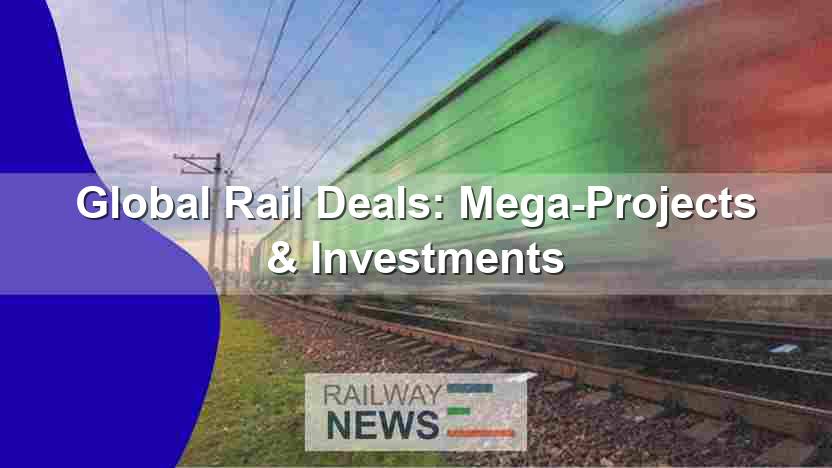
The global railway industry is experiencing a period of significant investment and modernization, driven by a need for improved infrastructure, increased capacity, and enhanced operational efficiency. This article examines several key deals announced this week, highlighting the diverse players and geographical locations involved. These deals underscore the evolving landscape of railway technology, financing, and international collaboration. From large-scale infrastructure projects in South America to the modernization of urban transit systems in Europe and the development of new transit lines in the United States, the examples below illustrate the dynamism and complexity of the global rail market. We will explore the strategic implications of these contracts, focusing on their economic impact, technological advancements implemented, and the role of international funding and partnerships. The analysis will reveal the trends shaping the future of railway development worldwide, emphasizing the crucial roles played by both established players and emerging markets.
China Railway Construction’s Argentinian Contract
State-owned China Railway Construction (CRC) has secured a substantial $1 billion contract from the Argentine government for the upgrade of a vital freight rail line. This project centers on the refurbishment of a 1,020-kilometer section of the San Martín railway, connecting the Rosario shipping hub with Mendoza province. The modernization aims to significantly reduce logistical costs associated with freight transportation, with projected savings of 55% in travel expenses. The contract’s signing during the G20 summit in Buenos Aires highlights the importance of infrastructure development for international trade and economic growth. The project demonstrates CRC’s growing global influence in railway infrastructure development and showcases the significant investment required for modernizing aging rail networks in developing nations. The selection of CRC likely reflects their experience in large-scale infrastructure projects and their competitive pricing.
Stadler’s Contract with FNM in Italy
Ferrovie Nord Milano (FNM), a public transport operator in Italy, has awarded a €115 million ($130.4 million) contract to Stadler for the supply of up to nine interoperable electric trains. This agreement encompasses the delivery of five trains initially, with an option for four more. Additionally, Stadler will provide first and second-level maintenance services. The contract highlights the growing demand for modern, interoperable rolling stock in Europe, emphasizing the need for standardized designs that allow for seamless cross-border operations. The eight-year timeframe reflects the long-term commitment involved in such contracts, encompassing not only initial delivery but also extensive maintenance and potential expansion. Stadler’s success in this tender showcases their competitiveness in supplying innovative and sustainable railway technology.
Honolulu Rail Transit Project and RF Industries
The Honolulu Rail Transit Project continues to progress, with Stanley Access Technologies awarding a contract to RF Industries (RF Industries) for the supply of wiring harnesses and electromechanical assemblies. These components are crucial for the platform screen doors (PSD), which are vital safety features for passenger protection. The project, encompassing 21 stations and connecting significant locations like Pearl Harbor and Honolulu Airport, represents a major investment in urban rail transit infrastructure in the United States. RF Industries’ role underscores the importance of specialized electronic interconnect products within larger infrastructure projects. The project’s progress and RF Industries’ participation illustrate the complexities involved in large-scale public transit development, requiring collaboration among multiple vendors and precise execution to meet stringent safety standards.
European Union Investment in Kosovo’s Rail Network
The European Union (EU), through the European Bank for Reconstruction and Development (EBRD) and the Western Balkans Investment Framework (WBIF), has committed €17.2 million ($19.5 million) to upgrade Rail Route 10 in Kosovo. This multi-phase project, running between Fushë Kosovë and Mitrovicë, underscores the EU’s commitment to infrastructure development in the Western Balkans region. The funding highlights the importance of international cooperation in supporting infrastructure projects and improving regional connectivity. The project showcases how international financial institutions and regional development initiatives play a crucial role in financing and promoting railway modernization across Europe. The phased approach allows for manageable project implementation while ensuring steady progress towards improved rail infrastructure.
Conclusions
The deals highlighted in this article demonstrate the considerable investment and activity within the global railway sector. From large-scale infrastructure projects undertaken by companies like China Railway Construction in Argentina, to the modernization of urban transit systems with Stadler’s contract in Italy, the railway industry is undergoing substantial transformation. These projects showcase not only the financial commitment required but also the complexities of international collaborations and partnerships. The involvement of the EU, through funding mechanisms such as the EBRD and WBIF, underlines the importance of international cooperation in supporting infrastructure development in regions such as the Western Balkans. Additionally, the inclusion of the Honolulu Rail Transit project illustrates the ongoing modernization efforts in the United States, highlighting the intricate technical aspects of railway construction and signaling systems. The consistent demand for technologically advanced, efficient, and safe railway systems, coupled with a substantial need for upgrades to existing infrastructure, presents both opportunities and challenges for industry stakeholders. The future of the global railway industry hinges on the continued integration of advanced technologies, innovative financing models, and strategic international collaborations to address the growing demands for efficient and sustainable transportation solutions.

Railway infrastructure, rolling stock and transport technologies specialist focused on global rail industry developments, high-speed rail systems, signaling technologies and freight transportation. Covering railway investments, public transport modernization, rail operations and international mobility projects across Europe, Asia and North America.
RELATED POSTS

September 5, 2026 4:19 pm
CPK launched formal tender talks with four consortia to design...

September 6, 2026 4:12 am
Alstom delivered the first of 100 new G Class trams...

September 5, 2026 7:14 pm
HS2 Ltd signed renegotiated civils contracts with EKFB and Align...
September 6, 2026 6:17 am
Hungary ordered a national ban on most freight trains from...
September 6, 2026 8:17 am
DB InfraGO reopened the Nuremberg-Regensburg line in Bavaria on 31...
September 7, 2026 8:16 am
Midea, Gree and TCL shipped air conditioners via China Railway...