
Global Rail Advancements: Bombardier, Alstom, Nokia Projects
Railway professionals, major contracts are transforming the industry! From Bombardier’s Aventra trains to advanced signaling systems, discover the latest innovations driving railway modernization.
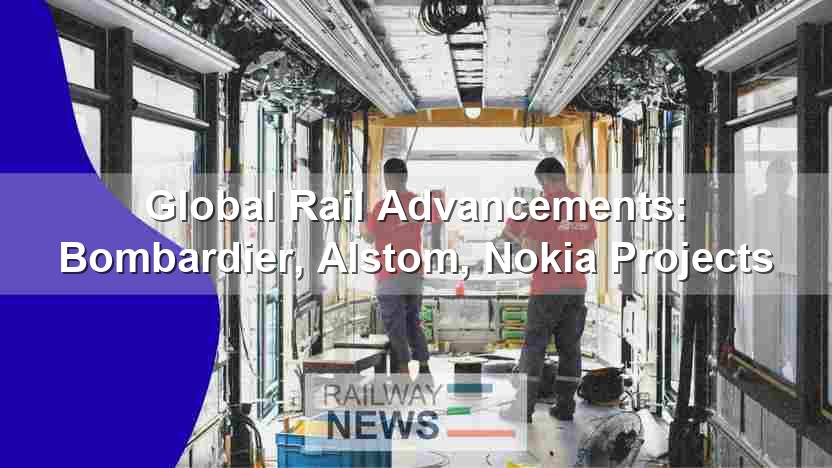
The global railway industry is experiencing a period of significant transformation, driven by the need for increased capacity, improved efficiency, and enhanced safety. This article examines several recent major contracts awarded to key players in the sector, highlighting the technological advancements and infrastructure improvements they represent. These contracts showcase diverse areas of the railway industry, including rolling stock procurement, signaling system upgrades, and the implementation of advanced communication networks. We will explore how these projects contribute to the modernization and expansion of railway networks worldwide, focusing on examples from several countries and different aspects of railway operations. From the expansion of London’s Elizabeth line with new Bombardier Aventra trains to the modernization of signaling systems in Argentina and Poland, we’ll delve into the specifics of these significant undertakings and their implications for the future of rail travel. The analysis will cover not only the financial aspects of these contracts but also their technological impact, emphasizing the move towards more sustainable, efficient, and passenger-friendly railway systems.
Bombardier’s Continued Success in Rolling Stock Provision
Bombardier Transportation secured two notable contracts. The first involves the delivery of five additional BOMBARDIER AVENTRA trains to Transport for London (TfL) for the Elizabeth line, increasing the total order to 70 trains. These nine-car trains, each boasting a capacity of 1,500 passengers, are highly energy-efficient and equipped with advanced technologies such as Bombardier ORBITA (Onboard Real-time Information and Train control) and the Bombardier Automated Vehicle Inspection System (AVIS). This contract underscores Bombardier’s dominance in supplying modern, high-capacity rolling stock for major metropolitan rail networks. The second contract with VIA Rail in Canada focuses on the refurbishment of 17 vintage rail cars, showcasing Bombardier’s expertise in extending the lifespan of existing rolling stock through modernization. This initiative highlights a growing focus on sustainability within the railway industry, maximizing the use of existing assets and reducing environmental impact through refurbishment rather than complete replacement.
Signal System Modernization and Infrastructure Upgrades
Alstom won a significant contract from Trenes Argentinos Infraestructura (Argentine Railways Infrastructure) for the resignaling of several stations. This €16m project encompasses the refurbishment of signaling networks across key stations, including testing track circuits, signal systems, and the implementation of remote control posts and relay interlocking systems. This illustrates the ongoing need for infrastructure modernization to enhance safety, efficiency, and capacity within existing railway networks. Concurrently, the Massachusetts Bay Transportation Authority (MBTA) selected Barletta Heavy Division to upgrade the Orange Line’s signaling system and reconstruct the Wellington Rail Yard. This is intended to support the deployment of 152 new Orange Line cars, showcasing the interconnectedness of rolling stock procurement and infrastructure upgrades for seamless railway operation.
Advancements in Railway Communication Networks
A Nokia-led consortium secured a substantial €539m contract from PKP Polskie Linie Kolejowe (PKP PLK), the Polish railway operator, for the implementation of a GSM-Railway (GSM-R) system. This involves installing and maintaining 13,800km of GSM-R network and the optical fiber-based backhaul infrastructure. This contract is crucial for PKP PLK to meet European Rail Traffic Management System (ERTMS) standards, enhancing the reliability and safety of train operations across Poland. The collaboration with Herkules, Pozbud, and Wasko highlights the complexity of such large-scale projects, requiring the expertise of multiple companies to ensure successful implementation.
Conclusion
The contracts discussed highlight several significant trends in the railway industry. First, there is a strong emphasis on procuring modern, high-capacity rolling stock capable of meeting the increasing demands of passenger transport in major cities. Bombardier’s success in this area underscores its position as a leading supplier of advanced rolling stock technology. Second, modernization and upgrades of existing railway infrastructure, particularly signaling systems, remain a crucial focus to enhance safety, efficiency, and operational capacity. Alstom’s and Barletta’s contracts highlight the need for continuous investment in infrastructure maintenance and improvements. Third, the adoption of advanced communication technologies, such as GSM-R, is accelerating, driven by the need to comply with ERTMS standards and improve the overall reliability and safety of railway networks. Nokia’s success exemplifies this technological shift. Finally, sustainability initiatives are gaining traction, with Bombardier’s refurbishment contract demonstrating a proactive approach to extending the lifespan of existing assets. These contracts collectively indicate a positive outlook for the railway industry, driven by substantial investment in infrastructure improvements, technological advancements, and a commitment to enhancing both passenger experience and operational efficiency. The ongoing modernization and expansion of railway networks worldwide signify a vital role for rail transport in sustainable and efficient transportation solutions for the future.

Railway infrastructure, rolling stock and transport technologies specialist focused on global rail industry developments, high-speed rail systems, signaling technologies and freight transportation. Covering railway investments, public transport modernization, rail operations and international mobility projects across Europe, Asia and North America.
RELATED POSTS

September 6, 2026 5:19 am
Hitachi delivered Taiwan's first N700ST high-speed train from Japan in...

September 6, 2026 6:17 am
Hungary ordered a national ban on most freight trains from...

September 6, 2026 1:17 am
Hitachi Toshiba Supreme Consortium confirmed the first of 12 N700ST...

September 5, 2026 4:19 pm
CPK launched formal tender talks with four consortia to design...

September 6, 2026 4:12 am
Alstom delivered the first of 100 new G Class trams...
September 7, 2026 8:16 am
Midea, Gree and TCL shipped air conditioners via China Railway...