
Giruno: Switzerland’s High-Speed Rail Revolution
The Giruno high-speed train: Swiss rail’s latest marvel, boasting unparalleled speed, comfort, and accessibility. Discover how it’s revolutionizing travel!
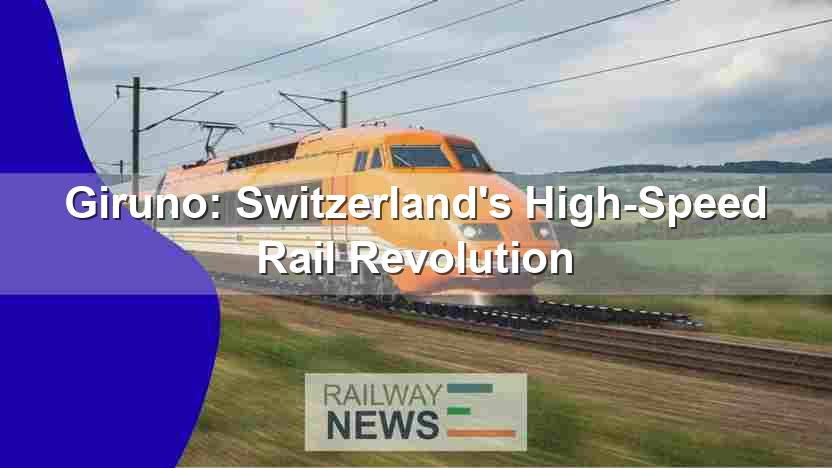
This article examines the significant milestone achieved with the granting of an operating license to the Stadler-built Giruno (SMILE) high-speed train by the Swiss Federal Office of Transport (FOT). This event marks the culmination of years of development, rigorous testing, and strategic planning, representing a pivotal moment in the modernization of Swiss Railways (SBB). The Giruno’s introduction signifies more than just the addition of new rolling stock; it underscores a commitment to enhanced passenger comfort, improved accessibility, and increased operational efficiency within the Swiss rail network, a network renowned for its precision and punctuality. The implications of this technological advancement extend beyond Switzerland’s borders, impacting intercontinental rail travel and potentially influencing future high-speed rail projects globally. This exploration will delve into the train’s technical specifications, operational capabilities, accessibility features, and its broader significance within the context of Switzerland’s evolving transportation infrastructure.
Technical Specifications and Operational Capabilities
The Giruno, officially named SMILE by its manufacturer Stadler, is a multi-system high-speed train capable of reaching speeds up to 200 km/h (124 mph) in single traction mode on the Swiss national network. Its impressive length, reaching up to 400 meters in double traction configuration, allows for a passenger capacity of 810 seats. The train’s design incorporates features optimized for operation across multiple countries, including Switzerland, Austria, Italy, and Germany, necessitating a sophisticated multi-system electrical system capable of seamlessly adapting to the varying power supply standards along its planned routes. This adaptability demonstrates a commitment to interoperability, facilitating smoother cross-border rail travel within Europe. The rigorous testing phases undertaken since 2017 across these diverse rail systems proved crucial in verifying its compatibility and ensuring safe operation.
Accessibility and Passenger Comfort
Beyond speed and operational efficiency, the Giruno prioritizes passenger comfort and accessibility. The train features a low-floor entrance designed to accommodate varying platform heights across different countries, a key feature for seamless passenger flow. Additionally, the Giruno surpasses legal requirements concerning accessibility for passengers with disabilities, providing significantly more wheelchair-accessible areas and toilets than mandated by law. These inclusive design features aim to make rail travel more accessible for all passengers, regardless of their abilities. Beyond accessibility, passenger comfort is enhanced with amenities such as power outlets at every seat, large luggage racks, gender-separated toilets, and an energy-efficient LED lighting system, all contributing to a more pleasant and sustainable travel experience.
Meeting Growing Demand and Future Expansion
The SBB’s order of 29 Giruno trains, with an option for an additional 92 units, reflects the growing demand for rail services in Switzerland, particularly since the opening of the Gotthard Base Tunnel (GBT) in late 2016. The GBT dramatically reduced travel times between northern and southern Switzerland, increasing the need for modern, high-capacity rolling stock capable of efficiently handling the increased passenger volume. The Giruno perfectly addresses this need, providing significant improvements in both passenger capacity and speed. This investment not only enhances current services but also provides a scalable solution for future growth, effectively future-proofing SBB’s capacity to meet increasing transportation demands. The train’s modular design may further facilitate easy integration and scalability in the future.
Conclusion
The Swiss Federal Office of Transport’s granting of an operating license to the Stadler-built Giruno represents a substantial achievement in Swiss rail modernization. The train’s advanced technical specifications, including its multi-system capability and high-speed performance, coupled with its commitment to passenger comfort and accessibility, demonstrate a clear dedication to enhancing the overall rail travel experience. The Giruno’s introduction addresses the rising demand for rail services post-Gotthard Base Tunnel opening. The scalability of the order and potential expansion to 121 units showcase SBB’s forward-thinking strategy in anticipating future growth. The project’s success underlines the importance of collaboration between manufacturers like Stadler and rail operators such as SBB in developing innovative, sustainable, and accessible transportation solutions. The Giruno isn’t merely a high-speed train; it is a symbol of Switzerland’s commitment to a modern, efficient, and inclusive rail network, setting a new standard for high-speed rail across Europe and serving as a potential model for other countries planning similar advancements in their rail infrastructure. The train’s features, from its multi-system compatibility to its emphasis on passenger accessibility, highlight a future where high-speed rail is not only efficient but also equitable and sustainable. The long-term impact of the Giruno’s introduction extends beyond improved travel times and increased capacity; it signifies a paradigm shift in the design and implementation of high-speed rail networks globally.

Railway infrastructure, rolling stock and transport technologies specialist focused on global rail industry developments, high-speed rail systems, signaling technologies and freight transportation. Covering railway investments, public transport modernization, rail operations and international mobility projects across Europe, Asia and North America.
RELATED POSTS

October 8, 2026 1:15 pm
Alstom secured a €1bn contract to build 13 automated trains,...

October 1, 2026 7:09 am
United States regulators confirmed a September 30 deadline for the...

October 4, 2026 5:14 pm
Alstom secured a CA$4.7 billion order from VIA Rail Canada...

October 5, 2026 6:12 pm
AECOM and Jacobs secured a contract in September 2026 to...

October 1, 2026 12:13 am
Illinois approved $1.5 billion annually for the Northern Illinois Transit...

October 4, 2026 11:08 pm
Sound Transit confirmed the September 30 opening of Seattle Pinehurst...