
Ghana’s $500M Railway Upgrade: Manso-Tarkwa-Dunkwa Line
Ghana’s railway modernization is underway! A $500 million investment, spearheaded by China Railway Wuju Group, is building a new standard gauge line—boosting efficiency and economic growth.
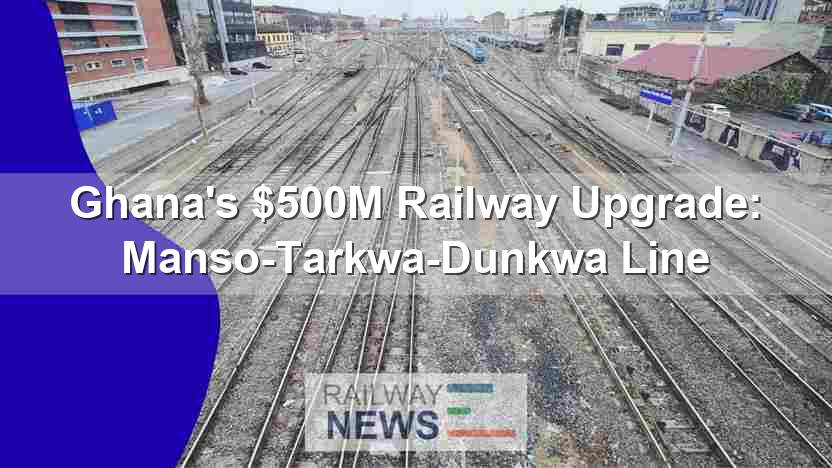
This article examines the significant investment in Ghana’s railway infrastructure, focusing on the $500 million contract awarded to China Railway Wuju Group Corporation (CRWG) for the development of a new standard gauge railway line. The project represents a crucial step in Ghana’s efforts to modernize its aging railway network and enhance its capacity for both passenger and freight transport. This modernization is vital for economic growth, facilitating the movement of goods and people across the country more efficiently and reliably than the currently limited operational network. We will delve into the specifics of the contract, exploring the scope of the project, the chosen contractor’s experience, and the broader implications for Ghana’s transportation sector and economic development. The analysis will also consider the challenges and opportunities presented by this large-scale infrastructure undertaking, examining the potential benefits and the necessity of efficient project management to ensure timely completion and effective integration into the national rail system.
The Manso-Tarkwa-Dunkwa Railway Line
The core of this investment centers on the construction of a new 100km standard gauge railway line connecting Manso, Tarkwa, and Dunkwa. This section represents a critical link in the broader plan to upgrade Ghana’s railway system. The selection of CRWG, a company with extensive experience in large-scale railway projects globally, suggests a commitment to high standards of engineering and project execution. The project is not isolated; it builds upon previous investments, such as the ongoing construction of the 22km Kojokrom-Manso line by Messers Amandi, demonstrating a phased approach to the larger network expansion.
CRWG’s Role and Experience
China Railway Wuju Group Corporation (CRWG) brings substantial experience in railway construction to this undertaking. Their presence in Ghana since 2007, managing multiple subsidiaries, underscores their commitment to the region and their capacity to handle projects of this magnitude. Their proven track record offers reassurance regarding the project’s technical feasibility and successful completion. The involvement of a large international contractor also raises questions regarding the transfer of technology and the potential for skills development amongst local Ghanaian workers. Successful collaboration in this area is key to long-term sustainability of Ghana’s rail infrastructure.
Broader Implications for Ghana’s Transportation Sector
This project is more than just a single railway line; it’s a component of a larger national strategy aimed at revitalizing Ghana’s railway network. The current operational network is significantly less than the historical 947km, highlighting the scale of the challenge. This $500 million investment signals a commitment to addressing this deficit and improving connectivity across the country. Improved rail infrastructure will streamline the movement of goods, potentially reducing transportation costs and boosting economic activity in the regions served by the line. It also has the potential to improve passenger transport, offering a more reliable and efficient alternative to road travel, particularly for long-distance journeys.
Challenges and Opportunities
While this project presents considerable opportunities for economic growth and improved infrastructure, challenges remain. Timely completion within the stipulated timeframe is crucial, and effective project management is essential to mitigate potential delays and cost overruns. Additionally, the integration of the new standard gauge line with existing infrastructure requires careful planning and coordination to ensure seamless operation. Finally, sustained investment in maintenance and ongoing operational support will be necessary to ensure the long-term viability of the upgraded railway system. This requires not only financial commitment but also the development of a skilled workforce capable of maintaining the new infrastructure.
Conclusion
The $500 million contract awarded to CRWG for the construction of the Manso-Tarkwa-Dunkwa railway line marks a significant step forward in Ghana’s efforts to modernize its railway network. This project, along with other ongoing investments like the Tema-Mpakadan line, demonstrates a commitment to improving the country’s transportation infrastructure. The involvement of a reputable international contractor like CRWG brings expertise and experience, increasing the likelihood of successful project completion. However, the success of this endeavor relies on effective project management, timely execution, and a commitment to long-term maintenance and operational sustainability. The potential benefits are substantial: improved connectivity, economic growth, enhanced efficiency in both freight and passenger transport, and the fostering of skills development within the Ghanaian workforce. Successful completion of this project will serve as a powerful example of infrastructure development and its transformative impact on a nation’s economic prospects. The Ghanaian government’s commitment to this substantial investment speaks volumes about its vision for a modern and efficient transportation sector capable of supporting sustained economic growth and improved quality of life for its citizens. Continued investment and a strategic, long-term approach to maintenance and operation will be crucial to unlocking the full potential of this vital infrastructure upgrade.

Railway infrastructure, rolling stock and transport technologies specialist focused on global rail industry developments, high-speed rail systems, signaling technologies and freight transportation. Covering railway investments, public transport modernization, rail operations and international mobility projects across Europe, Asia and North America.
RELATED POSTS

October 8, 2026 1:15 pm
Alstom secured a €1bn contract to build 13 automated trains,...

October 1, 2026 7:09 am
United States regulators confirmed a September 30 deadline for the...

October 4, 2026 5:14 pm
Alstom secured a CA$4.7 billion order from VIA Rail Canada...

October 1, 2026 12:13 am
Illinois approved $1.5 billion annually for the Northern Illinois Transit...
October 5, 2026 1:13 pm
New York MTA confirmed a late 2026 DEIS release for...
October 6, 2026 9:17 am
Illinois approved $1.1M in state funds to upgrade two McHenry...