
Germany’s Digital S-Bahn: DB & Siemens Rail Revolution
Witness the Hamburg S-Bahn’s digital revolution! ETCS Level 2 and ATO are transforming rail operations – discover how!
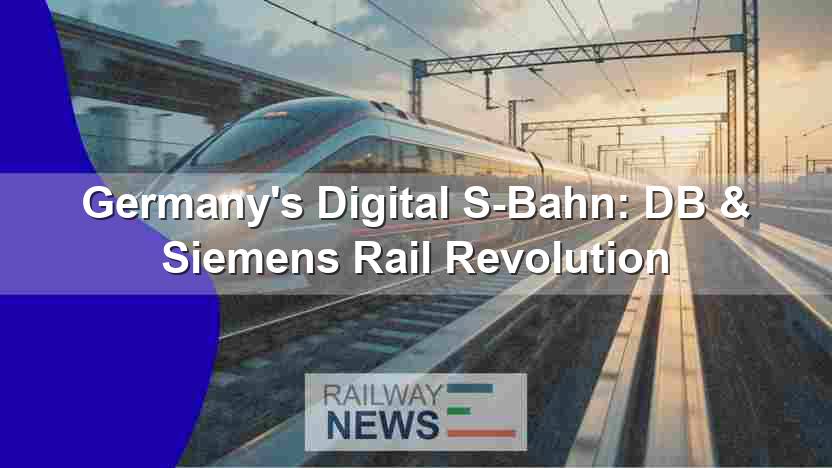
This article explores the groundbreaking initiative undertaken by Deutsche Bahn (DB) and Siemens to digitally transform the Hamburg S-Bahn (a suburban rail network), a significant step towards modernizing Germany’s railway infrastructure. The project, dubbed “Digital S-Bahn Hamburg,” represents a paradigm shift in rail operations, aiming to enhance efficiency, capacity, and passenger experience through the implementation of cutting-edge technologies. This endeavor serves as a crucial pilot project, potentially influencing the future of railway systems not only in Germany but across Europe. We will examine the technological underpinnings of this project, the strategic goals of the partners involved, and the potential implications for the broader railway landscape. The project’s success hinges on the seamless integration of sophisticated automation systems, robust communication networks, and a detailed safety framework, all while addressing the complexities of integrating new technologies into an existing, heavily utilized rail network. The transition to automated train operation (ATO) is a complex undertaking, requiring meticulous planning and testing to ensure optimal safety and reliability.
The Technological Foundation: European Train Control System (ETCS) and Automatic Train Operation (ATO)
The core technology driving the Digital S-Bahn Hamburg project is the integration of European Train Control System Level 2 (ETCS Level 2) and Automatic Train Operation (ATO). ETCS Level 2 utilizes radio signals for communication between the train and the trackside infrastructure, ensuring precise train control and positioning. This system eliminates the reliance on traditional track circuits, allowing for greater flexibility in train scheduling and improved capacity utilization. ATO, working in conjunction with ETCS Level 2, enables the trains to operate with minimal or no driver intervention, optimizing speed and braking profiles for enhanced efficiency and punctuality. This relies on sophisticated algorithms and sensors monitoring the train’s position, speed, and environment, enabling autonomous movement within pre-defined parameters. The initial phase focuses on a 23km section of Line S21, between Berliner Tor and Bergedorf/Aumühle stations, with four trains operating fully automatically. This controlled environment allows for rigorous testing and validation before wider deployment.
Strategic Objectives and Partnership: DB and Siemens Collaboration
This ambitious project underscores the strategic goals of both Deutsche Bahn and Siemens. For DB, it aligns with their “Digital Tracks for Germany” program, a broader initiative aimed at modernizing the country’s railway network. This project provides a high-profile demonstration of DB’s commitment to technological advancement and its ambition to improve efficiency and sustainability. For Siemens, the project serves as a significant showcase for their expertise in railway automation and signaling technology, providing valuable real-world data and demonstrating the capabilities of their systems in a complex operational environment. The €60 million investment reflects the significant commitment both organizations have made to the success of this endeavor. The collaboration reflects a strategic partnership focused on creating a blueprint for future digital rail systems.
Safety and Operational Considerations: Balancing Automation and Human Oversight
While the project strives for fully automated operation, safety remains paramount. Even in the fully automated sections, a driver will remain on board to intervene in case of unforeseen circumstances or system malfunctions. This staged approach is crucial in building trust and confidence in the system’s reliability. The initial phase allows for meticulous monitoring and data collection to continuously improve the performance and safety of the system. Detailed risk assessments and rigorous testing protocols are essential to mitigate potential hazards associated with automated train operation. The gradual transition to fully autonomous operation minimizes disruption and enables the identification and resolution of potential issues before widespread implementation.
Expanding the Scope: From Pilot Project to Network-Wide Implementation
The success of the pilot program on the S21 line will be critical in determining the future of the Digital S-Bahn Hamburg project. If the pilot phase proves successful, the plan is to expand the digitalization to the entire Hamburg S-Bahn network. This would involve substantial investment in infrastructure upgrades, extensive training for personnel, and ongoing system maintenance. A successful rollout would significantly enhance the network’s capacity, reduce energy consumption, and improve the overall passenger experience. The project’s scalability and potential for replication in other urban rail networks across Germany and beyond highlight its significance. The knowledge gained from this pilot program can inform the development of future digital rail projects, setting a benchmark for others to follow.
Conclusion
The Digital S-Bahn Hamburg project represents a significant milestone in the modernization of Germany’s railway infrastructure. The collaboration between Deutsche Bahn and Siemens showcases a commitment to technological innovation and sustainable transportation solutions. The project’s success hinges on the robust integration of ETCS Level 2 and ATO, ensuring safe and efficient train operation. The phased implementation, starting with a pilot line and gradually expanding to the entire network, demonstrates a responsible approach to the integration of this advanced technology. The project will provide valuable insights into the challenges and opportunities associated with deploying automated train operations in a dense urban environment. Ultimately, the successful completion of this project will not only transform the Hamburg S-Bahn but also pave the way for the wider adoption of digital technologies across Germany’s railway network and beyond, shaping the future of urban mass transit. The lessons learned from this initiative will be crucial in driving the global transition towards more efficient, sustainable, and passenger-centric rail systems.

Railway infrastructure, rolling stock and transport technologies specialist focused on global rail industry developments, high-speed rail systems, signaling technologies and freight transportation. Covering railway investments, public transport modernization, rail operations and international mobility projects across Europe, Asia and North America.
RELATED POSTS

October 1, 2026 12:13 am
Illinois approved $1.5 billion annually for the Northern Illinois Transit...
October 1, 2026 5:14 am
Siemens confirmed delivery of the first new S200 train to...

October 1, 2026 3:12 am
Greenbrier confirmed Brian Comstock as new president and CEO effective...
October 1, 2026 8:12 am
Knorr-Bremse expanded its UK rail adhesion trial on Chiltern Railways...

October 1, 2026 2:12 pm
Pittsburgh Regional Transit secured an $82.8 million FTA grant to...
October 2, 2026 12:12 am
Maywood Station Museum confirmed the completed cosmetic restoration of its...