
Germany’s Alstom Coradia iLint: Hydrogen Rail Revolution
Germany just approved Alstom’s Coradia iLint hydrogen train for passenger service! This zero-emission revolution for rail is changing the game – learn how.
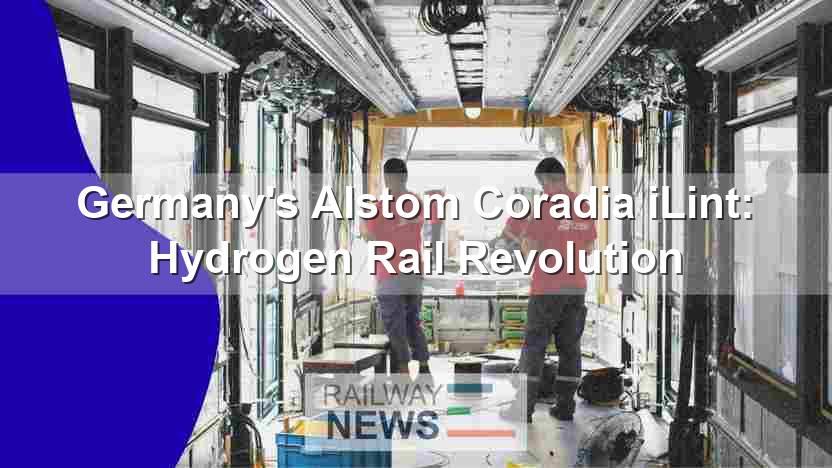
This article explores the groundbreaking approval granted by the German Railway Office (EBA) to Alstom’s Coradia iLint hydrogen fuel cell train for commercial passenger service. This marks a pivotal moment in the evolution of railway technology, signifying a significant shift towards sustainable and environmentally friendly transportation. The approval paves the way for the deployment of these innovative trains on non-electrified lines, addressing the challenges of emissions in less-developed rail networks. We will examine the technological advancements incorporated into the Coradia iLint, the implications of this approval for the future of rail transport in Germany and beyond, and the broader context of the German government’s commitment to sustainable transportation solutions. The analysis will delve into the technical aspects of the hydrogen fuel cell technology, the economic considerations, and the potential for wider adoption across Europe and globally.
The Coradia iLint: A Technological Breakthrough
Alstom’s Coradia iLint represents a significant advancement in railway technology. Unlike traditional diesel trains, the Coradia iLint utilizes hydrogen fuel cells to generate electricity for traction, resulting in zero emissions at the point of operation. The train’s design, a collaborative effort between Alstom’s teams in Salzgitter (Germany) and Tarbes (France), prioritizes efficiency and environmental friendliness. The fuel cell technology converts hydrogen into electricity, eliminating harmful pollutants such as particulate matter and nitrogen oxides. This makes it a compelling alternative to diesel trains, particularly on non-electrified lines where the cost of overhead line electrification is prohibitive or impractical. The success of the Coradia iLint demonstrates the viability and scalability of hydrogen fuel cell technology for mainline passenger services.
Regulatory Approval and Pilot Project
The EBA’s (Eisenbahn-Bundesamt) approval is a crucial step, validating the safety and reliability of the Coradia iLint for passenger operations within the German railway network. This approval process involved rigorous testing and evaluation to ensure compliance with stringent safety standards. Following the approval, two Coradia iLint prototypes will embark on a pilot project in the Elbe-Weser network, marking the commencement of regular passenger service. This pilot program provides a real-world testing ground, enabling detailed data collection on operational performance, maintenance requirements, and passenger acceptance. The success of this pilot phase will be instrumental in influencing wider adoption of the technology.
Government Support and Economic Implications
The German government’s substantial financial support for the Coradia iLint project, including an €8 million contribution from the National Innovation Program for Hydrogen and Fuel Cell Technology (NIP), underscores its commitment to promoting sustainable transportation. This funding reflects a strategic investment in developing and deploying clean energy technologies within the transportation sector. Beyond the environmental benefits, the deployment of the Coradia iLint offers economic opportunities. The creation of specialized maintenance infrastructure and the potential for domestic hydrogen production will stimulate local economies and create jobs. The long-term maintenance contract awarded to Alstom by Lower Saxony (LNVG) exemplifies the economic potential of this technology.
Wider Implications and Future Prospects
The successful approval and deployment of the Coradia iLint in Germany have significant implications for the future of rail transportation globally. It demonstrates the feasibility of hydrogen fuel cell technology as a viable alternative to diesel on non-electrified lines, opening up possibilities for decarbonizing regional rail networks worldwide. The technology’s scalability and adaptability make it suitable for various rail systems and operational contexts. The experience gained from the German pilot program will be invaluable for future deployments in other countries, accelerating the global transition towards cleaner and more sustainable rail transportation. The success of the Coradia iLint will likely inspire further investment in hydrogen fuel cell technology and related infrastructure, spurring innovation and accelerating the development of more efficient and cost-effective systems.
Conclusions
The German Railway Office’s (EBA) approval of Alstom’s Coradia iLint hydrogen fuel cell train for passenger service represents a monumental leap forward in sustainable rail transport. This approval, underpinned by significant government investment and a commitment to environmental responsibility, signifies a paradigm shift in how we approach regional rail operations. The Coradia iLint’s zero-emission operation offers a compelling solution for reducing the environmental impact of non-electrified rail lines, providing a cleaner, more sustainable alternative to traditional diesel trains. The pilot program in the Elbe-Weser network will provide invaluable real-world data, informing future deployments and refining operational strategies. Beyond the immediate environmental benefits, the project stimulates economic growth through job creation in manufacturing, maintenance, and hydrogen production. The long-term contract for maintenance and energy supply further solidifies the economic viability of this technology. The success of this initiative in Germany is expected to inspire global adoption of hydrogen fuel cell technology, paving the way for a cleaner, more sustainable future for the railway industry worldwide. This marks not just a technological advancement, but a significant step towards a greener and more environmentally responsible future for rail travel globally. The lessons learned from Germany’s pioneering role will undoubtedly shape the future of sustainable transportation for years to come.

Railway infrastructure, rolling stock and transport technologies specialist focused on global rail industry developments, high-speed rail systems, signaling technologies and freight transportation. Covering railway investments, public transport modernization, rail operations and international mobility projects across Europe, Asia and North America.
RELATED POSTS

October 8, 2026 1:15 pm
Alstom secured a €1bn contract to build 13 automated trains,...

October 1, 2026 7:09 am
United States regulators confirmed a September 30 deadline for the...

October 4, 2026 5:14 pm
Alstom secured a CA$4.7 billion order from VIA Rail Canada...

October 8, 2026 12:18 pm
Siemens Mobility signed an agreement with VinSpeed to supply 350...

October 1, 2026 12:13 am
Illinois approved $1.5 billion annually for the Northern Illinois Transit...

October 1, 2026 6:10 am
Amtrak approved a System Expansion Committee on July 30 to...