
Germany Rail Freight Crisis: Save Combined Transport Impact & Demands
Save Combined Transport initiative launched! Concerns rise over German rail freight impacting combined transport, crucial for supply chains. Demands include improved infrastructure for the sector.
Introduction
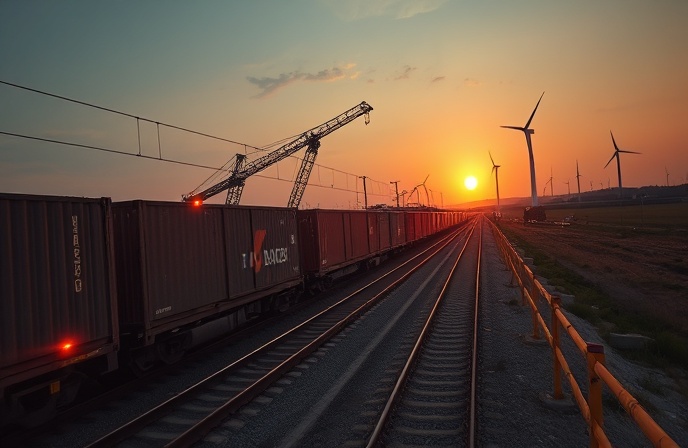
A new initiative, Save Combined Transport, has been launched by a coalition of logistics companies and industry associations, raising concerns about the state of rail freight in Germany and its potential impact on combined transport, a key component of European supply chains. The initiative, triggered by an open letter addressed to Federal Transport Minister Patrick Schnieder and Deutsche Bahn CEO Evelyn Palla, highlights issues such as declining reliability, rising operational costs, and the effects of ongoing construction work on the German rail network.
Main Content
Background and Concerns
The Save Combined Transport initiative highlights that the combined transport system in Germany replaces approximately six million truck movements annually. However, the sector is reportedly facing increasing strain due to declining punctuality, train cancellations, rising charges, and long-term line closures associated with Deutsche Bahn’s refurbishment program. Additionally, limited diversion routes are complicating rerouting during construction phases, potentially pushing freight volumes back onto roads, with consequences for congestion, emissions, and industrial competitiveness.
Initiative Demands
The campaign, Save Combined Transport, has outlined several demands for policymakers and infrastructure managers. These include calls for more predictable framework conditions, guaranteed freight capacity during construction periods, viable diversionary routes, and fair and competitive track access charges. The initiative emphasizes that infrastructure planning and maintenance should be structured to allow logistics operations to continue with minimal disruption. They are open to dialogue and emphasize the need for constructive cooperation.
Campaign Actions
To garner political and public attention, the initiative has launched a petition open to companies, organizations, and individuals. This platform aims to represent the perspective of freight users affected by network disruptions, path cancellations, and rising access charges. Additionally, the initiative has established a dedicated website providing data, case studies, and information on the role of combined transport, describing the potential “collateral damage” of large-scale corridor renovation works.
Short- and Medium-Term Proposals
The campaign has presented a list of measures to stabilize combined transport during the current infrastructure renewal period. These measures include specific actions to address the challenges faced by the sector.
Conclusion
Last June 2025, we published an article about Renfe building a cutting-edge Aranjuez maintenance hub. Click here to read – Future of Rail: Renfe’s Railway Technology Hub, Aranjuez: Essential Guide
The Save Combined Transport initiative, coordinated by combined transport operators Kombiverkehr and Hupac, aims to protect a mode of transport considered vital for supply chains and climate policy objectives. The platform welcomes participation from all interested stakeholders.
Company Summary
Deutsche Bahn: A German railway company and the owner and operator of much of the German rail network.
Hupac: A combined transport operator.
Kombiverkehr: A combined transport operator.

Railway infrastructure, rolling stock and transport technologies specialist focused on global rail industry developments, high-speed rail systems, signaling technologies and freight transportation. Covering railway investments, public transport modernization, rail operations and international mobility projects across Europe, Asia and North America.
RELATED POSTS

September 5, 2026 4:19 pm
CPK launched formal tender talks with four consortia to design...

September 6, 2026 6:17 am
Hungary ordered a national ban on most freight trains from...
September 5, 2026 6:17 pm
Universal Signalling won a deal to install its U-Cross system...
September 6, 2026 8:17 am
DB InfraGO reopened the Nuremberg-Regensburg line in Bavaria on 31...
September 7, 2026 8:16 am
Midea, Gree and TCL shipped air conditioners via China Railway...
September 6, 2026 12:20 pm
Indian Railways ordered a probe after a fire destroyed 2...