
Future of Rail: Ülemiste Linda Terminal Opens, Rail Baltica Milestone
Tallinn’s Ülemiste Linda terminal’s first platform opens, a Rail Baltica milestone. Passenger trains now use the new platform, part of a 2028 completion goal.
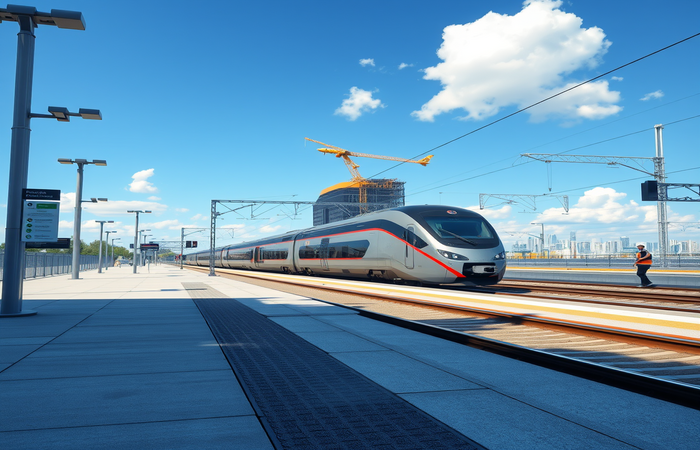
Ülemiste Linda Terminal Opens First Platform, Marking a Milestone in Rail Baltica Project
A significant step forward in the Rail Baltica project has been achieved with the unveiling of the first operational platform at Tallinn’s Ülemiste Linda terminal. This milestone, announced by RB Rail, sees passenger trains now utilizing the newly constructed platform, offering a glimpse of the future high-speed travel experience. This development, occurring in Tallinn, Estonia, represents a crucial phase in the overarching plan to integrate local and international rail services, connecting them with existing transport infrastructure. The opening of this platform signifies progress towards the completion of the Ülemiste Linda Terminal by 2028, enhancing Elron’s (Estonian Railways) operational capabilities and promising improved connectivity for passengers. The new platform and the terminal itself are designed to modernize the passenger experience, facilitate seamless transitions between various modes of transport, and provide crucial railway connections, offering faster service and a more streamlined experience for the 8 million passengers that use the Elron service annually.
New Platform Unveiled: A Foundation for Future Travel
The newly opened platform at the Ülemiste Linda terminal is a pivotal component of the Rail Baltic Estonia project. Measuring 230 meters in length and 9.3 meters in width, the platform is a modern infrastructure development designed to enhance passenger experience and streamline operations. Previously, Elron trains utilized older platforms within the same area. This transition allows passengers to experience a new standard of design and accessibility. This platform is an early embodiment of the future of travel within the terminal itself, the terminal is designed to connect several types of transit and transit hubs.
Integrated Design: Connecting Rail, Air, and Beyond
The Ülemiste Linda Terminal, slated for completion in 2028, is more than just a railway station; it is a detailed transport hub. Designed by Zaha Hadid Architects in collaboration with Estonian firm Esplan, the terminal will feature a unique architectural design, spanning over Suur-Sõjamäe Street and reaching a height of 20 meters. This design strategically integrates the high-speed Rail Baltica line with Elron’s local services, Tallinn Airport, tram lines, bus routes, and pedestrian and cycling infrastructure. This integrated approach is designed to streamline transportation, reducing travel times and providing passengers with a seamless journey between multiple modes of transport.
Enhanced Passenger Experience and Service
Elron is looking forward to providing faster and more convenient connections, supported by the modern infrastructure of the Ülemiste Linda Terminal. This infrastructure serves as a linchpin for future route expansion, as it provides connectivity to Pärnu, Riga, Kaunas, and Warsaw. Lauri Betlem, Chairman of the Management Board at Elron, has emphasized the terminal’s role as a crucial hub, seamlessly connecting these routes with the airport. The terminal is constructed in stages to minimize disruption to ongoing train services, ensuring uninterrupted operations throughout the construction period. This is crucial for the railway, because it allows a smooth transition to the new platform, and then to the completion of the project in 2030, where the Rail Baltica line will be running, this means new high-speed train service to Warsaw will be available.
European Union Backing and International Standards
The construction of the Ülemiste Linda Terminal is not just a local project, but a development meeting international standards. The project is co-financed by the European Union Cohesion Fund (CF) and the Connecting Europe Facility (CEF), underscoring its strategic importance and adherence to EU infrastructure guidelines. Anvar Salomets, Chairman of the Management Board at Rail Baltic Estonia, highlights the uniqueness of the terminal in the region, as it is designed to connect two railway gauges (1520 mm and 1435 mm) as well as tram lines, pedestrian and cycling paths, and a bus terminal. This multi-modal integration sets a new benchmark for transport hubs in the region.
Conclusion
The opening of the first platform at Tallinn’s Ülemiste Linda Terminal represents a significant step forward for the Rail Baltica project and the future of rail transport in the region. This new platform provides a preview of the improved travel experience, highlighting how modern design and better accessibility will improve passenger comfort and efficiency. The terminal’s integrated design, which includes rail, air, bus, and pedestrian access, enhances the experience for the traveling public. The collaborative approach between international and local firms underscores the complexity of this project, and its importance to the area. The use of European Union funding ensures that the infrastructure meets international standards, which will position the terminal as a major hub for the region. The success of this project will not only impact the traveling public, but also impact other infrastructure projects in Europe, and set a new standard for railway construction. Further expansion in rail travel will be crucial for providing easier and more available transit for the public in the future.
Company Summary
RB Rail: RB Rail AS is a multi-national joint venture established by the Republics of Estonia, Latvia, and Lithuania, for the purpose of implementing the Rail Baltica project – a high-speed railway project connecting the Baltic States with Poland and the rest of the European rail network. RB Rail is responsible for the design, construction, and marketing of the Rail Baltica railway. Their primary mission is to create a sustainable and modern railway infrastructure that enhances connectivity and economic development in the Baltic region.
Elron: Elron, formally known as Elektriraudtee, is the passenger railway company operating in Estonia. With a fleet of electric and diesel trains, Elron provides local and regional passenger transport services throughout the country. Elron is integral to the Rail Baltica project by facilitating the local transport services in Estonia. Elron is focused on improving passenger experience and connectivity.

Railway infrastructure, rolling stock and transport technologies specialist focused on global rail industry developments, high-speed rail systems, signaling technologies and freight transportation. Covering railway investments, public transport modernization, rail operations and international mobility projects across Europe, Asia and North America.
RELATED POSTS

October 8, 2026 1:15 pm
Alstom secured a €1bn contract to build 13 automated trains,...

October 1, 2026 7:09 am
United States regulators confirmed a September 30 deadline for the...

October 4, 2026 5:14 pm
Alstom secured a CA$4.7 billion order from VIA Rail Canada...

October 1, 2026 12:13 am
Illinois approved $1.5 billion annually for the Northern Illinois Transit...

October 5, 2026 1:13 pm
New York MTA confirmed a late 2026 DEIS release for...

October 1, 2026 6:10 am
Amtrak approved a System Expansion Committee on July 30 to...