
Future of Rail: Saarbahn Citylink TramTrain Innovations, Sustainable
First Citylink TramTrain arrives in Saarbrücken, Germany, marking a new era of cross-border rail transport. The VDV-TramTrain project, a pan-European collaboration, will modernize public transport.
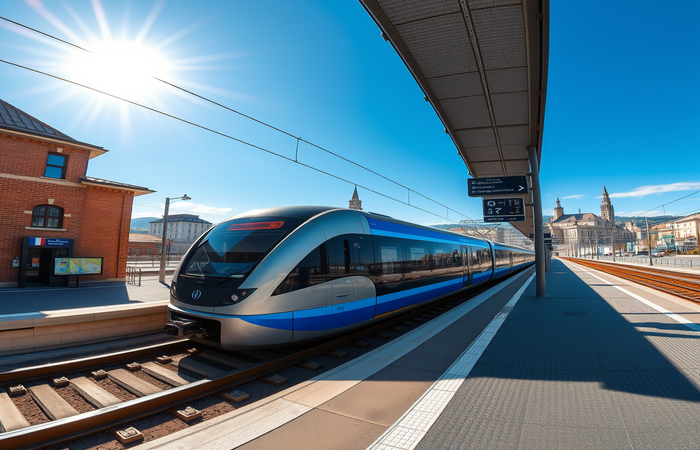
Saarbahn Unveils First Citylink TramTrain, Ushering in a New Era of Cross-Border Public Transport
Saarbrücken, Germany – Whit Monday, June 9, 2025, marked a significant moment for the European rail industry as the first Citylink TramTrain arrived in Saarbrücken, Germany. This unveiling represents the culmination of a landmark framework agreement between Stadler and a consortium of six German and Austrian transport operators. The event highlighted the “VDV-TramTrain” project, a unique, collaborative initiative aimed at delivering modern, interoperable light rail vehicles for enhanced cross-border and regional public transport. This article explores the significance of this unveiling, the innovative aspects of the project, and its potential to reshape public transport across Europe.
A Pan-European Collaboration: The Genesis of the VDV-TramTrain Project
The “VDV-TramTrain” project, a pioneering example of cross-border procurement, is a testament to the power of cooperation in the rail sector. This initiative unites multiple operators under a single vehicle platform, leveraging economies of scale and streamlining the procurement process. Stadler, based in Valencia, Spain, is manufacturing up to 504 TramTrains for the consortium, underscoring the international scope of this undertaking. The Saarbahn, one of the key partners, has initially ordered 28 TramTrains, with options for an additional 21 units. The TramTrain’s arrival is expected to provide greater passenger comfort and accessibility, and promote a more sustainable transport solution for the region.
Advanced Features and Technical Specifications of the Citylink TramTrain
The Citylink TramTrains are designed as modular, low-floor light rail vehicles, facilitating seamless travel between urban centres and surrounding areas. Each unit is 37.2 metres in length and 2.65 metres wide, configured in a three-section layout to optimise passenger comfort and accessibility. Standard features include air conditioning in both passenger and driver compartments, ensuring a pleasant travel experience regardless of the weather. Flexible multipurpose zones are provided for prams, wheelchairs, and bicycles, accommodating a diverse range of passenger needs. While the core specifications remain unified across operators, individual configurations will be tailored to meet specific local operational requirements.
Rigorous Testing and Certification: Ensuring Safety and Reliability
The Citylink TramTrains have undergone an extensive series of tests and approvals to ensure their compliance with railway (EBO – Eisenbahn-Bau- und Betriebsordnung) and tram (BoStrab – Betriebsordnung für Straßenbahnen) regulations. Functional testing took place at the Velim test circuit in the Czech Republic, while electromagnetic compatibility testing was conducted in Munich. Climate chamber trials in Vienna were crucial in validating the vehicles’ resilience under extreme temperatures. With the first vehicle now in Saarbrücken, additional testing will be undertaken, a key aspect of the project is gaining authorisation for cross-border operation to Sarreguemines (Saargemünd) in France, further highlighting the regional and European scope of the initiative.
Saarbahn’s Transition: A Phased Rollout and Future Vision
The arrival of the first Citylink TramTrain marks a pivotal moment in Saarbahn’s modernization strategy. The testing and certification phase in Saarbrücken will now move forward, with passenger service expected to commence in the first half of 2026. The existing fleet, in operation for approximately 30 years, will be gradually phased out by early 2028. This transition will not only improve the passenger experience but also contribute to the overall sustainability of Saarland’s public transport network.
Conclusion
The unveiling of the first Citylink TramTrain in Saarbrücken represents a significant milestone in European public transport. The VDV-TramTrain project exemplifies successful cross-border cooperation and the potential for standardization to drive efficiency and innovation in the rail industry. The modern, accessible design of the Citylink TramTrains, coupled with rigorous testing and certification, promises to enhance the passenger experience and promote sustainable mobility. The project’s success will have significant implications for the future of public transport, offering a model for other regions seeking to modernize their rail infrastructure and improve connectivity. As the rollout progresses, the project’s success will be closely watched, potentially inspiring similar collaborations and driving further advancements in rail technology and operation across Europe and beyond.
Company Summary: Stadler Rail AG
Stadler Rail AG, headquartered in Bussnang, Switzerland, is a leading manufacturer of rolling stock for passenger transport. Stadler produces a wide range of trains, trams, and locomotives, including high-speed trains, regional trains, and vehicles for urban rail systems. Known for its commitment to innovation, quality, and sustainability, Stadler has a strong presence across Europe and beyond. Stadler’s ability to design and manufacture a wide range of vehicles, along with its focus on innovation, makes it a key player in the global rail industry.

Railway infrastructure, rolling stock and transport technologies specialist focused on global rail industry developments, high-speed rail systems, signaling technologies and freight transportation. Covering railway investments, public transport modernization, rail operations and international mobility projects across Europe, Asia and North America.
RELATED POSTS

October 4, 2026 5:14 pm
Alstom secured a CA$4.7 billion order from VIA Rail Canada...
October 1, 2026 3:12 am
Greenbrier confirmed Brian Comstock as new president and CEO effective...
October 1, 2026 8:12 am
Knorr-Bremse expanded its UK rail adhesion trial on Chiltern Railways...

October 9, 2026 3:11 pm
Wabtec secured a $700 million service deal in Guinea to...

October 9, 2026 6:15 am
Transflo launched a 40 railcar transload terminal in Petersburg, Virginia,...
October 8, 2026 8:15 pm
Siemens Mobility secured an order from NWL to supply 61...