
Future NSW Freight: Rail Innovations, Infrastructure & Growth Trends
NSW unveils ambitious freight strategy, projecting 235,000 new jobs and $131.5B in economic growth by 2061. Focus on rail, infrastructure, and workforce development.
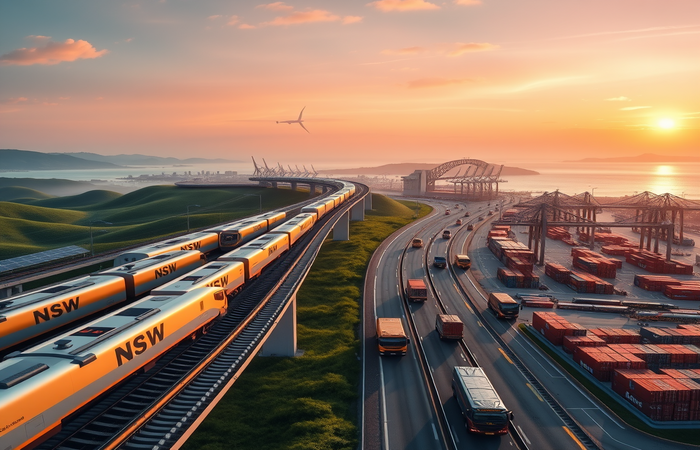
NSW Unveils Ambitious Freight Strategy to Fuel Economic Growth
New South Wales (NSW) is poised for a significant transformation of its freight sector, with a new government-commissioned report forecasting substantial growth and increased employment opportunities. The report, “Delivering Freight Policy Reform in NSW,” commissioned by the NSW government in January 2024, details a detailed strategy to prepare the state’s transport networks for future freight demands. The report, led by Dr. Kerry Schott AO and a panel of experts, outlines specific short-, medium-, and long-term actions designed to integrate freight seamlessly into the state’s transportation infrastructure. This initiative aims to significantly enhance the efficiency, capacity, and economic contribution of the freight industry by 2061. The primary objective is to prepare for population growth and changing technology.
Economic and Employment Projections
The report’s findings are particularly striking. By 2061, the NSW freight sector is projected to employ an additional 235,000 workers, bringing the total to 565,000. This expansion is expected to inject a staggering $131.5 billion into the state’s economy. The current Gross Value Add (GVA) of the sector, standing at $74 billion and supporting 330,000 jobs, is anticipated to grow by an average of $1.6 billion annually until 2061. The success of this expansion will depend on a series of crucial strategic initiatives outlined in the report to ensure efficiency.
Strategic Planning and Infrastructure Development
A cornerstone of the strategy is the development of a detailed freight master plan. This plan will provide an integrated, long-term approach to freight management through enhanced strategic planning and enhanced strategic planning for freight. Moreover, the report champions a suite of initiatives to promote a “rail modal shift” – essentially, a move toward increasing the volume of freight transported by rail. This will involve enhancing the competitiveness and efficiency of rail freight operations. The report also provides guidelines for a new port policy, recognizing Port Botany as the state’s principal container port while avoiding government involvement in the timing or location of future container terminals. The Industrial Lands Action Plan, carried out in partnership with the Department of Planning, Housing and Infrastructure, is recommended to address the shortage of industrial land availability. This is crucial because the availability of land impacts the ability of freight and other associated businesses to operate effectively, so will be addressed strategically.
Addressing Workforce and Night Freight Opportunities
Recognizing the critical need for a skilled workforce, the report suggests a government-backed program to promote recruitment, particularly addressing shortages in heavy vehicle and train drivers, as well as seafarers. This initiative will partner with industry stakeholders and address a major risk that consistently challenges the sector. Additionally, the NSW government has accepted the recommendation to investigate the feasibility of expanding night freight operations. This exploration will focus on maximizing off-peak capacity across the transportation system, including roads, motorways, rail networks, terminals, and distribution facilities. This strategic approach promises to generate economic growth in a way that allows a more even distribution of demand on the existing transport infrastructure.
Glebe Island and Broader Freight Considerations
The report also acknowledges the NSW Government’s ongoing review of the future of Glebe Island Port and the wider Bays precinct. The review precedes the construction of a new metro station connecting the area to Parramatta, the Central Business District, and the inner west. The report highlights the inherent challenges of co-locating homes and freight operations, noting that co-location is frequently unsustainable. Any impacts on freight movements are carefully considered in the review. This includes the infrastructure that is required for the freight to move from Glebe Island.
Conclusion
The “Delivering Freight Policy Reform in NSW” report represents a bold and ambitious vision for the future of freight in the state. Its recommendations offer a clear roadmap to optimize the sector, with significant implications for economic growth, job creation, and infrastructure development. The emphasis on rail modal shift, strategic land planning, and workforce development reflects a detailed approach to address current challenges and prepare for future demands. The industry faces complex challenges, but the report’s proposed solutions for integrating freight into transport networks demonstrate proactive planning. The emphasis on workforce training, nighttime freight, and a focus on industrial land availability should help to improve the efficiency and economic contribution of the freight industry over the next few decades.

Railway infrastructure, rolling stock and transport technologies specialist focused on global rail industry developments, high-speed rail systems, signaling technologies and freight transportation. Covering railway investments, public transport modernization, rail operations and international mobility projects across Europe, Asia and North America.
RELATED POSTS

October 1, 2026 7:09 am
United States regulators confirmed a September 30 deadline for the...

October 1, 2026 12:13 am
Illinois approved $1.5 billion annually for the Northern Illinois Transit...

October 1, 2026 5:14 am
Siemens confirmed delivery of the first new S200 train to...

October 1, 2026 6:10 am
Amtrak approved a System Expansion Committee on July 30 to...
October 1, 2026 3:12 am
Greenbrier confirmed Brian Comstock as new president and CEO effective...

October 1, 2026 4:10 am
DART launched two public ridership dashboards in March 2026 to...