
Front Range Rail: Colorado’s Passenger Rail & Future Connectivity
Colorado’s Front Range Passenger Rail project advances with new oversight committee. The Denver-Fort Collins “starter service” is key.
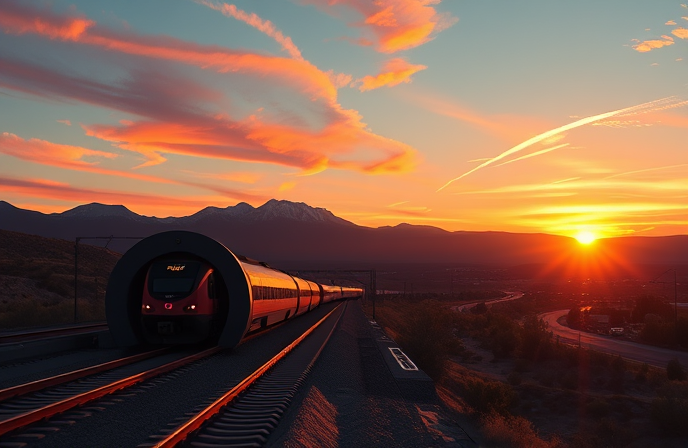
Front Range Passenger Rail Initiative Advances with Oversight Committee Formation
The Front Range Passenger Rail District (FRPRD) took a significant step forward yesterday in establishing passenger rail service along Colorado’s Front Range, announcing the adoption of an intergovernmental agreement. This agreement establishes the Joint Service Executive Oversight Committee, which will oversee the planning for a new passenger-rail “starter service” connecting Denver and Fort Collins. The news was released yesterday, highlighting the project’s commitment to improving transportation and connectivity. This initiative aims to establish a functional, passenger rail network that could eventually extend the full 180-mile Front Range Passenger Rail corridor. The committee’s formation is a pivotal move in transforming Colorado’s transportation landscape.
Partnership & Governance Structure
The Joint Service Executive Oversight Committee represents a collaborative effort, bringing together key players crucial for the project’s success. The committee will comprise representatives from the FRPRD, the Colorado Department of Transportation (CDOT), the Regional Transportation District-Denver (RTD), the Clean Transit Enterprise, the Colorado Transportation Investment Office (CTIO), and the office of Governor Jared Polis. This collaborative structure ensures a coordinated approach, allowing for streamlined decision-making and resource allocation. The agreement grants the partners the authority to work together to develop the initial passenger rail “starter service.” This includes tasks like route planning, infrastructure assessment, and project financing.
Phased Implementation Strategy
The “starter service” is a carefully planned initial phase that serves as a “proof of concept,” validating the operational models and demonstrating the feasibility of a larger-scale passenger rail network. This allows for refinements before the expansion. The success of the initial phase, linking Denver and Fort Collins, is crucial. The district officials emphasized that the development of the starter service facilitates expansion of the full 180-mile Front Range Passenger Rail corridor. Future planned connections to Wyoming and New Mexico highlight the project’s ambitious, long-term vision for regional connectivity. This is strategically focused on enhancing public transit options in Colorado, and the surrounding states.
Economic and Environmental Impact
Passenger rail systems offer a compelling alternative to single-occupancy vehicles, with significant economic and environmental advantages. Reducing traffic congestion on I-25, the primary north-south corridor in Colorado, will decrease commute times and improve freight mobility. Environmentally, passenger rail helps to lower greenhouse gas emissions and improve air quality, enhancing the quality of life for Front Range residents. A functional passenger rail network will improve the economy. This improves connections in densely populated areas along the Front Range.
Conclusion
The establishment of the Joint Service Executive Oversight Committee represents a crucial advancement for the Front Range Passenger Rail project. This marks a significant step in the realization of a comprehensive passenger rail system. The collaborative nature of the committee, encompassing multiple state and regional entities, underscores the commitment to the project’s success. The phased approach, beginning with the Denver-Fort Collins “starter service,” allows for efficient resource allocation and a staged implementation strategy. The success of this initial phase will be instrumental in securing support and funding for the full 180-mile corridor.
The development of the Front Range Passenger Rail project has the potential to transform Colorado’s transportation landscape. This includes reducing traffic congestion, lowering emissions, and driving economic development across the region. Looking ahead, the project’s ultimate success will depend on continued collaboration, effective implementation, and a clear commitment to regional connectivity. The long-term vision of extending the network into Wyoming and New Mexico underscores the project’s ambition. The initiative will play a vital role in shaping the future of passenger rail transportation in the Western United States.
RELATED POSTS

April 26, 2023 9:57 pm
The Severn Valley Railway (SVR): A Case Study in Heritage...
October 15, 2019 5:45 pm
This article examines the development and implementation of a cutting-edge...

November 23, 2015 8:30 pm
Chinese authorities have proposed a high-speed railway connecting its western...

July 23, 2010 9:58 am
Bangladesh and India have finalised railway projects funded by a...

August 6, 2010 11:13 am
Mongolia has approved the construction of a 1,100km rail line...

February 25, 2025 2:09 am
Alstom’s Divestiture of its North American Signaling Business: A Strategic...