
**Freight Rail Safety: Lawmakers Urge Rejection, Inspection Trends**
Lawmakers oppose freight rail safety waiver, citing concerns over reduced track inspections. Reduced inspections, from twice-weekly to twice-monthly, risk public safety.
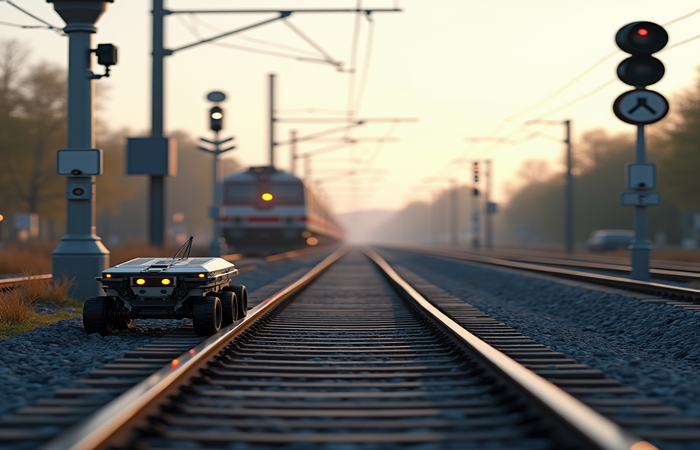
Lawmakers Urge Rejection of Freight Rail Safety Waiver, Citing Concerns Over Inspection Frequency
In a move raising significant safety concerns, Ranking Members from the House Transportation and Infrastructure Committee and its Subcommittee on Railroads, Pipelines and Hazardous Materials are urging U.S. Transportation Secretary Sean Duffy to deny a safety waiver request from the freight-rail industry. This request, put forth by the Association of American Railroads (AAR), seeks to reduce the frequency of visual track safety inspections conducted by Class I railroads. The letter, penned on June 17, 2024, highlights a potential shift from twice-weekly inspections to twice-monthly, raising questions about the impact on track integrity and public safety. This article delves into the details of this contentious request, the lawmakers’ arguments, and the broader implications for the railway industry, providing a comprehensive analysis of the current situation and the potential consequences.
Inspection Frequency at Risk: The Heart of the Matter
The core of the dispute lies in the AAR’s proposal to modify existing regulations concerning visual track safety inspections. Currently, Class I railroads—those with the largest operational scope and track mileage in the United States—are required to conduct visual inspections of their tracks at least twice a week. The AAR’s waiver seeks to decrease this frequency to twice a month, a significant reduction that has sparked intense debate. This proposed change aims to provide Class I railroads with operational flexibility while potentially affecting the comprehensive maintenance and detection of track defects. The proposed waiver also includes a provision allowing railroads up to 72 hours to address detected track defects, which currently must be addressed immediately.
Lawmakers’ Concerns: Prioritizing Safety
House Transportation and Infrastructure Committee Ranking Member Rick Larsen (D-Wash.) and House Subcommittee on Railroads, Pipelines and Hazardous Materials Ranking Member Dina Titus (D-Nev.) have articulated several compelling reasons for rejecting the waiver. Their primary concern, as outlined in their letter to Secretary Duffy, is the potential compromise of rail safety. The lawmakers are skeptical that reducing visual inspections while simultaneously extending the timeframe for defect remediation will lead to safer rail operations. They assert that fewer inspections could result in delayed identification of critical track flaws, increasing the risk of derailments and accidents. Moreover, they emphasize that while technological advancements like automated track inspection systems are welcome, they should not replace the crucial role of human oversight and frequent visual assessments.
Technological Advancements vs. Practical Application
While the lawmakers acknowledge the value of technological innovation in enhancing rail safety, they remain wary of using advanced technologies to justify reductions in current safety protocols. Automated track inspection systems, utilizing technologies like ultrasonic testing and ground-penetrating radar, are designed to identify track defects that may not be immediately visible to the human eye. However, these systems are intended to supplement, not replace, traditional visual inspections. The lawmakers believe that technology is not a perfect substitute, and the proposed reduction in visual inspection frequency is unwarranted. Their argument emphasizes the importance of a multi-faceted approach to track safety, combining both technological advancements and consistent human observation.
C3RS Participation: A Window into Safety Culture
The Federal Railroad Administration’s (FRA) Confidential Close Call Reporting System (C3RS) is a voluntary program that allows rail workers to report unsafe events and conditions without fear of reprisal. The lawmakers pointed out that only two out of the six Class I railroads have, in the past two years, participated in the C3RS, which raises questions about overall safety practices within the industry. Low participation rates indicate a reluctance to report safety concerns, potentially hampering proactive efforts to prevent accidents. The lawmakers suggested that greater adherence to safety reporting systems can improve the understanding of safety issues on the tracks.
Conclusion
The controversy surrounding the AAR’s safety waiver request highlights a critical juncture in the ongoing effort to ensure the safety of freight rail operations. Lawmakers’ opposition underscores a prioritization of maintaining rigorous inspection standards and defect remediation protocols. The rejection of the waiver could reinforce the industry’s commitment to traditional safety measures, and potentially encourage greater participation in the C3RS program. The ultimate decision made by Secretary Duffy will have far-reaching implications. The future of the industry’s approach to track inspection may depend on this ruling. Balancing innovation with established practices will be crucial for maintaining a safe and efficient rail network. The outcome will set a precedent affecting track safety procedures across the nation and the freight rail industry’s safety culture.
Company Summary (Optional)
Association of American Railroads (AAR): The AAR is a trade association that represents the freight rail industry in North America. Its member companies include Class I railroads, regional railroads, and other industry stakeholders. AAR’s role involves setting standards, lobbying for legislative and regulatory changes, and promoting the interests of its members, including safety and operational efficiency. The current safety waiver request represents a crucial test of AAR’s approach to balancing economic goals with public safety concerns.
RELATED POSTS

August 20, 2016 8:00 pm
In the French construction industry, Eiffage Métal completed a vital...
June 11, 2025 9:00 pm
Ulaanbaatar metro project seeks UK rail expertise, attracting investment and...
September 7, 2025 6:00 pm
£5 million in rail funding supports 26 safety-focused projects, starting...

October 17, 2007 6:52 pm
Railway stations in South Africa could soon be equipped with...
May 30, 2025 10:00 am
News Article: Metro Extension to Washington Gains Momentum with Arup...

March 19, 2025 5:40 am
The Emerging Risks of Artificial Intelligence in Fortune 500 Companies...