
Finland’s High-Speed Rail: One Hour Train Project

Designing Finland’s High-Speed Rail Link: The One Hour Train Project
This article delves into the intricacies of the “One Hour Train” project, a high-speed rail link designed to revolutionize travel between Helsinki and Turku, Finland. The project represents a significant undertaking, not only for its ambitious goal of reducing travel time but also for its innovative approach to project management and its commitment to sustainable engineering practices. We will explore the crucial role of AFRY, a Swedish engineering firm, in designing a 30km segment of this high-speed line, focusing on the complexities of integrating numerous bridges and tunnels into a challenging landscape. Further, the article examines the broader project partnership model employed, the project’s reliance on EU funding, and the broader implications for the future of Finnish railway infrastructure and sustainable transportation initiatives. The unprecedented scale and the collaborative nature of this project provide valuable insights into the future of large-scale infrastructure development, highlighting innovative approaches to design, funding, and sustainable construction.
AFRY’s Role in Track Design
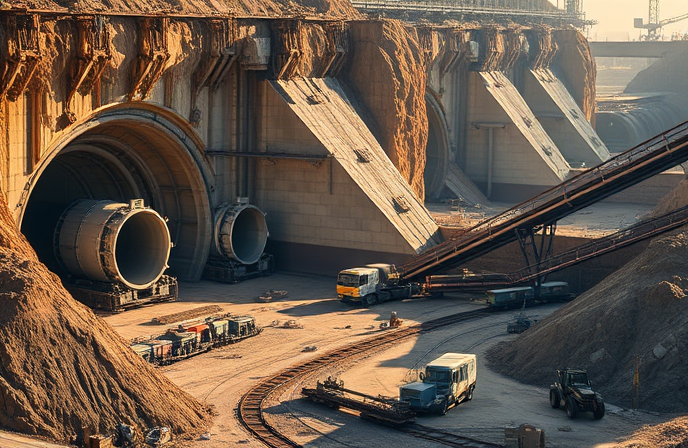
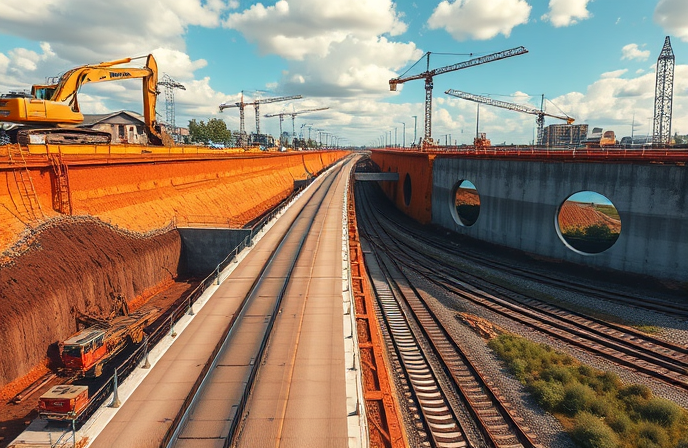
AFRY, a leading engineering firm, secured a contract to design the track for a significant 30km section of the One Hour Train project, situated between Suomusjärvi and Salo. This segment presents unique challenges due to its varied landscape, necessitating the design of six tunnels totaling 6.5km in length and 28 bridges, including one impressive 1.5km-long structure. The expertise required for such a project extends beyond basic track design and incorporates advanced geotechnical engineering to accommodate varied soil conditions and hydrological considerations, alongside sophisticated structural engineering for bridge and tunnel design to ensure longevity and resilience. The successful completion of the track design phase, projected for 2023, will be critical in enabling the subsequent stages of construction.
Project Partnership and Funding
The One Hour Train project stands out for its adoption of a novel project partnership model. This collaborative approach involves the Finnish Transport Infrastructure Agency, four cities (Turku, Espoo, Helsinki, and Lohja), one town (Salo), and two municipalities (Vihti and Kirkkonummi). This collaborative structure enables the sharing of responsibilities, resources, and expertise, potentially streamlining the decision-making process and enhancing overall project efficiency. The financial backing for the planning phase is secured through the European Union’s Connecting Europe Facility (CEF), underscoring the project’s importance in strengthening the EU’s transport infrastructure network. This financial support not only facilitates the project but also emphasizes the EU’s commitment to fostering sustainable transportation solutions across its member states.
Sustainability and Future Implications
Environmental sustainability is a core consideration within the One Hour Train project. While specific details regarding the implementation of sustainable practices within AFRY’s segment are limited in the available information, the overall project’s focus on efficient high-speed rail strongly promotes reduced carbon emissions compared to traditional road transportation. The project serves as a model for future sustainable railway developments in Finland. Further, the project’s success will have a profound impact on Finland’s railway system, significantly improving connectivity between major cities and boosting economic activity. The partnership model employed in this project is a significant advancement in large-scale infrastructure delivery, demonstrating the potential benefits of collaborative management and shared responsibility.
Collaboration and Technological Advancements
The One Hour Train project showcases a collaborative effort among several engineering firms, including Sweco Infra and Rail Oy, Ramboll Finland Oy, and Sitowise Oy. Each firm brings its own expertise to different segments of the rail line. This division of labor allows for specialized knowledge to be applied efficiently to each section, maximizing project effectiveness. Moreover, the project likely incorporates advanced technologies in various aspects of its design and construction. These might encompass digital twin modeling for enhanced design and construction management, sophisticated geotechnical investigation techniques, and advanced materials in bridge and tunnel construction, all contributing to a more efficient and robust railway network.
Conclusions
The One Hour Train project represents a significant step forward in Finnish railway infrastructure. AFRY’s role in designing a complex 30km section, encompassing multiple tunnels and bridges, showcases the sophisticated engineering challenges involved in high-speed rail construction. The innovative project partnership model, incorporating various stakeholders, including multiple municipalities and the EU, highlights a collaborative approach to large-scale infrastructure development. Securing funding from the Connecting Europe Facility (CEF) emphasizes the project’s strategic importance within the broader European transportation network. The project’s emphasis on sustainability, although not explicitly detailed in the available information, is implicitly present in the shift towards high-speed rail, which generally offers significant environmental benefits over road transport. Ultimately, the One Hour Train project serves as a case study for future high-speed rail development, demonstrating effective collaboration, innovative project management, and a commitment to sustainable transport solutions. Its success will not only improve travel times between Helsinki and Turku but also provide a blueprint for similar initiatives across Finland and beyond. The use of advanced technologies and the lessons learned from this project will undoubtedly contribute to the advancement of railway engineering and project management globally.
RELATED POSTS
February 24, 2021 3:13 pm
Financing India’s High-Speed Rail Ambitions: A Deep Dive into the...
June 30, 2025 1:33 pm
HS2's Northolt Tunnel excavation complete, a crucial step for UK...

September 15, 2011 6:02 pm
Oman’s plans to realise a national rail network are back...

July 1, 2010 6:49 am
The Philippines is planning to construct a high-speed railway line...

December 9, 2015 9:47 am
The State Railway of Thailand has picked a firm to...
June 27, 2025 1:33 pm
Victorian govt. unveils road bridge replacing Altona level crossing, boosting...