
European Rail: FRMCS, 5G, & AI Drive Digital Transformation
European railways are undergoing a digital transformation, replacing GSM-R with FRMCS, 5G, and AI, enhancing the railway’s capacity, and prioritizing cybersecurity.
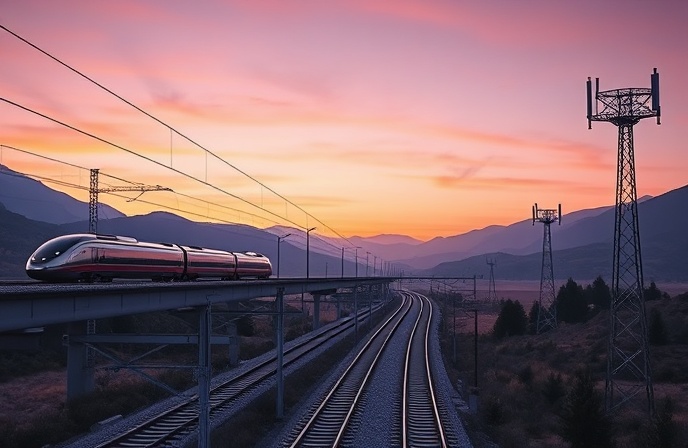
European railways are undergoing a profound digital transformation driven by the impending phase-out of GSM-R and the strategic adoption of next-generation technologies like FRMCS, 5G, and AI. This pivotal shift promises to unlock unprecedented levels of network capacity, enhance traffic management sophistication, and enable predictive maintenance, all while elevating cybersecurity to a paramount concern for the future of rail operations.
| Key Entity | Critical Detail |
|---|---|
| European Rail Sector | Digital transformation driven by GSM-R sunset and FRMCS adoption. |
| Core Technologies | FRMCS, 5G Standalone, AI-driven systems, ERTMS Level 3, Virtual Coupling. |
| Key Focus Areas | Increased capacity, improved traffic management, predictive maintenance, enhanced cross-border interoperability, robust cybersecurity. |
| Timeline | GSM-R migration ongoing, with key regulatory updates in 2025 and a focus on future-proofing towards 2030. An industry session on cybersecurity is scheduled for 3 December 2025. |
| Scale of Migration | Approximately 120,000 kilometres of GSM-R still active across Europe. |
The European rail industry stands on the cusp of a significant technological evolution as the gradual retirement of the Global System for Mobile Communications – Railway (GSM-R) accelerates preparations for the Future Railway Mobile Communication System (FRMCS). This strategic transition marks a generational leap in how rail networks manage critical functions such as operational control, signalling, traffic flow, and crucial cross-border interoperability. The overarching aim is to usher in an era of enhanced efficiency, safety, and capacity, redefining the operational landscape for decades to come.
The Strategic Imperative of FRMCS and 5G
At the heart of this transformation lies FRMCS, which will leverage a 5G Standalone architecture. This advanced infrastructure is engineered for ultra-low latency communication, ensuring a high degree of reliability and predictable performance essential for mission-critical railway operations. Key functionalities, such as dedicated network slices, are poised to enable the safer and more efficient deployment of advanced systems like ERTMS Level 3, moving block signalling, and laying the groundwork for technologies such as virtual coupling. Coupled with AI-driven analytics and predictive maintenance tools that are gaining traction in fleet planning, these advancements hold the potential to substantially increase network capacity and reduce reliance on traditional lineside assets.
The Escalating Challenge of Cybersecurity in a Digitalized Network
The accelerating digitalisation of rail operations inherently expands the industry’s cyber exposure. Once siloed operational technology (OT) networks are increasingly interconnected with information technology (IT) environments, spanning rolling stock, cloud platforms, and intelligent trackside equipment. This pervasive connectivity creates more diverse attack vectors, placing immense pressure on operators to fortify authentication protocols, enhance encryption strategies, and rigorously oversee their supply chains. The inherent complexity of multi-vendor ecosystems, where legacy and next-generation systems must coexist during lengthy transition periods, further complicates these efforts. Consequently, organisations are actively revising their cybersecurity governance frameworks, exploring advanced concepts like Zero Trust Architecture, certifying long-life assets against evolving standards, and embedding security within cloud-native network functions.
Navigating Regulatory Landscapes and Future-Proofing for 2030
Last June 2025, we published an article about Renfe’s cutting-edge Aranjuez maintenance hub. Click here to read – Future of Rail: Renfe’s Railway Technology Hub, Aranjuez: Essential Guide
The regulatory environment is intensifying, with updates to the Control Command and Signalling Technical Specification for Interoperability (CCS TSI) and a sharpened focus on digital resilience introducing new obligations for Infrastructure Managers and Railway Undertakings. The sheer scale of the migration from the estimated 120,000 kilometres of active GSM-R necessitates detailed planning that extends beyond radio networks to encompass operational processes and established engineering practices. Navigating these evolving regulatory expectations is proving to be as technically demanding as the migration itself. Looking towards 2030, industry experts anticipate an acceleration of digitalisation, spurred by early progress in virtual coupling, advanced traffic optimisation, and more integrated asset management. Organisations that proactively invest in secure digital foundations are best positioned to capitalise on recovered capacity, enhanced operational flexibility, and sustained resilience as FRMCS deployment expands across the European rail network.

Railway infrastructure, rolling stock and transport technologies specialist focused on global rail industry developments, high-speed rail systems, signaling technologies and freight transportation. Covering railway investments, public transport modernization, rail operations and international mobility projects across Europe, Asia and North America.
RELATED POSTS

October 8, 2026 1:15 pm
Alstom secured a €1bn contract to build 13 automated trains,...

October 1, 2026 7:09 am
United States regulators confirmed a September 30 deadline for the...

October 8, 2026 12:18 pm
Siemens Mobility signed an agreement with VinSpeed to supply 350...

October 4, 2026 5:14 pm
Alstom secured a CA$4.7 billion order from VIA Rail Canada...

October 5, 2026 6:12 pm
AECOM and Jacobs secured a contract in September 2026 to...

October 1, 2026 12:13 am
Illinois approved $1.5 billion annually for the Northern Illinois Transit...