
European Rail Asso. Urges EU Comm. for Rail Innovation Funding
European railway associations urge a robust EU-Rail successor, supporting the new Competitiveness Fund. This initiative aims to boost the European **railway sector** through key **rail** investments.
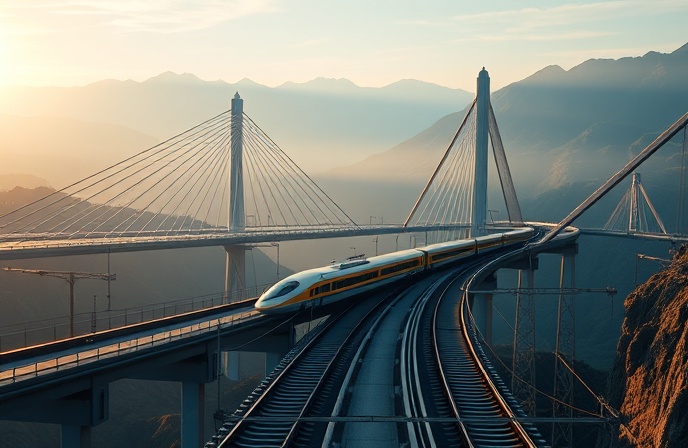
Five prominent European railway associations are urging the European Commission to establish a robust successor to the EU-Rail Joint Undertaking under Horizon Europe. This initiative aims to bolster the European railway sector’s development and competitiveness, coinciding with the associations’ endorsement of the proposed new European Competitiveness Fund (ECF) within the 2028-2034 multiannual financial framework.
| Key Entity | Critical Detail |
|---|---|
| European Railway Associations (CER, EIM, UIP, UITP, UNIFE) | Call for EU-Rail Joint Undertaking successor and support for the new European Competitiveness Fund (ECF). |
| Proposed EU-Rail Successor | Minimum investment of EUR 3 billion, EUR 15 billion for pre-implementation, inclusion of regional/urban rail. |
| Funding Framework | Next multiannual financial framework (MFF) 2028-2034. |
| Budgetary Commitment Model | Advocacy for 50% EU / 50% industry fixed commitment for successor partnership. |
| EU Investment Overview (2028-2034 MFF) | EUR 1.8 trillion total available, including EUR 243 billion for ECF and EUR 51 billion for CEF Transport. |
Main Body:
The collective voice of CER, EIM, UIP, UITP, and UNIFE signifies a unified push for continued and amplified innovation within the European rail sector. The proposed successor to the EU-Rail Joint Undertaking is envisioned as a cornerstone for future growth, with a call for a minimum investment of EUR 3 billion, augmented by EUR 15 billion dedicated to its pre-implementation phase. This substantial financial backing is intended to stimulate long-term private investment, enhance the global competitiveness of the European rail energy supply industry, and crucially, drive the realization of a single European railway area. Additionally, the scope of this successor initiative would extend to encompass regional and urban rail systems, fostering a more integrated and strengthened European rail industry.
Strategic Impact
The associations emphasize that the legal framework governing the successor partnership must facilitate broad participation from both private and public entities by ensuring no direct financial contributions are mandated from members. The option for contributions in kind is presented as a critical enabler, particularly for smaller players in the local and urban rail market, thereby fostering deeper industry commitment and dedication to a forward-thinking rail sector. This approach aligns with Horizon Europe’s objectives of enhanced SME inclusion and administrative burden reduction, prioritizing technical advancements and tangible results over bureaucratic hurdles.
Operational Details
A key point raised by the associations concerns the need for clarity and predictability in budgetary commitments for the EU-Rail successor. They advocate for a fixed commitment model, with a 50% contribution from the EU and 50% from the industry. This contrasts with the current flexible model where a reduction in EU contribution must be offset by industry, creating potential financial strain. Given the long-term nature of such partnerships, flexibility in budget allocation and the management of competitive calls is also deemed essential to adapt to evolving industry needs and technological advancements.
Industry Context
These strategic recommendations arrive at a pivotal moment, with the upcoming multiannual financial framework (MFF) of EUR 1.8 trillion, including substantial allocations for the European Competitiveness Fund (ECF) and the Connecting Europe Facility (CEF) transport component. These significant investments underscore the European Union’s dedication to technological sovereignty, its commitment to green and digital transitions, and its pursuit of global competitiveness. For industry leaders, the establishment of a well-funded and strategically aligned successor to EU-Rail, alongside the broader MFF investments, presents a clear opportunity to leverage public-private collaboration for innovation, market expansion, and the sustainable development of the entire European rail ecosystem.
Last June 2025, we published an article about Renfe’s cutting-edge Aranjuez maintenance hub. Click here to read –
Future of Rail: Renfe’s Railway Technology Hub, Aranjuez: Essential Guide
Future of Rail: Renfe’s Railway Technology Hub, Aranjuez: Essential Guide

Railway infrastructure, rolling stock and transport technologies specialist focused on global rail industry developments, high-speed rail systems, signaling technologies and freight transportation. Covering railway investments, public transport modernization, rail operations and international mobility projects across Europe, Asia and North America.
RELATED POSTS

October 1, 2026 7:09 am
United States regulators confirmed a September 30 deadline for the...

October 8, 2026 1:15 pm
Alstom secured a €1bn contract to build 13 automated trains,...

October 4, 2026 5:14 pm
Alstom secured a CA$4.7 billion order from VIA Rail Canada...

October 1, 2026 12:13 am
Illinois approved $1.5 billion annually for the Northern Illinois Transit...

October 6, 2026 2:14 am
Union Pacific launched export rail shipments with Ferromex to deliver...

October 1, 2026 6:10 am
Amtrak approved a System Expansion Committee on July 30 to...