
Euroa Station Upgrade: Inland Rail’s Victorian Transformation
Euroa station’s Inland Rail upgrade in Victoria is underway, reshaping rail infrastructure to accommodate double-stacked freight. Learn how this transformation boosts freight capacity!
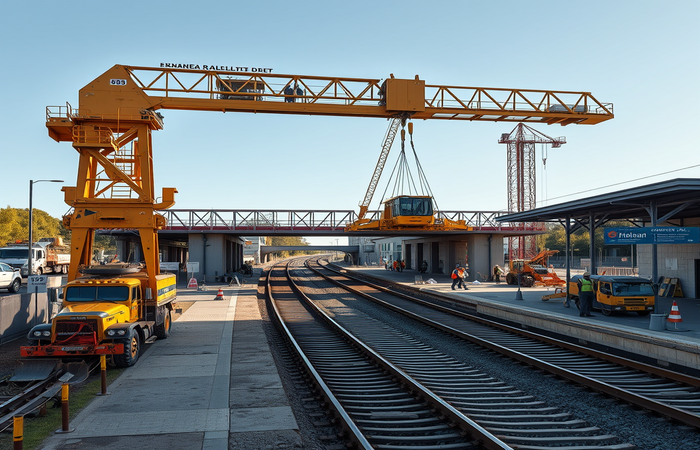
Victoria, Australia – October 26, 2023 – The Inland Rail project continues its ambitious undertaking to modernize Australia’s rail infrastructure, with significant progress being made at the Euroa station precinct in Victoria. This critical upgrade is designed to accommodate double-stacked freight trains, a key element in enhancing the efficiency and capacity of the Melbourne to Brisbane rail corridor. The transformation involves a complete overhaul of the station’s infrastructure, including track relocation, platform construction, and the replacement of the Anderson Street bridge with a vehicle underpass. This endeavor not only aims to improve rail transport capabilities but also seeks to integrate the station more seamlessly with the surrounding community. The following sections will delve into the specifics of the Euroa station upgrade, the challenges faced, and the broader implications for the Inland Rail project.
The Transformation of Euroa Station
The Euroa station upgrade represents a major step towards the realization of the Inland Rail project’s goals. The primary objective is to create a rail corridor capable of handling double-stacked freight trains, which significantly increases the volume of goods transported. This requires extensive modifications to the existing infrastructure. The project’s scope includes relocating the east track to create space, constructing a new west platform to accommodate the extended trains, and replacing the Anderson Street bridge with a vehicle underpass to ensure sufficient clearance for the double-stacked carriages. Furthermore, the upgrade involves building and enhancing car parks, improving platform access with new lifts, and enhancing pedestrian connections across the rail corridor and station. This comprehensive approach ensures that the station meets the demands of the modern rail freight system and provides improved accessibility for passengers and the community. The construction partner, John Holland, is working closely with Inland Rail to execute this complex project.
Demolition and Earthworks
A crucial stage in the Euroa station transformation was the demolition of the Anderson Street bridge. This undertaking required the use of a 450-tonne crane to lift out sections of the bridge, demonstrating the scale of the operation. A substantial amount of earthworks was also necessary. More than 9,360 cubic meters of soil were excavated from the northern side of the bridge. This soil was then transported to Broadford for use on other bridge projects, optimizing the use of resources and minimizing waste.
Track and Rail Material Handling
The project involved the removal and replacement of significant lengths of rail track. More than 820 meters of the existing west rail track were removed, along with 1,235 sleepers, which were then stored in Seymour. This process was essential to accommodate the new track layout and alignment necessary for the double-stacked freight trains. In addition to the removal of old infrastructure, the project required the delivery of new rail materials. Approximately 2.8 kilometers of new rail, consisting of 17,165-meter strings of rail, were delivered from Port Augusta to be used in the construction. This highlights the comprehensive nature of the project, which encompasses not only the physical construction but also the logistics and supply chain management required to deliver the necessary materials.
Community Integration and Enhanced Connectivity
A key aspect of the Euroa station upgrade is the integration of the station into the community. The project team is constructing a new open station forecourt, pathways, ramps, and stairs. Improved pedestrian connectivity across the rail corridor and station is also a priority. These enhancements will improve the experience for passengers and the local community, ensuring that the station is a vital part of the town. The new underpass will also improve traffic flow and ease congestion.
Conclusion
The Euroa station upgrade is a clear demonstration of the Inland Rail project’s commitment to upgrading Australia’s rail infrastructure. The project is not only focused on increasing freight capacity, but also on integrating the station with the local community. The demolition of the Anderson Street bridge, extensive earthworks, and the laying of new tracks are critical steps towards achieving this goal. The upgrade is a complex undertaking that requires careful planning, execution, and coordination of resources. The project’s success will have far-reaching implications, improving the efficiency of freight transport between Melbourne and Brisbane, which will boost the national economy. The improved accessibility and connectivity created by the upgrade will benefit both commuters and the community. This project is a good example of how careful infrastructure planning and execution can meet the challenges of a growing nation.
The Inland Rail project, along with the Euroa station upgrade, will set an example for future rail infrastructure projects across the country.
**Summary of Companies**
* **John Holland:** The construction partner responsible for carrying out the Euroa station upgrade.
* **Inland Rail:** The organization overseeing the Inland Rail project, including the Euroa station upgrade. They are responsible for the overall planning, management, and delivery of the rail infrastructure project.
RELATED POSTS

August 5, 2019 10:05 am
The Bescot Railway Sleeper Facility: A Case Study in Rail...
November 24, 2022 1:30 am
The Portishead Rail Line Restoration: A Case Study in Infrastructure...
February 18, 2023 5:00 pm
Modernizing Croatian Rail Infrastructure: A €31 Million Investment This article...
April 18, 2020 11:04 pm
The resurgence of construction activity on Beijing’s extensive network of...
October 28, 2021 2:37 am
The Finch West LRT project: a DBFM P3 success story...
January 29, 2026 11:39 pm
Twin Eagle Terminals & Logistics expanded its Big Spring, Texas,...