
EU Rail Budget Boost: CEF, Horizon Europe Fuel Sustainable Transport
EU draft budget boosts European rail investment, UNIFE hails major funding increase.
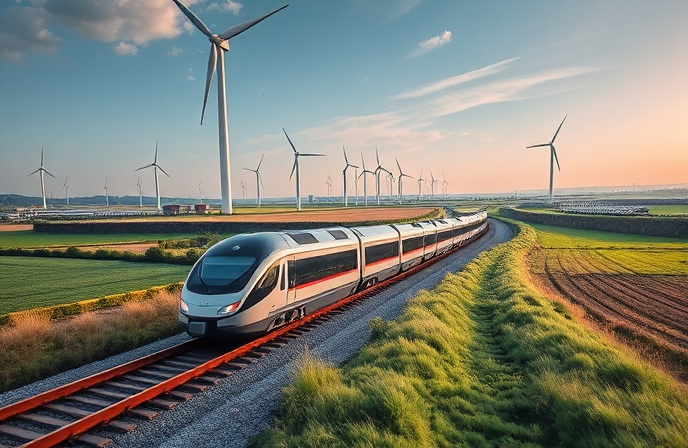
EU Draft Budget Signals Major Boost for European Rail, UNIFE Hails Increased Investment
The European Union’s draft budget, unveiled yesterday, has sparked significant optimism within the rail industry, specifically for its unprecedented financial commitment to rail infrastructure and sustainable transport initiatives. Who? The Union des Industries Ferroviaires Européennes (UNIFE), the association representing the European rail supply industry, is expressing strong approval. What? The draft budget proposes substantial increases in funding for rail projects across Europe. When? The announcement was made on July 17, 2024, in response to the EU’s draft budget. Where? Primarily focused on funding within the European Union, impacting infrastructure across member states. Why? The increased funding is aimed at modernizing rail infrastructure, supporting military mobility, and accelerating the transition to sustainable transport. How? Through doubled funding for Horizon Europe, the Connecting European Facility (CEF), the establishment of the European Competitiveness Fund, and a tenfold increase in military mobility funding. This article examines the implications of the EU draft budget, focusing on UNIFE’s perspective and the potential transformative impact on the European rail network.
Investing in the Future of Rail Infrastructure
The core message from UNIFE Director General Enno Wiebe revolves around the significant investment in rail infrastructure. The draft budget allocated €50 billion for the CEF, the primary EU funding mechanism for rail projects, along with an additional €18 billion earmarked for Military Mobility. The emphasis on maintaining and strengthening the CEF is crucial, as it serves as the primary investment vehicle for rail infrastructure across the EU. This financial boost will be critical in completing the Trans-European Transport Network (TEN-T) and deploying advanced technologies, such as the European Rail Traffic Management System (ERTMS), which enhances interoperability, safety, and network capacity. The draft budget also considers the need to simplify and improve access to finance to ensure investments are impactful.
Military Mobility and Dual-Use Benefits
A noteworthy aspect of the budget is the substantial increase in funding for military mobility. The draft budget multiplies the military mobility envelope by ten. UNIFE underscores the importance of maximizing dual-use benefits within these investments, acknowledging the role rail can play in enhancing European security preparedness. The proposed CEF should be built on a solid governance structure to serve as the main source of funding for military mobility, encompassing infrastructure and transport assets. This strategic approach acknowledges the interplay between defense needs and infrastructure development, creating new funding opportunities and a more resilient infrastructure.
Prioritizing Research and Development for a Competitive Industry
UNIFE also champions the crucial role of research and development (R&D) within the rail sector. The continued presence and reinforced budget of €175 billion for Horizon Europe are pivotal. This ensures the continuation of the ‘Europe’s Rail Joint Undertaking’ and empowers the European Rail Supply Industry to remain at the forefront of technological advancements, thereby maintaining its competitive edge in the global market. A robust R&D pipeline is essential to delivering the high-quality, EU-wide network UNIFE envisions. The newly established European Competitiveness Fund (ECF) will also support manufacturing and the development of strategic technologies and sectors located in the EU.
Driving Sustainable Transport: A Climate-Focused Approach
The proposed budget demonstrates a strong commitment to sustainability. The EU aims to achieve ambitious climate targets by 2040, which cannot be met without a sustainable, low-emission transport system. This focus on climate change aligns with the goal of transitioning to a climate-neutral economy. The budget allocates approximately 35% of spending across the Multiannual Financial Framework (MFF) towards climate objectives. This ensures investment in clean rolling stock and innovative technologies. The budget’s emphasis on climate goals sets a clear direction for the EU’s transport sector and reinforces the need for sustainable transportation systems, which is key to decarbonizing passenger and freight transport.
Conclusion
The EU draft budget represents a significant positive development for the European rail industry. UNIFE’s positive response highlights the industry’s recognition of the substantial financial commitment to rail infrastructure, research and development, and sustainable transport. The increased funding for CEF, Horizon Europe, and military mobility offers a pathway toward a modernized, interoperable, and resilient European rail network. The focus on climate goals and sustainable transport aligns with long-term objectives, signaling a shift toward a greener economy. The budget’s emphasis on R&D and support for European manufacturing will ensure the industry’s competitive edge. The success of this plan hinges on effective implementation, ensuring all the investment pillars have maximum impact. As the EU finalizes the budget, industry stakeholders must work together to deliver the desired result: a seamless, borderless European railway network, fueled by innovation and environmental consciousness. This budgetary framework provides a robust foundation for the future, paving the way for continuous investment to achieve ambitious goals.

Railway infrastructure, rolling stock and transport technologies specialist focused on global rail industry developments, high-speed rail systems, signaling technologies and freight transportation. Covering railway investments, public transport modernization, rail operations and international mobility projects across Europe, Asia and North America.
RELATED POSTS
September 6, 2026 5:19 am
Hitachi delivered Taiwan's first N700ST high-speed train from Japan in...
September 6, 2026 6:17 am
Hungary ordered a national ban on most freight trains from...
September 6, 2026 1:17 am
Hitachi Toshiba Supreme Consortium confirmed the first of 12 N700ST...

September 5, 2026 4:19 pm
CPK launched formal tender talks with four consortia to design...
September 7, 2026 8:16 am
Midea, Gree and TCL shipped air conditioners via China Railway...

September 6, 2026 4:12 am
Alstom delivered the first of 100 new G Class trams...