
EU High-Speed Rail: Connecting Capitals & Boosting Infrastructure
EU citizens favor high-speed rail, demanding faster cross-border travel. Survey shows strong support for investment in a pan-European network.
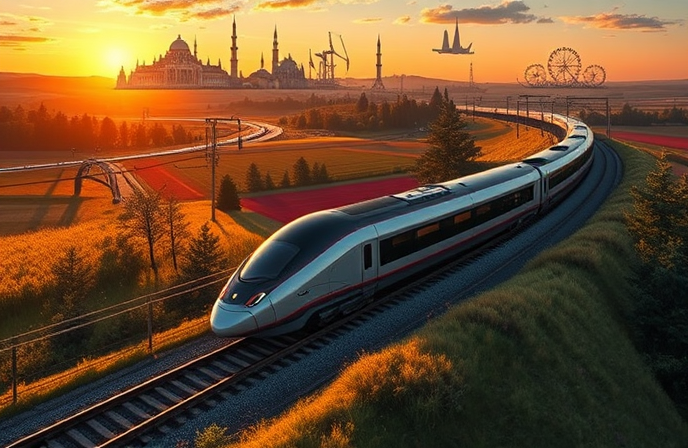
EU Citizens Demand Faster Rail: High-Speed Network Gains Momentum
Across the European Union, a groundswell of public support is building for a radical transformation of the continent’s transport infrastructure. A recent pan-European survey, commissioned by the Community of European Railway and Infrastructure Companies (CER) and conducted by Polling Europe, reveals a strong preference among citizens for high-speed rail travel over air travel, particularly for shorter and medium distances. This survey arrives at a critical juncture, as the European Commission prepares to unveil a comprehensive plan, at the request of President Ursula von der Leyen, to establish a continent-wide high-speed rail network. The “who” are the EU citizens; “what” they want is faster and easier travel; “when” the survey was conducted is recent, and the plan is now; “where” across Europe; “why” because air travel is not efficient or sustainable, and; “how” with significant investment in high-speed rail. This article delves into the survey’s findings, examining the public’s desire for high-speed rail and the ambitious plans to connect European capitals and major cities.
Public Sentiment: A Shift Towards Rail
The survey, which involved over five thousand interviews across the EU, paints a clear picture of public dissatisfaction with existing transport options. Alarmingly, only 1 in 10 EU citizens consider current cross-border transport connections adequate. The majority, a staggering 83%, believe there is significant room for improvement, with nearly half emphasizing the need for faster and easier travel. This sentiment directly translates into a strong affinity for high-speed rail. When presented with the prospect of fast and reliable high-speed rail connections, a substantial 75% of respondents indicated they would choose the train over flying for short and medium-distance journeys. This clear preference underscores the potential for high-speed rail to reshape the travel landscape across Europe, reducing reliance on air travel.
Investment Imperative: Funding the Future
The public’s desire for improved rail infrastructure is further reinforced by their positive views on investment. The survey shows that 79% of those surveyed believe that Europe should invest more in high-speed rail infrastructure to facilitate easier travel between European countries. This overwhelming support for investment is seen across the continent, not limited to countries already served by high-speed lines such as France and Spain. The implications are clear: citizens understand and support the necessity of large-scale investment to realize a modern and efficient transport network. This understanding is crucial for policymakers navigating the significant financial commitments needed to make the vision of a European high-speed rail network a reality.
The Network Blueprint: A Vision of Connectivity
The European Commission’s ambitious plan outlines a high-speed rail network spanning an impressive 49,400 kilometers. This network would aim to connect all EU capitals and major urban areas with populations exceeding 250,000 inhabitants. The project’s projected speeds, varying from 250 km/h up to 350 km/h on new lines and 200 km/h on upgraded lines, would drastically reduce travel times. Furthermore, this makes high-speed rail the most efficient mode of transport for distances up to 1,000 kilometers. The initiative would require a substantial financial outlay, with an estimated cost of EUR 546 billion. This investment, however, is seen as a catalyst for fostering regional development, driving economic integration, and improving connectivity across broad geographical areas, a significant undertaking for the European railway industry.
Conclusion
The recent EU survey underscores a potent desire among European citizens for a more efficient and sustainable transport future, with high-speed rail at its core. The widespread preference for rail travel over air travel, coupled with strong support for infrastructure investment, sends a clear message to policymakers. The proposed European high-speed rail network, with its vision of connecting capitals and major cities, represents a significant step toward meeting this demand. The substantial financial commitment required is a challenge, but the potential benefits – including enhanced regional development, economic integration, and reduced carbon emissions – are considerable. For the rail industry, this presents immense opportunities for growth and innovation, including the deployment of advanced signaling systems like ETCS (European Train Control System) and the development of new rolling stock. The coming years will be crucial as the European Commission navigates the complexities of project financing, infrastructure development, and stakeholder collaboration, to realize this ambitious vision and bring high-speed rail to the forefront of European transport.
RELATED POSTS

September 23, 2018 12:37 am
Northern's Class 195 trains are undergoing rigorous testing, bringing modern...
June 2, 2025 4:00 pm
Stephanie Deiger steps in as the new Vice Chair of...

June 19, 2025 1:35 pm
Go-Ahead Group enters Australian rail market, aiming for improved service...
January 19, 2026 1:39 pm
HS2 surpasses 2,000 apprenticeships, injecting £315M into the UK economy....

July 24, 2025 5:33 am
Salix's innovative track solutions deliver quieter, more sustainable Australian rail....

June 11, 2025 8:00 pm
Gotha gets new trams from Stadler, boosting railway sector. ...