
ERTMS/ETCS Revolution: Enhancing Rail Safety & Capacity
Here are a few voiceover-friendly excerpts for railway professionals, based on the provided text:
**Option 1 (Focus on Importance):**
“Modern **signaling systems** are the backbone of a safe and efficient railway. They’re vital to handling today’s increasing demands on networks.”
**Option 2 (Focus on Technology):**
“Digital advancements in **signaling systems** are revolutionizing rail. From ERTMS/ETCS to CBTC, they’re enhancing safety and boosting capacity.”
**Option 3 (Focus on the Future with a CTA):**
“The future of rail is digital. Learn how advancements in **signaling systems** are creating safer, more efficient networks.”
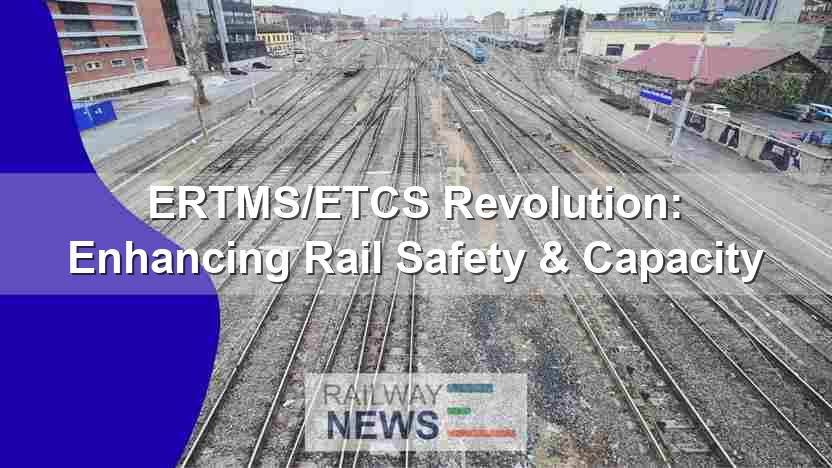
Article title is: The Vital Role of Modern Signaling Systems in Enhancing Railway Efficiency and Safety
Introduction
The railway industry is undergoing a significant transformation, driven by the need for increased capacity, improved safety, and enhanced operational efficiency. Central to this evolution is the implementation of advanced signaling systems. These systems, which encompass a wide range of technologies from computerized interlocking to automated train protection, play a pivotal role in managing train movements, preventing collisions, and optimizing network performance. This article will delve into the complexities of modern signaling systems, examining their key components, benefits, and the challenges associated with their deployment and maintenance. We will explore how these technological advancements are reshaping the railway landscape, paving the way for a more reliable, sustainable, and passenger-friendly transportation network. The exploration will range from understanding the core principles of signaling to analyzing specific technologies, with an emphasis on the future of railway signaling and its impact on the global transportation system.
Signaling Fundamentals: The Cornerstone of Railway Operations
Railway signaling systems are essentially the nervous system of a railway network, responsible for ensuring the safe and efficient movement of trains. At their core, these systems provide a means of communication between trackside equipment, control centers, and train-borne systems. They use a variety of technologies to control train movements, including:
* *Track circuits*: These circuits detect the presence of trains on a section of track, providing vital information for signaling control.
* *Signals*: These visual indicators (lights or semaphore arms) communicate permissible speeds and route information to train drivers.
* *Interlocking systems*: These systems ensure that signals and points (switches) are set correctly to prevent conflicting movements, thus preventing collisions.
* *Train detection systems*: Systems like axle counters and track circuits are used to precisely locate trains along the track.
Traditionally, signaling systems relied on electromechanical relays and manual operation. However, modern systems have embraced digital technology, leading to more sophisticated and reliable operation. Centralized Traffic Control (CTC) systems allow operators to monitor and control train movements over vast distances, while more advanced systems, such as European Rail Traffic Management System (ERTMS) / European Train Control System (ETCS), provide automatic train protection and are designed to increase line capacity by allowing trains to run closer together safely. The evolution from basic signaling to these advanced systems is crucial for handling the growing demands on railway networks.
The Technological Advancements: Enhancing Safety and Capacity
The introduction of digital technology has revolutionized railway signaling. One of the most significant advancements is the implementation of ERTMS/ETCS, a standardized signaling and control system designed to improve interoperability and enhance safety across Europe. ETCS uses continuous train control, providing real-time information to the driver and automatically applying the brakes if a dangerous situation is detected. This significantly reduces the risk of human error and enhances overall safety.
Other technological advancements include:
* *Computer-Based Interlocking (CBI)*: This replaces relay-based systems with software-controlled interlocking, offering greater flexibility and reliability.
* *Automatic Train Protection (ATP)*: This system automatically stops a train if it exceeds the speed limit or passes a signal at danger, further improving safety.
* *Automatic Train Operation (ATO)*: This system automates train operation, including speed control and stopping at stations, increasing capacity and reducing energy consumption.
* *Communication-Based Train Control (CBTC)*: Primarily used in urban rail systems, CBTC allows for very close headways between trains, significantly increasing line capacity.
You might be interested in:
Last November 2018, we published an article about Alstom’s Class 390 Pendolino repainting project. Click here to read – Alstom’s Pendolino Repaint: A £28M Rail Success
Challenges and Future Trends in Signaling
While modern signaling systems offer significant benefits, their deployment is not without challenges. One major hurdle is the high initial investment costs associated with implementing new technologies. The complexity of these systems requires highly skilled personnel for installation, maintenance, and operation. Additionally, the transition from legacy systems to modern systems can be complex, requiring careful planning and coordination to minimize disruption to rail services. Cybersecurity is another growing concern, as digital signaling systems are vulnerable to cyberattacks. Robust cybersecurity measures are essential to protect critical infrastructure.
The future of railway signaling is likely to see further advancements, including increased automation, the integration of artificial intelligence (AI) and machine learning (ML) for predictive maintenance and optimized traffic management, and the development of more sophisticated communication systems, such as 5G, to improve data transmission and system reliability. Research and development efforts in the realm of *UK Railway Research* are crucial to address the challenges and harness the opportunities presented by these emerging technologies, ensuring continued improvements in railway safety, efficiency, and sustainability.
Conclusion
To summarize, modern signaling systems are indispensable for the efficient and safe operation of contemporary railways. They represent a significant upgrade from traditional signaling methods, enabling greater capacity, enhanced safety features, and improved operational efficiency. The transition to digital and automated systems, such as ERTMS/ETCS, CBI, and CBTC, has transformed railway networks globally, optimizing the flow of trains and reducing the likelihood of accidents. However, the implementation of these advanced systems presents challenges, including high costs, the need for skilled personnel, the complexities of integrating new technologies with existing infrastructure, and cybersecurity concerns.
Looking ahead, the railway industry is poised to witness further innovation in signaling technology. The integration of AI, ML, and advanced communication systems like 5G holds the potential to revolutionize railway operations, enabling predictive maintenance, optimized traffic management, and even greater levels of automation. Addressing the challenges associated with deployment, cybersecurity, and the skills gap is essential to fully realize the benefits of these advancements. Ongoing research and development initiatives, especially those focused on *UK Railway Research*, will be critical in driving these innovations and ensuring the continuous improvement of railway signaling systems, ultimately contributing to the creation of safer, more efficient, and more sustainable railway networks for the future.

Railway infrastructure, rolling stock and transport technologies specialist focused on global rail industry developments, high-speed rail systems, signaling technologies and freight transportation. Covering railway investments, public transport modernization, rail operations and international mobility projects across Europe, Asia and North America.
RELATED POSTS

October 1, 2026 7:09 am
United States regulators confirmed a September 30 deadline for the...

October 1, 2026 12:13 am
Illinois approved $1.5 billion annually for the Northern Illinois Transit...
October 1, 2026 5:14 am
Siemens confirmed delivery of the first new S200 train to...

October 1, 2026 6:10 am
Amtrak approved a System Expansion Committee on July 30 to...
October 1, 2026 4:10 am
DART launched two public ridership dashboards in March 2026 to...
October 1, 2026 3:12 am
Greenbrier confirmed Brian Comstock as new president and CEO effective...