
Elizabeth Line’s Old Oak Common Depot: Rail Innovation
Old Oak Common depot: The Elizabeth line’s success hinges on this state-of-the-art facility, ensuring efficient operations and sustainability. Discover how!
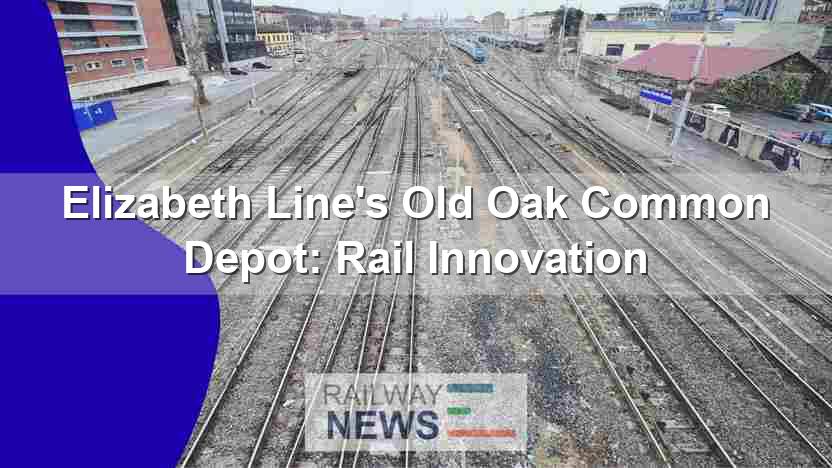
This article explores the significance of the newly opened Old Oak Common depot in supporting the operational efficiency and environmental sustainability of the Elizabeth line (Crossrail), a crucial addition to the London rail network. The opening of this state-of-the-art facility marks a significant milestone in the project, addressing critical aspects of train maintenance, driver training, and environmental responsibility. The depot’s capabilities, its role in the overall Elizabeth line strategy, and its contribution to sustainable railway operations will be examined in detail, highlighting its importance for the long-term success of this ambitious undertaking. The integration of sustainable energy practices within the depot’s design is also a key focus, demonstrating a commitment to minimizing the environmental impact of rail operations. Finally, the article will assess the long-term implications of this investment for the future of rail infrastructure development in the UK and beyond.
Supporting Elizabeth Line Operations
The Old Oak Common depot, a key component of the Elizabeth line infrastructure, is designed to accommodate and maintain up to 42 of the line’s 70 new trains simultaneously. This capacity is essential to ensure the efficient and reliable operation of the line, minimizing downtime for maintenance and maximizing service availability for passengers. The depot’s strategic location facilitates quick access to the main line, minimizing the time trains spend travelling to and from maintenance facilities. This is especially crucial during peak operating hours where minimizing delays is paramount. The depot’s design incorporates 33 stabling roads (tracks for storing trains) and nine roads dedicated to heavy maintenance, encompassing wheel and motor repairs and other crucial components. The inclusion of a train wash facility further enhances the operational efficiency by ensuring the regular deep cleaning of the vehicles.
Integrating TfL Rail Services
The Old Oak Common depot plays a vital role in coordinating the TfL Rail services between Paddington and Heathrow Airport. This integration underscores the depot’s broader function within the London transport network. By centralizing maintenance and operations for both the Elizabeth line and the TfL Rail services, the depot enhances operational synergy and resource optimization. The seamless integration of these services through a single depot simplifies logistical complexities and improves the overall efficiency of the railway system.
Commitment to Sustainable Practices
The Old Oak Common depot incorporates a significant commitment to environmental sustainability. Over 30% of the depot’s energy needs are met through renewable energy sources. This strategy leads to an estimated annual reduction of 500 tonnes of CO2 emissions compared to a conventionally powered facility. This commitment reflects a wider trend in the railway industry towards reducing its carbon footprint and aligns with the broader environmental goals of Transport for London (TfL). The adoption of sustainable practices in the design and operation of the depot sets a benchmark for future infrastructure projects, showcasing the feasibility of combining operational efficiency with environmental responsibility.
Driver Training and Future Development
The depot serves as a crucial training hub for Elizabeth line drivers. The facility houses state-of-the-art simulators that enable detailed driver training. This on-site training reduces operational costs and improves driver proficiency. The concentration of driver training at Old Oak Common allows for efficient coordination and the implementation of standardized training protocols. Additionally, this facility can accommodate future expansion and adaptation to meet evolving training requirements and technological advances within the rail industry.
Conclusion
The opening of the Old Oak Common depot signifies a significant advancement in the development and operational readiness of the Elizabeth line. Its capacity to house and maintain a large portion of the new train fleet is pivotal to the smooth running of the line, guaranteeing regular service and minimizing disruptions. The depot’s role in integrating TfL Rail services streamlines operations and improves coordination within the broader London transport network. The incorporation of substantial renewable energy sources demonstrates a commitment to sustainability, setting a positive precedent for future rail infrastructure developments. Finally, the depot’s function as a key driver training facility ensures the line’s safe and efficient operation by employing highly skilled personnel. The Old Oak Common depot is not merely a maintenance facility; it represents a strategic investment in the long-term success and sustainable operation of the Elizabeth line, embodying the principles of efficiency, integration, and environmental responsibility. Its success serves as a model for future railway infrastructure projects, emphasizing the importance of considering operational efficiency, environmental sustainability, and effective workforce training from the outset of design and construction.

Transport and railway industry editor covering global rail infrastructure, sustainable mobility, urban transit systems and next-generation railway technologies with a focus on accessible and industry-focused reporting.
RELATED POSTS

September 6, 2026 5:19 am
Hitachi delivered Taiwan's first N700ST high-speed train from Japan in...

September 5, 2026 4:19 pm
CPK launched formal tender talks with four consortia to design...

September 5, 2026 7:14 pm
HS2 Ltd signed renegotiated civils contracts with EKFB and Align...

September 6, 2026 4:12 am
Alstom delivered the first of 100 new G Class trams...

September 6, 2026 1:17 am
Hitachi Toshiba Supreme Consortium confirmed the first of 12 N700ST...

September 6, 2026 6:17 am
Hungary ordered a national ban on most freight trains from...