
Edmonton’s $1.5B LRT Expansion: A City Transformed
Edmonton’s $1.5 billion LRT expansion is underway! Two major lines are adding kilometers of track, boosting efficiency and creating countless opportunities.
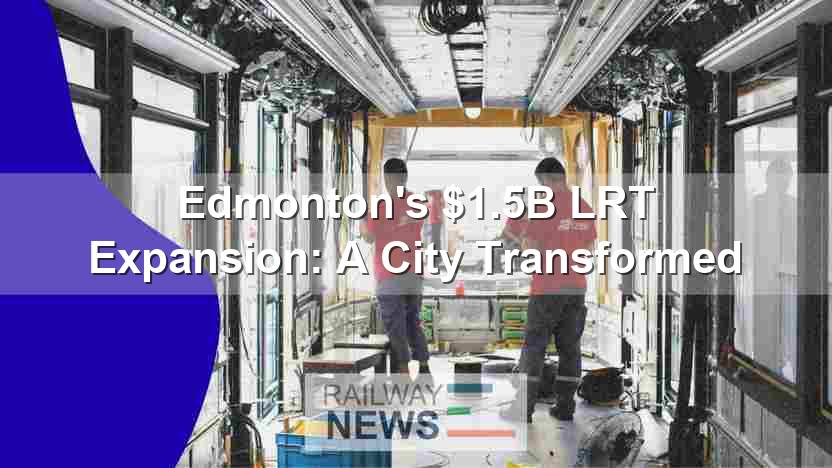
This article examines the significant investment secured by the city of Edmonton, Alberta, for the expansion of its light rail transit (LRT) system. Edmonton’s commitment to expanding its public transportation infrastructure reflects a broader trend in urban planning towards sustainable and efficient mass transit solutions. This $1.5 billion (USD) injection of funding, a combined effort from the federal and provincial governments, will facilitate the construction of two crucial LRT extensions: the Valley Line West and the Metro Line Northwest. This expansion will not only alleviate traffic congestion and reduce reliance on personal vehicles but also stimulate economic growth and improve the overall quality of life for Edmonton residents. The following sections will delve into the specifics of the funding, the projects themselves, the projected timelines, and the broader implications of this substantial investment for the city’s future.
Funding Sources and Allocation
The project’s financial backing demonstrates a strong commitment from multiple levels of government. The federal government, through the Investing in Canada Infrastructure Plan, is contributing over C$1 billion ($750 million USD), with C$948 million ($709.6 million USD) designated for the Valley Line West LRT and approximately C$127 million ($95.06 million USD) for the Metro Line Northwest LRT. The Government of Alberta, through its Climate Leadership Plan, is adding approximately C$1.17 billion ($880 million USD), allocating C$1.04 billion ($780 million USD) to the Valley Line West LRT and roughly C$131 million ($98 million USD) to the initial phase of the Metro Line Northwest LRT. This collaborative funding model highlights the importance placed on expanding Edmonton’s public transportation infrastructure.
Project Scope and Details
The Valley Line West LRT extension will significantly expand the existing network, adding 14 kilometers of track from the city center to Lewis Farms in west Edmonton. This expansion aims to improve connectivity to residential and commercial areas, providing a vital transportation link for a large segment of the population. The Metro Line Northwest LRT extension, while smaller in scale at 1.5 kilometers, will connect the Northern Alberta Institute of Technology (NAIT) to Blatchford, addressing a significant transportation gap and improving accessibility to educational and residential areas. Both projects are crucial to the city’s long-term transportation strategy. The selection of contractors is anticipated within one year, with the possibility of construction commencing as early as 2020.
Timeline and Projected Completion
The ambitious nature of these projects is reflected in their projected timelines. The Valley Line West LRT expansion is anticipated to take five to six years to complete, a testament to the scale of the undertaking. In contrast, the Metro Line Northwest LRT extension, being smaller in scope, is expected to be finalized within four years. These timelines highlight the urgency with which the city and the involved governments are approaching this vital infrastructure development. The successful completion of these projects will hinge upon effective project management, efficient resource allocation, and collaboration between various stakeholders.
Economic and Social Impacts
Beyond the immediate transportation benefits, the LRT expansion is expected to have far-reaching economic and social impacts. The construction phase itself will generate significant employment opportunities, stimulating economic activity within the city. Moreover, improved public transportation will attract investment, enhance the quality of life for residents, and promote sustainable urban growth. Reduced traffic congestion will lead to decreased commute times and lower carbon emissions, contributing to a more environmentally friendly city. The enhanced connectivity will also improve access to education, employment, and recreational facilities for a broader range of the population.
Conclusions
Edmonton’s securing of C$2 billion ($1.5 billion USD) in funding for the expansion of its LRT system represents a landmark achievement in urban infrastructure development. This significant investment, shared between the federal and provincial governments, will facilitate the construction of two vital LRT extensions: the Valley Line West and the Metro Line Northwest. The Valley Line West extension, spanning 14 kilometers, will connect downtown Edmonton to Lewis Farms, significantly improving west-side connectivity. The Metro Line Northwest extension, while shorter at 1.5 kilometers, will link NAIT to Blatchford, addressing a crucial transportation need. The project’s financial framework, collaborative approach, and ambitious timeline underscore its importance to Edmonton’s future. The projected completion times, ranging from four to six years, highlight the scale of this undertaking. Beyond the immediate construction jobs created, this investment promises significant long-term benefits. These include reduced traffic congestion, decreased commute times, improved access to employment and educational opportunities, environmental benefits through decreased emissions, and stimulated economic growth through increased investment. The successful implementation of this project will not only enhance Edmonton’s public transportation system but will also serve as a model for other cities seeking to invest in sustainable and efficient mass transit solutions.

Railway infrastructure, rolling stock and transport technologies specialist focused on global rail industry developments, high-speed rail systems, signaling technologies and freight transportation. Covering railway investments, public transport modernization, rail operations and international mobility projects across Europe, Asia and North America.
RELATED POSTS

October 8, 2026 1:15 pm
Alstom secured a €1bn contract to build 13 automated trains,...

October 4, 2026 5:14 pm
Alstom secured a CA$4.7 billion order from VIA Rail Canada...

October 5, 2026 6:12 pm
AECOM and Jacobs secured a contract in September 2026 to...

October 1, 2026 12:13 am
Illinois approved $1.5 billion annually for the Northern Illinois Transit...

October 4, 2026 11:08 pm
Sound Transit confirmed the September 30 opening of Seattle Pinehurst...

October 5, 2026 1:13 pm
New York MTA confirmed a late 2026 DEIS release for...