
Eastriggs Rail Hub: Future of Scottish Rail : Innovations, Trends
Eastriggs rail hub, a former military base, is revived, boosting Scottish rail freight and creating jobs.
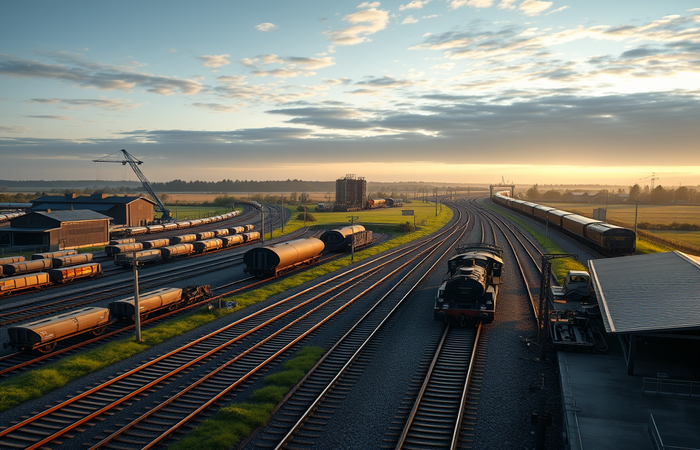
Eastriggs Rail Hub Revived: A New Era for Scottish Rail Operations
In a remarkable resurgence, a former military base with direct connections to the West Coast Main Line is undergoing a dramatic transformation, breathing new life into Scotland’s rail network. Rail Sidings Limited, a dynamic Small and Medium Enterprise (SME), has reactivated the Eastriggs site after 14 years of dormancy. This ambitious project, spearheaded by Managing Director Gary Draisey, is creating employment opportunities, fostering local economic growth, and playing a crucial role in Scotland’s commitment to a sustainable future. The “What”: The reopening of a strategic rail hub. The “Who”: Rail Sidings Limited, supported by key industry partners. The “When”: Reactivation within the last eight months. The “Where”: Eastriggs, a former military base in Southern Scotland. The “Why”: To enhance rail freight capabilities, reduce carbon emissions, and stimulate local economic development. The “How”: Through strategic partnerships, infrastructure development, and a commitment to workforce training. This article will delve into the revitalization of Eastriggs, exploring its operational advancements, community impact, and the long-term implications for the Scottish rail sector and beyond.
Strategic Advantages: A Fast-Growing Rail Hub
Within a mere eight months, the Eastriggs site has already achieved full operational capacity. The facility now provides secure storage, repair, and maintenance services for a diverse fleet, including wagons, passenger trains, and essential snowploughs. Currently employing seven local staff, the site is poised for further expansion. Eastriggs’ strategic location is critical. It effectively links the Scottish central belt with Southern Scotland and Ireland, addressing a significant logistical gap. This enables the development of more efficient transport routes, resulting in a measurable reduction in carbon emissions. By accommodating a variety of rolling stock and offering detailed service capabilities, Eastriggs significantly enhances the operational efficiency of the overall rail network. The direct access to the West Coast Main Line ensures optimal connectivity for freight and passenger services.
Freight Forward: Leveraging Strategic Proximity and Industry Collaboration
The site’s potential extends far beyond current operations. Several local businesses, including quarries and logistics firms, have shown considerable interest in transporting goods by rail, capitalizing on Eastriggs’ strategic advantages. By facilitating an expansion of freight services, Rail Sidings can leverage the proximity to the A75, optimizing connectivity. This move supports Scotland’s net-zero goals by actively mitigating road congestion and reducing harmful emissions. Moreover, Eastriggs stands as the sole rail service point between Manchester and Glasgow, a critical asset in high demand, and represents a game-changing opportunity to drive a modal shift. The collaboration between Rail Sidings Limited and Rail Cluster Scotland, a project led by Scottish Engineering and funded by Scottish Enterprise, Transport Scotland, and Skills Development Scotland, highlights the importance of public-private partnerships in achieving these goals.
Investing in the Future: Skills Development and Community Engagement
Rail Sidings is actively engaged in workforce development. Discussions are underway with secondary schools in Annan and Dumfries to create work experience opportunities, providing students with a valuable first-hand understanding of the rail industry. This initiative seeks to bridge the gap between education and employment. This proactive approach is designed to attract young people into the rail sector. Beyond this, plans include establishing a dedicated training facility at Eastriggs, which will allow students to gain practical, hands-on experience in a safe environment, away from live rail lines. The site is also forging close ties with the local Porridge Museum, and the site is actively integrated into the fabric of the community. This will not only help with workforce development, but also bolster a positive community and economic impact for the region.
Conclusion
The revival of the Eastriggs rail hub by Rail Sidings Limited represents a significant step forward for Scotland’s rail industry and the wider economic landscape. Through strategic investment, collaborative partnerships, and a commitment to community engagement, the project is already demonstrating tangible results. The enhanced freight capabilities, coupled with a focus on workforce development and environmental sustainability, position Eastriggs as a model for future rail infrastructure projects. The successful reactivation of this site highlights the critical role of SMEs in driving innovation and growth within the railway sector. The potential for further expansion, particularly in freight services, promises even greater benefits, including reduced carbon emissions and increased operational efficiency across Scotland’s rail network. The long-term vision for Eastriggs, encompassing training facilities and community partnerships, suggests a lasting positive impact, ensuring that the facility remains a cornerstone of the local economy for generations to come. With continued collaboration and strategic investment, the Eastriggs project is poised to make a lasting and transformational impact on Scotland’s rail industry and beyond.

Railway infrastructure, rolling stock and transport technologies specialist focused on global rail industry developments, high-speed rail systems, signaling technologies and freight transportation. Covering railway investments, public transport modernization, rail operations and international mobility projects across Europe, Asia and North America.
RELATED POSTS
September 6, 2026 5:19 am
Hitachi delivered Taiwan's first N700ST high-speed train from Japan in...

September 5, 2026 4:19 pm
CPK launched formal tender talks with four consortia to design...
September 6, 2026 6:17 am
Hungary ordered a national ban on most freight trains from...
September 6, 2026 1:17 am
Hitachi Toshiba Supreme Consortium confirmed the first of 12 N700ST...
September 6, 2026 8:17 am
DB InfraGO reopened the Nuremberg-Regensburg line in Bavaria on 31...
September 7, 2026 8:16 am
Midea, Gree and TCL shipped air conditioners via China Railway...